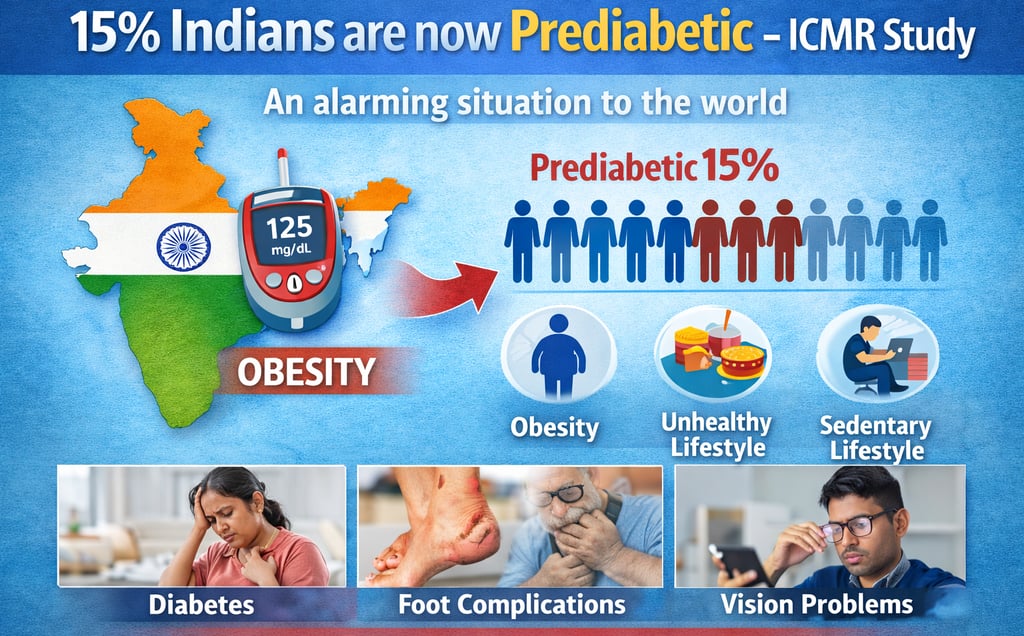
15% Indian are now Prediabetic- ICMR Study The alarming situation to the world
A silent tsunami is sweeping across India. While the world remains preoccupied with geopolitical tensions, economic uncertainties, and technological disruptions, a far more insidious threat is quietly reshaping the future of over 200 million Indians. The latest findings from the Indian Council of Medical Research (ICMR) have delivered a wake-up call that cannot be ignored: 15.3% of Indians—more than one in every seven adults—are now living with prediabetes .
ASF
18 min read
A silent tsunami is sweeping across India. While the world remains preoccupied with geopolitical tensions, economic uncertainties, and technological disruptions, a far more insidious threat is quietly reshaping the future of over 200 million Indians. The latest findings from the Indian Council of Medical Research (ICMR) have delivered a wake-up call that cannot be ignored: 15.3% of Indians—more than one in every seven adults—are now living with prediabetes.
This figure is not merely a statistic. It represents 136 million individuals standing at the edge of a metabolic cliff. Behind this number are real people—young professionals in Bengaluru's tech parks, farmers in Punjab, homemakers in Kolkata, and students in Mumbai—all carrying within their bodies a condition that could, within a few years, transform into full-blown diabetes.
The ICMR-INDIAB study, one of the most comprehensive epidemiological investigations ever conducted in the country, has revealed that one in four Indians is now either diabetic or at immediate risk of developing the disease. When combined with the 101 million already diagnosed with diabetes, the total affected population exceeds a quarter of a billion people—larger than the entire population of most countries on Earth.
This blog post examines the ICMR findings in depth, explores what prediabetes means for the average Indian, analyses the regional variations across the country, and provides a practical roadmap for reversal. The situation is alarming, but it is not hopeless. Within the prediabetes diagnosis lies the greatest opportunity for intervention—a window of time when lifestyle changes can still rewrite the body's metabolic destiny.
1. Understanding the ICMR-INDIAB Study: What the Numbers Really Mean
1.1 The Landmark Study
The ICMR-INDIAB study represents the most comprehensive assessment of diabetes and metabolic health ever undertaken in India. Recent findings from this ongoing research have painted a stark picture of the nation's health landscape: approximately 101 million people live with diabetes, while another 136 million have crossed into the prediabetic range.
Non-communicable diseases (NCDs) now account for 6.3 million deaths annually in India—68% of all mortality. The ICMR researchers explicitly identify unhealthy diets as a primary contributor to this burden, noting that dietary transitions over the past three decades have fundamentally altered the metabolic health of the population.
1.2 The 15.3% Prediabetes Prevalence
The finding that 15.3% of Indians have prediabetes carries profound implications. Prediabetes is not a benign condition—it is an active pathological state where blood glucose levels are elevated above normal but have not yet crossed the threshold for diabetes diagnosis.
To understand the scale: 15.3% of India's adult population exceeds 136 million individuals. This is larger than the populations of Germany, France, and the United Kingdom combined. These 136 million people are not merely "at risk"—they are already experiencing metabolic dysfunction that, left unaddressed, will progress to diabetes in a substantial proportion of cases.
1.3 Higher Estimates from Laboratory Data
A separate HbA1c-based epidemiology study published in late 2024 analysed nearly 2 million (19,66,449) adult samples from across India and found even higher prevalence rates: 22.25% of the tested population met criteria for prediabetes, while 27.18% showed evidence of diabetes.
This discrepancy between the ICMR-INDIAB figure (15.3%) and the laboratory-based estimate (22.25%) likely reflects methodological differences. The HbA1c study captured data from individuals who sought laboratory testing, potentially biasing toward populations with higher health awareness or existing concerns. Nevertheless, both datasets confirm that prediabetes affects a massive segment of the Indian population—conservatively at least one in seven adults, and potentially more than one in five.
1.4 Regional Variations: From Odisha to Jammu & Kashmir
One of the most valuable contributions of recent research is the documentation of substantial regional variation in prediabetes prevalence across India. The HbA1c study revealed that Odisha recorded the highest rates, while Jammu & Kashmir reported the lowest.
These geographic differences likely reflect variations in dietary patterns, physical activity levels, urbanisation, and possibly genetic factors. The correlation observed between state-specific grain consumption and disease prevalence suggests that dietary habits play a significant role in shaping regional metabolic health.
2. What Is Prediabetes? Understanding the Window of Opportunity
2.1 Defining Prediabetes
Prediabetes is a health condition characterised by blood glucose levels that are higher than normal but not yet high enough to be classified as diabetes. It is diagnosed through several laboratory measures:
- Fasting blood glucose: 100–125 mg/dL (impaired fasting glucose)
- Oral glucose tolerance test (2-hour value): 140–199 mg/dL (impaired glucose tolerance)
- HbA1c: 5.7% to 6.4%
The International Diabetes Federation (IDF) 2025 Atlas estimates that nearly 90 million Indians are affected by prediabetes using standard diagnostic criteria. This figure aligns broadly with the ICMR findings and confirms India's position as the global epicentre of the prediabetes epidemic.
2.2 The Metabolic Reality of Prediabetes
Prediabetes is not merely a "borderline" condition. It represents an active state of metabolic dysfunction where the body's cells have begun to lose sensitivity to insulin—a state known as insulin resistance. The pancreas responds by producing more insulin to compensate, maintaining blood glucose in the near-normal range only through hyperinsulinemia (excessively high insulin levels).
This compensatory phase can last for years, but it places enormous strain on the insulin-producing beta cells of the pancreas. Over time, these cells begin to fail, insulin production drops, and blood glucose rises into the diabetic range. The transition from prediabetes to diabetes is not inevitable, but it requires active intervention.
2.3 The Connection with Obesity
Prediabetes rarely travels alone. An Indian study found that nearly 80% of prediabetics are overweight or obese. This close association reflects the central role of excess adiposity—particularly visceral fat—in driving insulin resistance.
The recent ICMR study involving 1,13,043 participants revealed India's metabolic landscape in striking detail :
- 43.3%: Metabolically obese, non-obese (MONO) — normal weight but metabolically unhealthy
- 28.3%: Metabolically obese, obese (MOO) — obese and metabolically unhealthy
- 26.6%: Metabolically healthy, non-obese (MHNO)
- Only 1.8%: Metabolically healthy, obese (MHO)
These numbers reveal a crucial insight: in India, metabolic health cannot be assumed from appearance. The "thin-fat" Indian phenotype means that individuals who appear lean may still carry dangerous visceral fat and meet criteria for prediabetes.
3. The Indian Paradox: Why We Are Uniquely Vulnerable
3.1 The Asian Indian Phenotype
Indians develop prediabetes and diabetes differently from Western populations. The "Asian Indian phenotype" is characterised by:
- Higher body fat percentage at lower body mass index (BMI)
- Greater visceral fat accumulation—the metabolically dangerous fat around internal organs
- Lower muscle mass reduces the body's capacity for glucose disposal
- Higher insulin resistance even at normal body weight
This phenotype explains why Indians develop prediabetes at younger ages and lower body weights compared to Caucasians. An Indian with a BMI of 23 may carry the same metabolic risk as a Caucasian with a BMI of 30.
3.2 Genetic Predisposition
Research has identified specific genetic variations more common in Indian populations that affect fat storage patterns and insulin sensitivity. These genetic factors evolved over millennia in an environment of food scarcity and high physical activity. They were optimised for efficient energy storage—a survival advantage when food was unpredictable.
Today, in an environment of calorie abundance and sedentary lifestyles, those same thrifty genes become a liability. The metabolic machinery designed to store energy efficiently now promotes fat accumulation and insulin resistance.
3.3 Dietary Transformation: The Carbohydrate Overload
The traditional Indian diet, while diverse and regionally varied, has undergone profound changes over the past three decades. The core issue is not merely what Indians eat, but how it is processed and combined.
Refined Carbohydrates: Traditional meals were carbohydrate-heavy, but those carbohydrates came with fibre intact—whole grains, unpolished rice, and legumes that slowed digestion and glucose absorption. Today, highly polished white rice and finely milled wheat flour (maida) dominate. A study in Chennai reported a mean refined grain intake of 333 g/day—46.9% of total calories.
Hidden Sugars: Sugar has infiltrated the Indian diet in ways many do not recognise. Packaged fruit juices, carbonated beverages, sweetened dairy products, and seemingly savoury snacks now contain added sugars. Sugar is estimated to be found in 75% of packaged foods, often under names consumers do not recognise.
Ultra-Processed Foods: Retail sales of ultra-processed foods in India grew over 150% between 2009 and 2023. India consumed 8.68 billion servings of instant noodles in 2023 alone.
3.4 Physical Inactivity and Sedentary Lifestyles
As diets have worsened, physical activity has plummeted. Urbanisation has reduced occupational physical activity—fewer people work in agriculture or manufacturing; more sit at desks. Leisure time, once spent outdoors, is now dominated by screens.
A study in rural Bengaluru found that 46.8% of adults were physically inactive, while 82.3% consumed an unhealthy diet. Even in rural areas, the health transition is well underway.
4. The Transition Window: From Prediabetes to Diabetes
4.1 Critical New Research from India
A landmark decade-long retrospective cohort study published in late 2025 has provided the most detailed picture yet of how prediabetes progresses in Indian populations. Researchers followed 1,670 diabetes-free individuals aged 30 years and above over a 10-year period, using electronic medical records from a government hospital.
The findings are both alarming and hopeful.
4.2 Transition Probabilities
The study calculated the overall incidence of type 2 diabetes at 20.94 per 1,000 person-years. However, this average masks a crucial difference:
- Individuals with baseline prediabetes had an incidence rate of 41.74 per 1,000 person-years
- Individuals with normal blood sugar at baseline had an incidence rate of 15.89 per 1,000 person-years
In practical terms, having prediabetes increases the risk of progressing to diabetes by approximately 2.6 times compared to someone with normal blood sugar.
The probability of progressing from prediabetes to diabetes reached approximately 30% over the study period, while the probability of moving from normal blood sugar to prediabetes reached approximately 25%.
4.3 The Golden Window: Reversal Is Possible
The most hopeful finding from this research is that reversal from prediabetes to normal blood sugar is not only possible but common—if caught early.
The study found that reversion from prediabetes to normoglycemia peaked at around 60% within the first 2–3 years after identification, declining substantially thereafter.
This finding carries profound implications. The "golden window" for intervention is narrow—approximately two to three years from the time prediabetes is detected. During this window, lifestyle modifications can succeed in restoring normal metabolic function in a majority of individuals. After this window closes, the probability of reversal declines, and the likelihood of progression to diabetes increases.
4.4 Gender Differences
The study also revealed important gender differences in prediabetes progression :
- Males had a higher likelihood of progressing from prediabetes to diabetes
- Females showed higher rates of reversion from prediabetes to normal blood sugar
These differences may reflect hormonal factors, differences in body fat distribution, or variations in health-seeking behaviours. They highlight the need for gender-sensitive approaches to prediabetes screening and intervention.
5. The Economic Shock: What Prediabetes Costs India
5.1 The Direct Cost of Diabetes Care
While prediabetes itself may not require medication, it represents the entry point into a lifetime of potentially expensive healthcare. Understanding the economic trajectory from prediabetes to diabetes is essential for grasping the full implications of the ICMR findings.
A systematic review of systematic reviews (umbrella review) published in the International Journal of Diabetes and Technology estimated the annual per-patient cost of diabetes care in India at approximately ₹20,660. This figure represents the median of total costs reported across multiple studies and geographic zones.
The cost components include:
- Direct Medical Costs: Doctor consultations, medications (oral drugs and insulin), monitoring equipment (glucometers, test strips), and regular laboratory tests (HbA1c, lipid profiles)
- Direct Non-Medical Costs: Transportation to clinics, special dietary foods, and hospital stays for complications
- Indirect Costs: Lost wages due to illness, time taken off by family members for caregiving, and premature mortality
5.2 The National Economic Burden
The economic cost of obesity and its associated conditions—including prediabetes and diabetes—was estimated at approximately $26.6 billion in 2019. This figure is projected to rise to $81.5 billion by 2030, equivalent to around 1.6% of India's GDP.
For a young country aspiring to global economic leadership, permitting such a preventable drain on human capital is simply not an option. The 136 million Indians with prediabetes today represent not only a health challenge but an economic imperative.
5.3 The Family's Burden
Behind these macroeconomic figures are painful personal stories. Families are selling land or pledging jewellery to pay for repeated hospitalisations. Workers in their forties are living with diabetes, heart disease, and disability, their most productive years stolen.
A diabetes diagnosis can push a lower-middle-class family into debt. The high share of informal caregiving—comprising almost 90% of the total economic burden in some estimates—explains why families are stretched thin, with caregivers often dropping out of the labour market.
For the 136 million Indians with prediabetes, the economic message is clear: intervention now is far cheaper than treatment later.
6. The Clinical Reality: Prediabetes and Complications
6.1 Silent but Not Benign
Prediabetes is often called "borderline diabetes," creating the impression that it is a minor concern. This is dangerously misleading. While prediabetes may not cause obvious symptoms, it is associated with early complications.
Microvascular Changes: Even in the prediabetic range, elevated blood glucose can begin to damage small blood vessels. Some individuals with prediabetes show early signs of retinopathy (eye damage) and nephropathy (kidney damage).
Cardiovascular Risk: Prediabetes increases cardiovascular risk even before diabetes develops. The metabolic dysfunction underlying prediabetes—insulin resistance, inflammation, dyslipidemia—directly promotes atherosclerosis.
6.2 The Connection with Metabolically Dysfunctional-Associated Steatotic Liver Disease (MASLD)
Prediabetes rarely exists in isolation. Metabolically dysregulated steatotic liver disease (MASLD), formerly known as non-alcoholic fatty liver disease, now affects 27.4% of the Indian population, often coexisting with prediabetes and diabetes.
This combination compounds risks for heart disease, kidney disease, liver cancer, and stroke. The liver's role in glucose regulation means that fatty liver both contributes to and results from insulin resistance, creating a vicious cycle.
6.3 The High Rate of Undiagnosed Disease
One of the most concerning findings from recent research is the high rate of undiagnosed metabolic disease. A community-based study in rural Bengaluru found that more than one-third of diabetes cases and three-fourths of hypertension cases were newly diagnosed through population-based screening.
In urban Bengaluru, it is estimated that over 20% of adults are affected by diabetes, with vulnerable groups such as daily-wage workers and migrants disproportionately impacted. Stigma and limited access to healthcare contribute to delayed diagnosis and costly complications, often representing nearly a quarter of a person's income after diagnosis.
For prediabetes, which by definition produces no symptoms, the undiagnosed rate is likely even higher. The 15.3% identified by ICMR may represent only the tip of the iceberg.
7. Beyond the Clinic: The Case for Community Action
7.1 The Limits of Clinical Care
One of the biggest mistakes in the fight against prediabetes is assuming it can be won in the doctor's clinic alone. A 15-minute consultation can diagnose high blood sugar and advise lifestyle changes, but true behaviour change rarely begins and ends within that brief window.
Food practices in India are deeply rooted in religion, culture, and tradition. When a healthcare provider tells a patient from a rural background to "eat better," what does that actually mean for someone whose food world begins and ends with rice and dal?
7.2 Community-Based Models
Recognising these limitations, organisations like the World Diabetes Foundation are supporting community-anchored models for diabetes and hypertension care. A 2026 fundraiser initiative in Bengaluru aims to establish a scalable care model centred on the needs of marginalised populations in urban and peri-urban areas.
Key elements of this approach include:
- Peer educators leading outreach and community sessions to promote early screening, reduce stigma, and encourage healthy behaviours
- Frontline health workers translating medical advice into practice by reinforcing nutrition education in local languages
- Digital outreach and mobile screening camps reaching populations that cannot easily access fixed facilities
- Community support groups in collaboration with Mahila Arogya Samitis and Self-Help Groups
This model recognises that sustainable behaviour change requires ongoing support within the community, not occasional visits to a healthcare facility.
7.3 The Role of Frontline Workers
India's network of ASHA workers, ANMs, and Anganwadi workers represents a unique infrastructure for community-based metabolic health interventions. These frontline workers, if adequately trained and supported, can:
- Conduct basic screening using point-of-care devices
- Provide culturally appropriate nutrition education
- Follow up with individuals identified with prediabetes
- Link community members to primary health centres for confirmation and care
The challenge lies in ensuring these workers have the training, time, and resources to add metabolic health to their already extensive responsibilities.
8. The Urban Environment: Are Our Cities Making Us Sick?
8.1 The Food Environment
Our living environment plays a substantial role in the prediabetes epidemic. Urbanisation has transformed the food landscape in ways that actively promote metabolic dysfunction.
High Retail Food Environment Index (RFEI): In many urban areas, the density of fast-food outlets and processed food sellers now exceeds that of healthy options like vegetable vendors. A study conducted in Chennai found that a high RFEI correlated strongly with diabesity prevalence.
Quick Commerce and Delivery: Platforms like Swiggy, Zomato, and Blinkit have made calorie-dense, nutrient-poor foods available at the touch of a button, often cheaper than healthier alternatives. About 74% of Indians cannot afford a healthy diet due to low income levels, while ultra-processed foods are often priced lower.
8.2 The Physical Activity Environment
Physical inactivity is not merely a matter of individual choice—it is shaped by the built environment. The Chennai study found that distance to parks, green spaces, and walkable areas correlated with diabetes risk. Those living farther from spaces conducive to physical activity had higher rates of metabolic disease.
Urban planning decisions—or their absence—have created cities where walking is unpleasant or dangerous, where green space is scarce, and where dependence on motorised transport is nearly complete.
8.3 The Digital Environment
The Economic Survey 2025-26 introduced a novel concern: digital addiction. Excessive screen time is associated with reduced physical activity, sleep deprivation, and stress—all of which compound metabolic risk.
The convergence of sedentary behaviour with poor diet, mediated through digital platforms, creates the metabolic perfect storm driving the prediabetes epidemic.
9. Managing Prediabetes: A Practical Guide for Indian Families
9.1 The Golden Opportunity
The finding that 60% of individuals can reverse prediabetes within 2–3 years transforms this diagnosis from a life sentence to a call to action . For the 136 million Indians with prediabetes, the message is clear: you have a window of opportunity. Use it.
9.2 Know Your Numbers
The first step is awareness. Adults should know their:
- Fasting blood glucose (ideal: below 100 mg/dL)
- Post-meal blood glucose (ideal: below 140 mg/dL)
- HbA1c (ideal: below 5.7%)
Those with a family history of diabetes, who are overweight, or who lead sedentary lives should test annually. The Indian Express recommends that adults check blood pressure, blood sugar, cholesterol levels, and body weight at least once a year.
9.3 Rethinking the Indian Plate
Managing prediabetes in India requires strategies that work with our culture, not against it. The goal is not to abandon traditional foods but to rediscover their wisdom while adapting to modern circumstances.
The Plate Rule:
- Fill Half Your Plate with non-starchy vegetables: Include a variety of colourful vegetables—bhindi, lauki, cabbage, leafy greens, and salads.
- Fill One-Quarter with Protein: Prioritise plant proteins—dal, chana, rajma, soya chunks, along with moderate amounts of paneer, fish, or chicken.
- Fill One-Quarter with Quality Carbs: Choose whole grains, millets (jowar, bajra, ragi, foxtail millet), or parboiled rice.
9.4 Smart Carbohydrate Choices
Not all carbohydrates are equal. The glycemic index (GI) measures how quickly foods raise blood sugar.
Low-GI options:
- Millets (jowar, bajra, ragi)
- Whole wheat and besan (chickpea flour) blends
- Parboiled rice
- Legumes and pulses
High-GI options to limit:
- Highly polished white rice
- Finely milled wheat flour (maida)
- Sugar-sweetened beverages
- Processed breakfast cereals
9.5 The Truth About Sugar
Reducing added sugar is one of the most impactful dietary changes. A simple win: cutting just one teaspoon of sugar from tea or coffee twice daily saves roughly 8–10 grams of sugar daily—240–300 grams monthly.
Be aware that "healthy" alternatives like jaggery and honey are still sugars that raise blood glucose similarly to table sugar. They should be limited, not freely substituted.
Reading labels is essential. If sugar appears among the first three ingredients, the product is likely nutritionally poor. Remember that sugar hides under many names—maltose, dextrose, high-fructose corn syrup, fruit juice concentrates, and dozens more.
9.6 Protein: The Missing Nutrient
The Indian diet, traditionally carbohydrate-heavy, often lacks adequate protein. This is particularly problematic because protein provides satiety, preserves muscle mass (the body's metabolic engine), and has minimal impact on blood sugar.
Good Indian protein sources include:
- Pulses and legumes: All dals, chana, rajma, lobia, soybeans
- Dairy: Curd, paneer, buttermilk (in moderation)
- Eggs and fish for non-vegetarians
- Nuts and seeds in controlled portions
9.7 Physical Activity: Moving More
Physical activity is non-negotiable in reversing prediabetes. It improves insulin sensitivity, helps maintain muscle mass, aids weight management, and reduces cardiovascular risk.
For most adults, the goal should be:
- At least 30 minutes of moderate activity (brisk walking, cycling, yoga, swimming) on most days
- Strength training twice weekly to preserve muscle mass
- Reduced sedentary time—breaking up long sitting periods with short walks
Movement does not need a gym. Household chores, stairs, and short walks all count.
9.8 Manage Stress and Prioritise Sleep
Chronic stress and poor sleep directly affect hormones, blood sugar, blood pressure, and immunity. Long working hours, constant phone use, and lack of rest increase the risk of lifestyle diseases.
Adults should aim for 7 to 8 hours of quality sleep each night. Simple habits such as fixed sleep times, reduced screen use before bed, and relaxation practices can improve sleep quality.
Stress management through yoga, meditation, breathing exercises, or hobbies helps lower disease risk. Mental health is as important as physical health.
9.9 Avoid Tobacco and Limit Alcohol
Tobacco use remains a major cause of preventable illness in India. Smoking and smokeless tobacco increase the risk of heart disease, stroke, cancer, and lung disease. Quitting tobacco at any age improves health outcomes.
Alcohol consumption should be limited as excess intake contributes to liver disease, high blood pressure, weight gain, and poor mental health. Moderation or complete avoidance is especially important for people with prediabetes.
10. Policy Response: What Must Be Done
10.1 Recognise Prediabetes as a Priority
India's health policy has historically focused on diabetes treatment rather than prediabetes prevention. The ICMR findings demand a shift in approach. Prediabetes must be recognised as a distinct priority within the National Programme for Prevention and Control of Cancer, Diabetes, Cardiovascular Diseases and Stroke (NPCDCS).
10.2 Expand Screening
The high rate of undiagnosed disease documented in rural Bengaluru—where more than one-third of diabetes cases were newly detected through screening—highlights the urgent need for expanded screening efforts.
India's network of Ayushman Arogya Mandirs and the National NCD portal offer platforms for protocol-based, digitally enabled screening at low cost. Similar models can be adapted for prediabetes: standardised screening pathways, SMS and app-based nudges, teleconsultations with nutritionists, and systematic follow-up.
10.3 Regulate the Food Environment
Individual choices are shaped by the environment in which they are made. Policy must address the commercial determinants of health:
- Front-of-pack nutrition labelling using simple warning symbols for products high in sugar, salt, and unhealthy fats
- Tighter controls on marketing and advertising of junk food to children, including on digital platforms
- Health-oriented taxes on sugar-sweetened beverages and ultra-processed foods, with revenue earmarked for health promotion
- Banning junk food sales in and around school campuses
International experience, such as the United Kingdom's soft drinks industry levy, shows that well-designed regulation can drive product reformulation and reduce sugar consumption without harming overall sales .
10.4 Create Healthy Environments
Creating healthier environments means acting where people spend most of their time:
- In schools: Integrate nutrition and physical activity into timetables, strengthen school meals, and offer supportive counselling for children with metabolic risk
- In workplaces: Promote regular movement breaks, healthier cafeteria options, and routine health checks
- In cities: Design pedestrian-friendly streets, parks, and markets selling fresh produce
10.5 Leverage Digital Health
India's growing strengths in digital health offer powerful tools for prediabetes management. The National NCD portal can be leveraged for protocol-based, digitally enabled care: standardised screening and counselling pathways, SMS and app-based nudges for healthier habits, teleconsultations with nutritionists, and systematic follow-up.
11. Hope on the Horizon
11.1 The Remission Revolution
The most hopeful finding from recent research is that type 2 diabetes remission is possible. A study of an Indian cohort of 2,384 patients undergoing intensive lifestyle interventions found that 31.2% achieved remission—maintaining an HbA1c below 6.5% for at least three months without medication.
For prediabetes, the remission rate is far higher—up to 60% within the first 2–3 years. This suggests that early, aggressive intervention can essentially "reset" metabolism for a significant portion of the population. The window is narrow, but it exists.
11.2 Traditional Food Wisdom
There is renewed interest in millets and traditional grains. The government's push for millets and Ayurveda recognises that traditional dietary wisdom—diverse whole foods, plant-based eating, fermented foods—aligns perfectly with modern metabolic science.
11.3 Growing Awareness
The prediabetes epidemic is finally receiving the attention it deserves. From parliamentary representations on childhood obesity to media coverage of economic costs, awareness is growing. The installation of Sugar and Oil Boards in schools and workplaces, while simple, represents a shift toward environmental interventions that make healthy choices easier.
11.4 Policy Momentum
The Economic Survey 2025-26's integration of health into economic planning marks a paradigm shift . Recognising that economic resilience depends on population health creates the foundation for sustained policy attention across electoral cycles.
12. Conclusion: The Window Is Open—Act Now
The ICMR findings are unambiguous: 15.3% of Indians—136 million people—now live with prediabetes. This is not merely a statistic; it is a call to action for every Indian family, every healthcare provider, and every policymaker.
But within this alarming news lies extraordinary hope. Research now confirms that within the first 2–3 years of identification, up to 60% of individuals can reverse prediabetes and return to normal blood sugar. The window is open, but it will not remain open forever.
If you are reading this and you have a family history of diabetes, if you carry excess weight around your abdomen, if you live a sedentary life, or if you have already received a diagnosis of prediabetes, consider this your call to action. Get tested. Know your numbers. Make one change today, however small.
The weapons to defeat the prediabetes epidemic are simple: awareness, dietary wisdom, physical activity, community support, and evidence-based policy. We must create a culture where metabolic health is valued, where traditional dietary wisdom is revived, and where the food environment supports health rather than undermining it.
The biggest threat to India's future is not prediabetes itself but our inaction in the face of it. The window of opportunity is open. Let us act now—for ourselves, for our families, and for our nation.
References
1. Deccan Herald. (2026). ICMR INDIAB study reveals one in four Indians develops diabetes, 15.3% have prediabetes.
2. Deshpande, P. R. (2026). How Much Does an Individual with Diabetes Spend on Health Care in Bharat? An Estimation Through Systematic Review of Systematic Reviews. International Journal of Diabetes and Technology, 5(1):9-12.
3. World Diabetes Foundation. (2026). Fundraiser 2026: Bridging care gaps for marginalised communities in urban Bengaluru, India.
4. Vora, H., et al. (2024). Prediabetes and diabetes in India: An HbA1c-based epidemiology study. Diabetes Research and Clinical Practice, 217:111889.
5. Sharma, P., et al. (2025). Transition between prediabetic and diabetic stages in an urban community in India: a decade-long retrospective cohort study. Journal of Diabetes & Metabolic Disorders, 24:270.
6. Dahale, S. M. (2026). Obesity-Prediabetes Duo: Why Clinicians Must Intervene Early? Medical Dialogues.
7. Veeraswamy, K., & Bhanu, V. (2026). India's $81 billion crisis: Why treating obesity as a chronic disease is an economic imperative. ET Government.
8. Chatterjee, S. (2026). Diabetes, BP and fatty liver often go undetected: Five things Indians should do to stay healthy in 2026. The Indian Express.
9. Sarveswaran, G., et al. (2024). Assessment of burden of prediabetes and diabetes with oral glucose tolerance test in community-based settings of Bengaluru rural district. Journal of Family Medicine and Primary Care, 13(9):3806-3814.
---
Disclaimer: This blog post is for informational purposes only and does not constitute medical advice. Always consult a qualified healthcare professional for diagnosis and treatment. The information presented is based on current research and may evolve as new evidence emerges.