Ayurveda: A Boon to Humanity – Reclaiming Holistic Health in a Fragmented World
In an era defined by the relentless pace of modern life, the beeping of hospital monitors, the silent struggle against chronic stress, and the looming shadow of ecological crisis, humanity finds itself at a critical crossroads. We have achieved breathtaking feats in technology and acute care, yet we are witnessing a parallel pandemic of lifestyle diseases, mental health disorders, and a profound sense of disconnection from our own bodies and the natural world.
ASF
11 min read
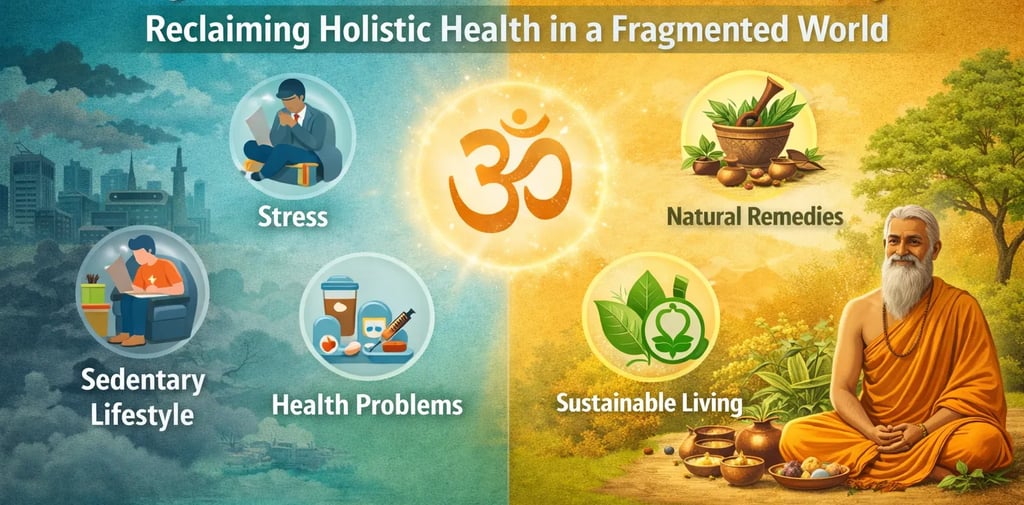
In an era defined by the relentless pace of modern life, the beeping of hospital monitors, the silent struggle against chronic stress, and the looming shadow of ecological crisis, humanity finds itself at a critical crossroads. We have achieved breathtaking feats in technology and acute care, yet we are witnessing a parallel pandemic of lifestyle diseases, mental health disorders, and a profound sense of disconnection from our own bodies and the natural world. It is in this context of searching for sustainable, holistic, and personalised solutions that an ancient wisdom is experiencing a remarkable global renaissance: Ayurveda.
Far more than a system of medicine, Ayurveda is a comprehensive philosophy of living—a veritable boon to humanity that offers a timeless roadmap to balance, vitality, and harmony. This blog delves deep into the heart of this "Science of Life," exploring its profound philosophical roots, its practical applications for modern living, its alignment with global health goals, and its potential to heal not just the individual, but the planet itself.
Part I: The Eternal Foundation - Understanding the "Science of Life"
To truly appreciate Ayurveda as a boon, one must first understand its foundational principles. It is not a collection of folk remedies but a sophisticated, codified scientific tradition with roots stretching back over 5,000 years.
1. Origins and the Philosophical Tapestry
The term Ayurveda is derived from the Sanskrit words Ayuḥ (आयुः), meaning "life" or "longevity," and Veda (वेद), meaning "knowledge" or "science." Thus, it is literally the "Knowledge of Life." This knowledge is believed to have been revealed to the ancient sages (rishis) deep in meditation, who perceived the universal laws of nature and their application to human well-being. It is considered an Upaveda (subsidiary) of the Atharva Veda, one of the four ancient sacred texts of India, dating back to at least 1200–900 BCE.
Ayurveda's philosophical underpinnings are richly drawn from the Samkhya school of thought, one of the six principal philosophical systems of India. Samkhya provides a metaphysical map of creation, distinguishing between Purusha (pure consciousness, the unchanging witness) and Prakriti (primordial matter, the dynamic and ever-changing source of the manifest universe). From the interplay of these two arises all of creation—a concept that forms the bedrock of Ayurveda's understanding of health and disease.
2. The Building Blocks of Existence: The Panchamahabhuta
At the core of Ayurvedic cosmology lies the theory of the Panchamahabhuta—the five great elements. These are not elements in the chemical sense but rather states of matter and energy, each with specific qualities:
Akasha (Ether/Space): The subtlest element, representing emptiness, void, and the container for all else. It is associated with sound and the quality of lightness.
Vayu (Air): The element of movement, dynamism, and dryness. It governs all motion in the universe and in the body, from nerve impulses to the flow of breath.
Agni (Fire): The element of transformation, heat, and light. It governs digestion, metabolism, and intellectual comprehension.
Jala (Water): The element of cohesion, fluidity, and stability. It is responsible for binding things together, from cellular structures to emotional bonds.
Prithvi (Earth): The element of solidity, structure, and mass. It gives form to all things, from bones and teeth to the physical body itself.
These five elements are not separate but are interwoven in all matter, combining in infinite permutations to create the universe. The human body, as a microcosm of the universe (Loka-Purusha Samya), is also composed of these elements.
3. The Dynamic Forces of Physiology: The Tridosha Theory
The Panchamahabhuta manifest in the living body as three fundamental biological humours or energies known as the Tridosha. These are the physiological principles that govern all mental and physical processes.
Vata Dosha (composed of Ether and Air): Vata is the principle of movement. It controls breathing, blinking, muscle and tissue movement, heartbeat, and all communication in the mind and nervous system. Its qualities are light, cold, dry, rough, mobile, and subtle. When balanced, Vata fosters creativity, enthusiasm, and mental clarity. When imbalanced, it can lead to fear, anxiety, constipation, dry skin, and insomnia.
Pitta Dosha (composed of Fire and Water): Pitta is the principle of transformation and metabolism. It governs digestion, absorption, assimilation, body temperature, and intellectual understanding. Its qualities are hot, sharp, light, oily, and liquid. Balanced Pitta results in intelligence, courage, and a strong digestive fire. Imbalanced Pitta manifests as anger, irritability, inflammation, heartburn, and skin rashes.
Kapha Dosha (composed of Water and Earth): Kapha is the principle of structure and lubrication. It provides physical form, stability, and cohesion. It forms the body's bulk, lubricates joints, and maintains immunity. Its qualities are heavy, slow, cold, oily, smooth, and dense. Balanced Kapha fosters love, forgiveness, strength, and stamina. Imbalance leads to attachment, greed, weight gain, congestion, and lethargy.
Every individual is born with a unique combination of these three doshas—their own blueprint for optimal health—known as Prakriti (constitution). This Prakriti determines our physical characteristics, our mental and emotional tendencies, and our predisposition to certain imbalances. Health, in Ayurveda, is defined as the dynamic state of equilibrium (Swasthya) of these three doshas, along with balanced digestion (Agni), proper formation of tissues (Dhatus), efficient elimination of wastes (Malas), and a state of spiritual, mental, and sensory bliss (Prasanna Atma, Indriya, Manah).
4. The Two Great Goals: Preservation and Cure
The entire purpose of Ayurveda is encapsulated in its two primary objectives:
Swasthasya Swasthya Rakshanam: To protect and preserve the health of a healthy person. This is the preventive and promotive aspect, emphasising lifestyle and diet to maintain equilibrium.
Aturasya Vikara Prashamanam: To manage and alleviate the disease of an ailing person. This is the curative aspect, which involves restoring balance through various therapies and medicines.
This dual focus makes Ayurveda uniquely powerful. It does not wait for disease to strike; it provides the tools to build a fortress of well-being from the ground up.
Part II: The Boon in Practice - Ayurveda for Modern Maladies
The true genius of Ayurveda lies in its timeless applicability. While its principles are ancient, its solutions are profoundly relevant to the unique challenges of the twenty-first century.
1. Personalised Preventive Healthcare: The Path of Dinacharya and Ritucharya
In a world of one-size-fits-all medical guidelines, Ayurveda offers a refreshing alternative: personalisation. It recognises that what is food for one person can be poison for another, based on their unique Prakriti. This is the foundation of its preventive strategies.
Dinacharya (Daily Routine) is a set of self-care practices designed to align the body's rhythms with the natural cycles of the day. This includes:
Waking up during Brahma Muhurta (approximately one and a half hours before sunrise) when the mind is most clear and receptive for meditation or reflection.
Scraping the tongue to remove the toxins (Ama) that have accumulated overnight.
Drinking a glass of warm water to flush the digestive tract and stimulate Agni.
Performing self-massage (Abhyanga) with warm, dosha-appropriate oil to nourish the skin, calm the nervous system, and improve circulation.
Engaging in yoga and pranayama (breathing exercises) to balance the body and mind.
Eating the largest meal at noon, when the digestive fire (Pitta) is at its peak.
Ritucharya (Seasonal Routine) provides guidelines for adjusting diet and lifestyle to harmonise with the changing seasons. For example, the dry, cool, and rough qualities of Vata dominate in the fall, so one is advised to eat warm, grounding, and oily foods like soups and stews to stay balanced. In the hot summer (Pitta season), cooling foods like sweet fruits, cucumbers, and coconut water are recommended.
By following these personalised, rhythm-based routines, individuals can prevent the accumulation of imbalances that lead to disease, effectively building a robust immune system and a resilient mind.
2. A Rational Approach to Nutrition: Food as Medicine
Ayurveda elevates nutrition from a matter of calories and macronutrients to a profound therapeutic tool. The focus is not just on what one eats, but how, when, and in what combination.
Key principles of the Ayurvedic diet include:
Eating According to Your Dosha: A Vata-pacifying diet emphasises warm, cooked, oily, and grounding foods. A Pitta-pacifying diet favours cool, liquid, and less spicy foods. A Kapha-pacifying diet focuses on light, warm, dry, and pungent foods to counter its heavy and slow nature.
The Primacy of Agni (Digestive Fire): All health hinges on strong digestion. If Agni is weak, even the healthiest food can turn into Ama (toxic metabolic waste), which is the root cause of most diseases. Therefore, Ayurveda recommends eating only when one is truly hungry, avoiding overeating, and sipping warm ginger tea throughout the day to stoke the digestive fire.
Mindful Eating: Eating in a calm environment, without distractions like phones or television, chewing food thoroughly, and eating with gratitude are considered essential for optimal digestion and assimilation.
Spices as Medicine: The Ayurvedic kitchen is a pharmacy. Everyday spices like turmeric (anti-inflammatory), cumin (digestive), coriander (cooling), fennel (soothing), and ginger (stimulating) are used both for flavour and for their potent therapeutic properties.
3. The Curative Powerhouse: Panchakarma and Rejuvenation
When disease does occur—due to prolonged imbalance or unhealthy lifestyle—Ayurveda offers powerful curative and purification therapies, the most renowned of which is Panchakarma. Meaning "five actions," Panchakarma is a profound detoxification and rejuvenation protocol designed to eliminate deep-seated Ama and restore systemic balance.
Panchakarma is not a simple massage; it is a carefully supervised, multi-step process that includes:
Poorva Karma (Preparation): This involves internal and external oleation (Snehana) to loosen toxins from tissues, followed by fomentation therapy (Swedana), usually in the form of steam, to liquefy the toxins and move them into the gastrointestinal tract.
Pradhana Karma (Main Procedures): The five main eliminatory procedures are:
Vamana (therapeutic emesis): For expelling excess Kapha from the stomach and respiratory tract.
Virechana (purgation): For cleansing excess Pitta from the small intestine.
Basti (medicated enema): Considered the most powerful treatment for Vata disorders, it uses decoctions and oils to cleanse the colon.
Nasya (nasal administration): For cleansing and nourishing the head and neck region.
Rakta Mokshana (bloodletting): A specialised procedure for purifying the blood, rarely used today in its traditional form.
Paschat Karma (Post-Procedure): This is a crucial period of dietary and lifestyle regulations to allow the body to rebuild and consolidate the benefits of the cleanse. This is also the time for Rasayana (rejuvenation) therapies, which include the use of special herbal formulations to promote longevity, immunity, and cellular regeneration.
People who undergo authentic Panchakarma often report not just physical lightness, but also mental clarity, emotional release, and a profound sense of renewal—a true reset for the entire system.
Part III: Scientific Validation and Global Recognition - The Boon Goes Global
For decades, Ayurveda was often dismissed by the Western scientific community as mere folklore. However, a paradigm shift is underway. As modern science grapples with the limitations of reductionist models, it is beginning to validate the holistic wisdom of Ayurveda.
1. The Rise of Evidence-Based Ayurveda
A growing body of research is now providing scientific evidence for the efficacy of Ayurvedic principles and therapies. This is happening on multiple fronts:
Ayurgenomics: This emerging field seeks to bridge the gap between Prakriti and genomics. Studies have shown that individuals of different Prakriti types have demonstrable differences in gene expression, particularly those related to metabolism, circulation, and immune response. This provides a molecular basis for personalised Ayurvedic medicine and offers a powerful framework for predictive and preventive healthcare.
Pharmacological Validation: The active compounds in many Ayurvedic herbs are being extensively studied. Curcumin in turmeric is now a globally recognised anti-inflammatory agent. Withaferin A in Ashwagandha is being investigated for its adaptogenic and neuroprotective properties. Bacosides in Brahmi have shown promise in enhancing cognitive function.
Reverse Pharmacology: This innovative approach, championed in India, takes a traditionally used, safe herbal formulation and studies it rigorously using modern scientific methods to understand its mechanism of action, validate its efficacy, and potentially develop it into a standardised, evidence-based drug.
2. The Co.M.S. Framework: A New Paradigm for Integration
A groundbreaking development in this field is the Collaborative Medicine and Science (Co.M.S.) framework. This model proposes a true epistemological integration, moving beyond simply trying to prove Ayurveda with biomedical tools. Instead, it suggests using Ayurveda's own holistic principles—the Panchamahabhuta, Tridosha, and Guna (qualities)—as a lens to understand modern medicine itself.
For example, researchers are now exploring how the properties of a modern antibiotic or antihypertensive drug can be interpreted through the Ayurvedic framework of Guna (e.g., is it heating or cooling? heavy or light?) and its subsequent effect on the Tridosha. This approach could help predict inter-individual variability in drug response, optimise prescription practices, and reduce side effects, offering a more personalised and comprehensive understanding of pharmacology.
3. Alignment with Global Health Goals
The strategic importance of Ayurveda is now being recognised at the highest levels of global health governance. The World Health Organisation (WHO) has established its first and only Global Centre for Traditional Medicine (GCTM) in Jamnagar, India, acknowledging the need to integrate evidence-based traditional medicine into modern health systems.
Ayurveda's core principles align perfectly with several UN Sustainable Development Goals (SDGs), particularly SDG-3: Good Health and Well-being.
Maternal and Child Health: The detailed protocols for Garbhini Paricharya (antenatal care) and Sutika Paricharya (postnatal care) offer a holistic approach to ensuring the health of both mother and child, addressing not just physical but also mental and emotional well-being.
Combating Communicable and Non-Communicable Diseases: Ayurveda's focus on strengthening immunity (Vyadhikshamatva) and addressing root causes makes it a powerful ally in managing lifestyle disorders like diabetes, hypertension, and autoimmune conditions. Its concepts of Janapadodwamsa (epidemiology) also demonstrate an ancient understanding of communicable disease spread.
Universal Health Coverage (UHC): By focusing on prevention and lifestyle management, Ayurveda offers a cost-effective and accessible pathway to health, reducing the burden on overstretched, disease-centric healthcare systems.
The 2025 National Ayurveda Day theme, "Ayurveda for People & Planet," perfectly encapsulates this expanded vision. It positions Ayurveda not just as a healer of individuals, but as a framework for planetary health, emphasising ecological balance, sustainable sourcing of herbs, and a deep respect for biodiversity—a concept that mirrors the modern "One Health" approach, which recognises the interconnectedness of human, animal, and environmental health.
Part IV: Challenges, Ethics, and the Path Forward
Despite its immense potential, Ayurveda's journey to becoming a mainstream global health system is not without its challenges. Navigating these thoughtfully is crucial to preserving its integrity while expanding its reach.
1. Standardisation, Regulation, and Safety
For Ayurveda to be globally accepted, it must meet modern standards of safety and efficacy. This requires:
Pharmacopoeial Standards: Establishing and enforcing rigorous quality control measures for raw herbs and finished products to ensure they are free from heavy metals, pesticides, and microbial contamination.
Clinical Trials: Encouraging high-quality, rigorous clinical trials for Ayurvedic treatments, using methodologies that can respect the holistic and individualised nature of the therapy (such as whole-system research or N-of-1 trials).
Regulatory Harmonisation: Working with international regulatory bodies to create a clear and consistent framework for the registration and practice of Ayurvedic products and practitioners worldwide.
2. Preserving Epistemological Integrity
One of the greatest risks of globalisation is the dilution or commodification of Ayurveda. Reducing it to a list of herbs or a "wellness massage" strips it of its philosophical core. The challenge is to foster epistemological bridging—creating a dialogue between the qualitative, systemic logic of Ayurveda and the quantitative, reductionist logic of biomedicine. This requires interdisciplinary education, where Ayurvedic scholars and modern scientists learn to communicate and collaborate as equals, respecting the strengths of each system.
3. Cultural Sensitivity and Protection of Traditional Knowledge
As the world embraces Ayurveda, it is imperative to protect the rights of the communities and lineages that have preserved this knowledge for millennia. This involves:
Preventing Biopiracy: Ensuring that patents are not granted for traditional knowledge that is already in the public domain. India's Traditional Knowledge Digital Library (TKDL) is a pioneering effort in this regard, documenting ancient formulations in a digitised format accessible to patent offices worldwide.
Equitable Benefit Sharing: If an Ayurvedic herb or formulation is commercialised globally, mechanisms must be in place to ensure that the local communities and traditional custodians who provided that knowledge share in the benefits.
Ethical Practice: Promoting authentic, well-trained practitioners and discouraging the superficial or culturally inappropriate use of Ayurvedic symbols and therapies.
Conclusion: Embracing the Boon
Ayurveda is, without a doubt, a profound boon to humanity. It arrives at a time when we are desperately seeking alternatives to a healthcare model that is often reactive, fragmented, and impersonal. It offers us a lens to see ourselves not as a collection of symptoms to be managed, but as a vibrant, interconnected ecosystem of body, mind, and spirit, inseparably linked to the world around us.
Its boon is multi-faceted:
It is a boon for the individual, offering a personalised path to lasting vitality, self-awareness, and peace through simple daily practices and a deep understanding of one's own unique nature.
It is a boon for the healer, providing a sophisticated, time-tested framework for understanding the root causes of disease and guiding patients back to wholeness.
It is a boon for the global community, presenting a cost-effective, preventive, and sustainable model for public health that aligns with our most urgent international goals.
It is a boon for the planet, reminding us of our sacred interconnectedness with nature and the importance of living in harmony with its rhythms.
The global ascent of Ayurveda is not about replacing modern medicine. It is about integration. It is about creating a more complete, compassionate, and effective paradigm of healthcare—one that has the wisdom to use a scalpel when needed, and the foresight to prescribe a cup of warm spiced milk and an early bedtime to prevent the need for one.
As we move forward, the responsibility lies with all of us—practitioners, researchers, policymakers, and individuals—to engage with Ayurveda with respect, curiosity, and integrity. We must protect its roots while allowing its branches to spread, ensuring that this ancient "Knowledge of Life" continues to blossom and offer its timeless wisdom for generations to come. The invitation is open. The wisdom is waiting. It is time for humanity to fully embrace this precious boon.