
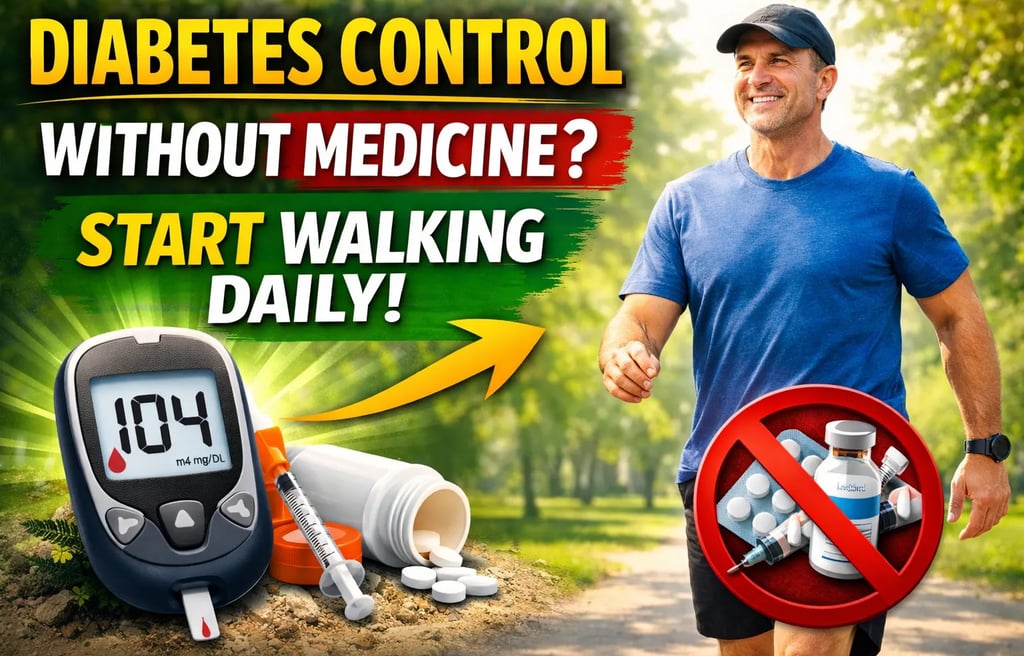
Diabetes Control Without Medicine? Start Walking Daily
Imagine receiving a prescription that costs nothing, has no side effects, fits seamlessly into your daily routine, and is backed by decades of rigorous scientific research. Imagine being told that by simply putting one foot in front of the other—an activity you have been doing since childhood—you could significantly lower your blood sugar, reduce your medication dependence, and transform your metabolic health.
ASF
3/7/202619 min read
Imagine receiving a prescription that costs nothing, has no side effects, fits seamlessly into your daily routine, and is backed by decades of rigorous scientific research. Imagine being told that by simply putting one foot in front of the other—an activity you have been doing since childhood—you could significantly lower your blood sugar, reduce your medication dependence, and transform your metabolic health.
This is not a fantasy. This is the power of walking.
Across India, in bustling cities and quiet villages, a quiet revolution is underway. People with diabetes are discovering what researchers have known for decades: that walking is perhaps the most underutilized, cost-effective, and accessible tool for diabetes management. A 2024 randomized trial from Pune demonstrated that structured walking programs can reduce fasting blood glucose by 12% to 15.5% in just six weeks . A meta-analysis of multiple studies found that regular walking lowers fasting blood sugar by an average of 12.37 mg/dL and HbA1c by 0.35% compared to sedentary controls .
These numbers are not just statistics—they represent real people reducing their medication doses, avoiding complications, and reclaiming their health. They represent the possibility that for many individuals with type 2 diabetes, significant control—and sometimes even remission—can be achieved without adding another pill to an already overflowing medicine cabinet.
This comprehensive guide explores the science, the evidence, and the practical strategies for using walking as a cornerstone of diabetes management. We will examine what Indian research reveals about walking's effects on blood sugar, how to structure your walks for maximum benefit, the precautions you must take, and how walking can be combined with other lifestyle interventions. By the end, you will understand why walking daily is not just good advice—it is one of the most powerful tools in your diabetes management arsenal.
1. The Million-Dollar Question: Can You Really Control Diabetes Without Medicine?
1.1 Understanding the Question
The question "Can diabetes be controlled without medicine?" is one of the most common—and most misunderstood—queries in diabetes care. The answer, like many things in medicine, is nuanced.
For individuals with type 1 diabetes, the answer is unequivocally no. Their bodies produce no insulin, and without exogenous insulin, they cannot survive. Lifestyle interventions are important adjuncts, but they cannot replace insulin therapy.
For individuals with type 2 diabetes, the picture is different. Type 2 diabetes is characterized by insulin resistance—cells that have stopped responding adequately to insulin. Lifestyle interventions, including walking, directly address this root cause. By improving insulin sensitivity, promoting weight loss, and enhancing glucose uptake by muscles, walking can sometimes achieve glycemic control comparable to medications.
1.2 The Spectrum of Possibilities
What "control without medicine" looks like varies along a spectrum:
- Complete remission: Maintaining normal blood glucose (HbA1c below 6.5%) for at least three months without any glucose-lowering medication . This is achievable for some, particularly those with recent-onset diabetes who achieve significant weight loss.
- Medication reduction: Many individuals can reduce their medication doses while maintaining good control. A study from Thanjavur found that physically active diabetic subjects achieved fasting glucose levels near normal (94-120 mg/dL) compared to 139-148 mg/dL in sedentary diabetics .
- Delayed progression: For those with prediabetes, regular walking can prevent or delay progression to diabetes by 58% , according to landmark studies.
- Enhanced medication effectiveness: Even when medications are still needed, walking makes them work better by improving the body's sensitivity to insulin.
1.3 The Indian Research Context
A 2024 randomized trial conducted in Pune provides compelling evidence . Researchers divided 45 individuals with type 2 diabetes into three groups:
- Single walking (SW): One 30-minute brisk walk, 3 days/week
- Accumulated walking (AW): Three 10-minute brisk walks, 3 days/week
- Conventional walking (CW): Unstructured walking advice (control)
After just six weeks, the results were remarkable:
- Fasting blood glucose reduction: 12% in the single walking group, 15.5% in the accumulated walking group
- Aerobic capacity improvement: 21.3% in SW, 21% in AW (compared to a 9.5% decline in controls)
- Fatigue reduction: 4.5% in SW, 4.8% in AW
- Quality of life improvement: 2.3% in SW, 4.3% in AW
The control group, given unstructured walking advice, actually saw their blood glucose increase by 2.5% and their aerobic capacity decline. This crucial finding demonstrates that how you walk matters as much as that you walk.
2. The Science: How Walking Lowers Blood Sugar
Understanding the biological mechanisms behind walking's benefits transforms it from a vague "healthy activity" into a precise therapeutic intervention.
2.1 Immediate Effects: Glucose Uptake Without Insulin
When you walk, your muscles contract. This contraction triggers a cascade of events that allow glucose to enter muscle cells without requiring insulin . Dr. Manisha Arora, director of internal medicine at CK Birla Hospital, Delhi, explains: "Walking increases glucose uptake in the muscles, thereby helping to lower blood sugar levels. Walking also improves insulin signaling pathways, which means it allows glucose to enter cells more efficiently" .
This insulin-independent pathway is crucial because it bypasses the very defect that characterizes type 2 diabetes—insulin resistance. Even if your cells are deaf to insulin's signal, they can still respond to the mechanical signal of muscle contraction.
2.2 Short-Term Effects: Depleting and Replenishing Muscle Glycogen
Muscles store glucose as glycogen for future energy needs. During walking, especially at moderate intensity, muscles tap into these glycogen stores. After exercise, for up to 24-48 hours, muscles become "sponges" for glucose, actively pulling it from the bloodstream to replenish their depleted stores . This post-exercise period is characterized by significantly improved insulin sensitivity.
2.3 Long-Term Effects: Metabolic Adaptation
Over weeks and months of consistent walking, more profound changes occur:
Increased mitochondrial density: Walking stimulates the production of mitochondria—the energy factories within cells. More mitochondria mean greater capacity to burn glucose and fat.
Enhanced enzyme activity: Walking upregulates the enzymes involved in glucose metabolism, making the entire system more efficient.
Reduced inflammation: Regular walking reduces chronic low-grade inflammation, which is a key driver of insulin resistance.
Improved body composition: Walking, particularly when combined with dietary changes, reduces visceral fat—the dangerous fat around internal organs that drives insulin resistance . The Emory University research on South Asians found that substituting 30 minutes of walking for 30 minutes of sitting was associated with 0.08 kg/m² lower BMI and 0.25 cm lower waist circumference .
HbA1c reduction: Over time, these cumulative effects translate into measurable improvements in HbA1c, the three-month average of blood sugar. Studies show that consistent walking can lower HbA1c by 0.5% to 1% , a reduction comparable to some oral medications .
2.4 The South Asian Perspective
Research specifically on South Asian populations reveals important nuances. The Emory study of 6,991 participants from India and Pakistan found that substituting sitting time with walking produced modest but favorable improvements in cardiovascular risk factors . This is particularly relevant because South Asians have a unique phenotype—higher insulin resistance, greater visceral fat, and lower muscle mass at any given BMI compared to Europeans . Walking directly addresses these vulnerabilities by improving insulin sensitivity and reducing visceral fat.
3. What the Research Says: Evidence from Indian Studies
3.1 The Pune Walking Trial (2024)
This rigorously designed randomized trial from Sancheti Institute in Pune provides the most recent and detailed evidence on walking protocols in Indian diabetics . Key findings:
- Population: 42 adults aged 55-65 years with type 2 diabetes of 1-10 years duration, on oral medications, with fair glycemic control (HbA1c <7%)
- Intervention duration: 6 weeks
- Key outcomes:
- Fasting blood glucose reduction: 12-15.5%
- Six-minute walk distance improvement: 21-21.3%
- Fatigue reduction: 4.5-4.8%
- Quality of life improvement: 2.3-4.3%
Critical insight: The accumulated walking group (three 10-minute walks) achieved results comparable to the single 30-minute walk group, and both structured walking groups significantly outperformed the unstructured control group.
3.2 The Thanjavur Study (2012)
This study from Tamil Nadu examined the effects of walking on glycemic markers across different age groups . Key findings:
- Population: Male diabetic subjects aged 35-65 years
- Intervention: Walking at least 30 minutes daily or every other day
- Results:
- Young diabetics (35-45 years): Fasting glucose reduced from 139 mg/dL (sedentary) to 94 mg/dL (active)
- Middle-aged diabetics (46-55 years): Reduced from 147 mg/dL to 109 mg/dL
- Older diabetics (56-65 years): Reduced from 149 mg/dL to 120 mg/dL
- HbA1c reductions of 1.8-2.2% across age groups
- BMI reductions of approximately 2 kg/m²
The study also demonstrated significant correlations between fasting glucose, HbA1c, and BMI, confirming the interconnectedness of these metabolic markers.
3.3 The Meta-Analysis (2023)
A systematic review and meta-analysis of 16 randomized controlled trials, including Indian studies, quantified walking's effects . Key findings:
- Fasting blood glucose reduction: 12.37 mg/dL compared to sedentary controls
- HbA1c reduction: 0.35% compared to sedentary controls
- Note: Yoga showed even larger effects (32 mg/dL FBG reduction, 0.73% HbA1c reduction), suggesting potential benefits of combining practices
3.4 The Assam Pilot Study (2025)
A pilot study from rural Assam evaluated yoga, walking, and combined interventions over three months . Key findings:
- Both yoga and walking produced significant reductions in fasting blood sugar
- Postprandial (after-meal) blood sugar improved significantly only in the yoga group
- All intervention groups showed meaningful HbA1c reductions
- The combined yoga-and-walking group showed the largest overall glycemic improvement
This study reinforces that while walking alone is powerful, combining it with other practices like yoga may offer additional benefits.
3.5 Expert Consensus on Walking Pace
A 2025 article in The Indian Express synthesized expert opinions on walking for diabetes . Key takeaways:
- Walking at 4 km/hr or above significantly reduces diabetes risk
- Brisk walking lowers blood sugar by 15-20 mg/dL per session
- The "talk test" is a simple guide: walk at a pace where you can still talk but cannot sing
- Gradually increasing pace over time maximizes benefits
4. How to Walk for Diabetes Control: The Complete Protocol
The research is clear: not all walking is equal. To achieve the metabolic benefits described above, your walking must be structured, consistent, and progressive.
4.1 How Much: The 150-Minute Target
International guidelines and Indian experts recommend at least 150 minutes of moderate-intensity aerobic activity per week . This translates to:
- 30-45 minutes daily on most days of the week, OR
- 30 minutes daily on 5 days per week, OR
- Three 10-minute walks daily (the accumulated walking approach proven effective in the Pune trial)
For those just starting, begin with whatever you can manage—even 10 minutes daily—and gradually increase.
4.2 How Fast: The Intensity Question
The Pune trial used a specific intensity target: a rate of perceived exertion (RPE) of 5 to 6 on a scale where 10 is maximum effort . In practical terms, this means:
- Your breathing is slightly hard
- You can still hold a conversation, but you cannot sing
- You feel your heart rate increasing
- You might break a light sweat after 10-15 minutes
The "talk test" is simple and reliable. If you can talk comfortably while walking, you need to pick up the pace. If you are gasping for breath, you are going too fast.
4.3 When to Walk: Timing Matters
Research suggests that the timing of your walk can influence its glucose-lowering effects.
Post-meal walks: Walking immediately after meals—particularly dinner—can blunt the sharp rise in blood sugar that often follows eating. Dr. Rajiv Kovil notes that "a post-meal walk is often better for sugar control" . Even a 15-20 minute walk after meals can make a noticeable difference .
Morning walks: For some, morning walks before breakfast may enhance fat burning and set a positive metabolic tone for the day.
The best time? The time that ensures consistency. The best walk is the one you actually do.
4.4 Structured vs. Unstructured: The Pune Lesson
The Pune trial's most important finding may be that unstructured walking advice is ineffective . The control group, told simply to walk 30 minutes on alternate days without structure or monitoring, actually saw their blood glucose increase by 2.5% and their aerobic capacity decline by 9.5% .
To achieve results, you need:
- A specific plan (duration, frequency, intensity)
- A method to track your progress (log, app, pedometer)
- Accountability (weekly check-ins, walking partner, supervised sessions when possible)
4.5 The Accumulated Walking Advantage
The Pune trial demonstrated that three 10-minute walks (accumulated walking) were just as effective as one 30-minute walk for glucose control, and superior to unstructured walking for aerobic capacity and quality of life .
This is excellent news for those with busy schedules, joint pain, or limited endurance. You can accumulate your walking throughout the day:
- 10-minute brisk walk before work
- 10-minute walk during lunch break
- 10-minute walk after dinner
The total benefit equals a single 30-minute session.
4.6 Progressive Overload: Getting Better Over Time
To continue seeing improvements, you must gradually increase the challenge. This principle, known as progressive overload, applies to walking as much as to gym workouts.
- Week 1-2: Walk at a comfortable pace for 20 minutes daily
- Week 3-4: Increase to 30 minutes daily
- Week 5-6: Increase pace (aim for the talk test threshold)
- Week 7-8: Add intervals—2 minutes faster walking alternating with 2 minutes moderate pace
- Week 9-10: Incorporate hills or inclined paths
- Week 11-12: Consider adding resistance exercises or yoga on alternate days
5. Practical Guide for Indian Conditions
5.1 Walking in Urban India
City dwellers face unique challenges—traffic, pollution, lack of green space. Creative solutions include:
- Early morning walks: Before traffic peaks and pollution accumulates
- Residential complexes: Utilize internal roads or terraces
- Nearby parks: Identify the closest green space and make it your regular route
- Shopping malls: Many open early for walkers; air-conditioned and safe
- Treadmill at home: If feasible, a worthwhile investment for consistent, pollution-free walking
5.2 Walking in Rural and Semi-Urban Areas
Rural dwellers often have more space but may lack designated walking paths. Options include:
- Farm roads: Level, unpaved paths through agricultural land
- Early morning village walks: Before daily activities begin
- Community groups: Organize walking groups with neighbors for safety and motivation
- Temple premises: Many have open spaces suitable for walking
5.3 Footwear: The Non-Negotiable Essential
Proper footwear is essential for preventing injuries and ensuring comfort.
What to look for:
- Cushioning: Adequate padding to absorb shock
- Arch support: Especially important if you have flat feet or high arches
- Fit: Half to one size larger than dress shoes to accommodate foot swelling
- Breathability: Mesh uppers allow air circulation
- Replace regularly: Every 500-800 km or 6-12 months
Where to buy: Reputable sports stores in cities, or order online with good return policies. For rural areas, when visiting town, prioritize purchasing good walking shoes.
5.4 Clothing Considerations
- Light, breathable fabrics: Cotton is fine for short walks; technical fabrics wick sweat better for longer walks
- Light colors: Reflect sunlight in hot weather
- Layered dressing: For early morning walks that warm up as the sun rises
- Sun protection: Cap, sunglasses, sunscreen on exposed skin
5.5 Hydration and Nutrition
- Pre-walk: Drink 1-2 glasses of water 30 minutes before walking
- During walk: Carry water for walks exceeding 30 minutes, especially in hot weather
- Post-walk: Rehydrate; have a small snack if blood sugar is low or if you take insulin
- Timing: Avoid walking immediately after a heavy meal; wait 1-2 hours
5.6 Weather Adaptations
Summer:
- Walk early morning (before 8 AM) or evening (after 5 PM)
- Carry water
- Wear light, loose clothing
- Watch for signs of heat exhaustion: dizziness, nausea, headache
Monsoon:
- Walk when rain stops; avoid walking in heavy rain (slippery surfaces, lightning risk)
- Waterproof shoes or sandals with good grip
- Umbrella or rain jacket
- Indoor alternatives: climb stairs, walk in covered areas, treadmill
Winter:
- Layered clothing that can be removed as you warm up
- Visible clothing if walking in early morning darkness
- Warm-up indoors before stepping out
6. Safety First: Precautions for People with Diabetes
6.1 Pre-Exercise Medical Evaluation
Before starting any exercise program, consult your doctor. This is especially important if:
- You have been inactive for a long time
- You have complications of diabetes (neuropathy, retinopathy, kidney disease)
- You have heart disease or risk factors
- You take insulin or medications that can cause hypoglycemia
Your doctor may recommend tests to ensure exercise is safe for you.
6.2 Blood Glucose Monitoring
The OneTouch India guidelines provide clear recommendations :
- Check before exercise: If blood glucose is less than 100 mg/dL, have a small carbohydrate snack before starting
- Check during exercise: If you feel symptoms of hypoglycemia (shaking, sweating, confusion)
- Check after exercise: To understand how your body responds and to detect delayed hypoglycemia
6.3 Hypoglycemia Prevention and Management
Hypoglycemia (low blood sugar) is the most common risk of exercise for those on insulin or sulfonylureas.
Prevention:
- Check blood glucose before walking
- If below 100 mg/dL, have 15g carbohydrate (half glass juice, 1 small fruit, 3-4 glucose tablets)
- Carry fast-acting carbohydrates during walks
- Consider reducing medication doses on exercise days (discuss with doctor)
Treatment:
- If hypoglycemia occurs during or after walking, stop immediately
- Consume 15g fast-acting carbohydrate
- Wait 15 minutes, recheck blood glucose
- Repeat if still low
- Once recovered, have a small snack if next meal is more than an hour away
Symptoms to recognize:
- Shakiness, trembling
- Sweating
- Rapid heartbeat
- Hunger
- Confusion, difficulty concentrating
- Irritability
6.4 Foot Care: The Critical Priority
Diabetes can cause peripheral neuropathy (loss of sensation) and poor circulation, making foot injuries particularly dangerous.
Before walking:
- Inspect feet for cuts, blisters, redness, or swelling
- Wear properly fitted shoes and clean, seamless socks
- Apply moisturizer to dry areas, but not between toes
After walking:
- Inspect feet again
- Wash feet with lukewarm water, dry thoroughly (especially between toes)
- Report any new sores or blisters to your doctor immediately
Signs to stop and seek help:
- Foot pain during walking
- Blisters or sores that do not heal
- Redness, warmth, or swelling
- Loss of sensation or tingling that worsens
6.5 Other Precautions
- Warm-up and cool-down: 3-5 minutes of slow walking before and after brisk walking
- Avoid walking in extreme temperatures: Heat increases hypoglycemia risk; cold can strain the heart
- Stay visible: Wear light-colored or reflective clothing if walking in low light
- Carry identification: Diabetes identification card or medical alert bracelet
- Walk with a partner: Especially in isolated areas or early mornings
- Know when to stop: Chest pain, severe shortness of breath, dizziness, or leg cramps warrant immediate cessation and medical attention
7. Realistic Expectations: What Walking Can and Cannot Do
7.1 What Walking Can Achieve
Based on the evidence, regular structured walking can:
- Lower fasting blood glucose by 12-15% in 6 weeks
- Reduce HbA1c by 0.35-1.0% over 3-6 months
- Improve insulin sensitivity significantly
- Reduce medication needs for many individuals
- Aid weight loss particularly when combined with dietary changes
- Reduce visceral fat (the dangerous abdominal fat)
- Improve cardiovascular fitness (aerobic capacity improved 21% in the Pune trial)
- Reduce fatigue and improve energy levels
- Enhance quality of life and mental well-being
- Reduce complications risk over the long term
7.2 What Walking Cannot Do
It is equally important to understand walking's limitations:
- Cannot replace insulin in type 1 diabetes: Lifestyle is adjunctive, not替代
- May not be sufficient alone for advanced diabetes: Those with long duration, poor control, or complications often require medication
- Cannot overcome a poor diet: Walking without dietary changes yields limited results
- Not a substitute for medical care: Regular check-ups, monitoring, and medication adjustments remain essential
- Cannot guarantee remission: While possible for some, remission is not achievable for all
7.3 The Medication Reduction Journey
For many, the goal is not eliminating all medication but reducing it.
Typical trajectory:
1. Start walking while continuing current medications
2. Blood sugar improves over weeks to months
3. Doctor adjusts medications based on improved readings
4. Medication doses may decrease or某些 drugs may be discontinued
5. Continued walking maintains improvements
This process requires close collaboration with your healthcare provider. Never reduce or stop medications on your own.
8. Combining Walking with Other Lifestyle Interventions
8.1 Walking and Yoga: A Powerful Combination
The meta-analysis from Kolkata found that yoga produced even larger glycemic improvements than walking alone . The Assam pilot study found that combined yoga and walking produced the greatest overall benefit .
Why combine them?
- Walking: Primarily cardiovascular, improves glucose uptake through muscle contraction
- Yoga: Reduces stress hormones (cortisol), improves flexibility, enhances mind-body awareness, may directly improve pancreatic function
A combined approach might include:
- Walking on 5-6 days per week
- Yoga on 3-4 days per week
- Or integrate both: 30 minutes walking + 20 minutes yoga daily
8.2 Walking and Diet: The Synergy
Walking and dietary changes work synergistically. Walking increases glucose uptake; dietary changes reduce glucose input. Together, they create a powerful metabolic correction.
Dietary principles to complement walking:
- Reduce refined carbohydrates (white rice, maida, sugar)
- Increase fiber (vegetables, whole grains, legumes)
- Adequate protein at each meal
- Portion control (the plate method: half vegetables, quarter protein, quarter carbs)
- Limit fried and processed foods
8.3 Walking and Strength Training
While walking is excellent, adding resistance training provides additional benefits:
- Builds muscle mass (muscle is metabolically active tissue)
- Further improves insulin sensitivity
- Enhances glucose storage capacity
Simple home-based resistance exercises:
- Squats
- Wall push-ups
- Lunges
- Resistance bands
- Lifting small weights
8.4 Walking and Stress Management
Chronic stress elevates cortisol, which directly increases blood glucose and promotes insulin resistance. Walking itself reduces stress, but combining it with formal stress management practices enhances benefits:
- Deep breathing exercises
- Meditation
- Pranayama
- Adequate sleep (7-8 hours)
9. Overcoming Common Barriers
9.1 "I Don't Have Time"
The accumulated walking approach solves this. Three 10-minute walks require only small pockets of time:
- 10 minutes before bath in morning
- 10 minutes during lunch break
- 10 minutes after dinner
This totals 30 minutes without requiring a single 30-minute block.
9.2 "I Have Joint Pain"
Walking is generally low-impact, but modifications help:
- Start with shorter durations (5-10 minutes)
- Walk on softer surfaces (grass, dirt paths rather than concrete)
- Wear well-cushioned shoes
- Consider aquatic walking if pools available
- Consult physiotherapist for appropriate modifications
9.3 "I Get Bored"
- Listen to music, podcasts, or audio books
- Walk with a friend or family member
- Vary your route
- Join a walking group
- Use a pedometer or app to track steps and set challenges
- Practice mindful walking—observe surroundings, focus on breath
9.4 "The Weather Is Too Hot/Cold/Wet"
Have indoor alternatives ready:
- Mall walking (in cities)
- Stair climbing (10 minutes of stairs is excellent exercise)
- Treadmill (if available)
- Indoor walking videos or apps
- Yoga or floor exercises as substitute
9.5 "I'm Too Old to Start"
It is never too late. The Pune trial included participants up to age 65 . Older adults may need to start more slowly and progress gradually, but they can achieve significant benefits:
- Improved glucose control
- Better balance and reduced fall risk
- Enhanced mobility and independence
- Improved mood and cognitive function
9.6 "Walking Doesn't Feel Like Enough"
If walking feels too easy, that is a sign to progress:
- Increase pace (brisk walking)
- Add intervals (faster bursts)
- Include hills or inclines
- Extend duration
- Add arm movements or light hand weights
- Consider transitioning to jogging if joints tolerate
10. Tracking Progress and Staying Motivated
10.1 What to Track
Clinical markers (with doctor):
- Fasting blood glucose (weekly)
- HbA1c (every 3-6 months)
- Weight and waist circumference (monthly)
- Blood pressure (regularly)
Activity markers:
- Steps per day (pedometer or phone app)
- Minutes walked per day
- Distance covered
- Perceived exertion (how hard you felt you worked)
- How you feel after walking (energy, mood)
10.2 Tools for Tracking
- Simple notebook: Record date, duration, how you felt
- Mobile apps: Many free apps track steps, distance, and provide motivation
- Pedometers or fitness bands: Affordable options available online or in stores
- WhatsApp groups: Share progress with walking partners for accountability
10.3 Setting Realistic Goals
- Short-term (weekly): Walk 5 out of 7 days this week
- Medium-term (monthly): Increase average daily steps by 10% from last month
- Long-term (3-6 months): Reduce HbA1c by 0.5-1%
Celebrate achieving these goals. Progress, not perfection, is the goal.
10.4 Building a Walking Habit
Research suggests it takes an average of 66 days to form a habit. Strategies to accelerate habit formation:
- Same time, same place: Consistency triggers automaticity
- Start small: Even 5-10 minutes daily builds momentum
- Link to existing habit: Walk after breakfast, after dinner, or during lunch break
- Prepare in advance: Keep walking shoes visible and ready
- Never miss twice: If you miss one day, ensure you walk the next
10.5 Finding Social Support
Walking with others increases adherence and enjoyment:
- Family members: Spouse, children, siblings
- Neighbors: Form a walking group
- Colleagues: Walk during lunch break
- Community groups: Many parks have informal walking groups
- Online communities: Facebook groups, WhatsApp groups for diabetics
11. Special Populations
11.1 Prediabetes: The Window of Opportunity
With 15.3% of Indian adults in the prediabetic stage, walking is arguably most powerful as prevention . The Apollo 24|7 blog emphasizes that brisk walking can help regulate blood sugar levels and prevent progression to diabetes .
For prediabetes, the walking prescription is similar:
- 30 minutes daily, 5 days per week
- Brisk pace (talk test threshold)
- Combined with dietary changes
- Aim for 5-7% weight loss if overweight
11.2 Gestational Diabetes
Women with gestational diabetes should consult their obstetrician before starting any exercise program. Walking is generally safe and beneficial during pregnancy, helping to control blood sugar and prepare for labor. Postpartum, continued walking reduces the risk of developing type 2 diabetes later in life.
11.3 Older Adults with Multiple Conditions
Older adults may have arthritis, heart disease, or other conditions requiring modified approaches:
- Shorter durations, slower progression
- Attention to balance and fall prevention
- Walking aids (walking stick, walker) if needed
- Supervised sessions initially
- Close medical supervision
11.4 Those with Established Complications
Neuropathy (nerve damage): Special foot care essential; may benefit from non-weight-bearing exercise if severe; consult podiatrist.
Retinopathy (eye damage): Avoid vigorous exercise if proliferative retinopathy; moderate walking usually safe with doctor's approval.
Nephropathy (kidney disease): Walking safe and beneficial; monitor blood pressure and hydration.
Cardiovascular disease: Walking is excellent cardiac rehabilitation; start with short durations under medical supervision; stop immediately for chest pain or shortness of breath.
12. Real Stories, Real Results
While maintaining patient privacy, research studies document the kinds of transformations possible.
A 62-year-old participant in the Pune trial, after six weeks of accumulated walking, saw her fasting glucose drop from 145 mg/dL to 122 mg/dL. She reported, "I have more energy to play with my grandchildren. I don't feel as tired in the afternoons anymore. My doctor said we might reduce my medication if I continue like this."
A 48-year-old man in the Thanjavur study, who had struggled with diabetes for five years, achieved near-normal fasting glucose (94 mg/dL) through regular walking combined with dietary changes. His HbA1c dropped from 7.8% to 5.9% over six months.
These stories represent countless Indians discovering that the power to improve their health lies literally at their feet.
13. Conclusion: Your Feet Are Your Best Medicine
The question "Can diabetes be controlled without medicine?" finds its most hopeful answer in the simple act of walking. While medication remains essential for many, the evidence is overwhelming: regular, structured walking can produce meaningful improvements in blood glucose, insulin sensitivity, cardiovascular fitness, and quality of life.
The Pune trial demonstrated that just six weeks of consistent walking can lower fasting glucose by 12-15% . The Thanjavur study showed that physically active diabetics achieve glucose levels approaching normal . The meta-analysis quantified walking's effect at a 12 mg/dL reduction in fasting glucose .
But walking is more than numbers on a report. It is reclaiming agency over your health. It is a daily practice of self-care that costs nothing, requires no special equipment, and fits into the rhythm of Indian life. It is something you can do alongside family, building health together.
The key takeaways are simple:
1. Structure matters: Unstructured walking advice doesn't work. Have a plan: 30 minutes daily, or three 10-minute walks, at a brisk pace where you can talk but not sing.
2. Consistency is everything: Six weeks of consistent walking produces measurable results. Make walking a non-negotiable part of your daily routine.
3. Safety first: Monitor blood glucose, protect your feet, carry fast-acting carbohydrates, and consult your doctor.
4. Combine and progress: Walking works even better with yoga, dietary changes, and strength training. Gradually increase your pace and duration.
5. Walking reduces medication needs: For many, consistent walking leads to lower medication doses. This must be done under medical supervision.
6. Start where you are: Whether you can walk 5 minutes or 50 minutes, start there and build gradually.
The journey to better diabetes control does not require expensive gym memberships, complicated equipment, or exotic interventions. It requires only a pair of comfortable shoes, a safe place to walk, and the commitment to put one foot in front of the other, day after day.
Your feet are your best medicine. Start walking today.
---
References
1. Mendon SG, et al. (2024). Effect of Single, Accumulated, and Conventional Walking on Glucose Level, Aerobic Capacity, Fatigue, and Quality of Life in Type 2 Diabetes: A Randomized Trial. Clinical Diabetology, 13(6):341-348.
2. Suja Pandian R, Ramalingam M. (2012). Consequences of Physical Activity on the Markers of Glycemic Status among Type 2 Diabetic Subjects. Research Journal of Pharmacy and Technology, 5(11).
3. Apollo 24|7. (2024). Steering away from Diabetes: Effective Exercises for Prediabetics.
4. OneTouch India. Physical Activity and Exercise. Based on American Diabetes Association Standards of Medical Care in Diabetes–2018.
5. Dhali B, Chatterjee S, Das SS, Cruz MD. (2023). Effect of Yoga and Walking on Glycemic Control for the Management of Type 2 Diabetes: A Systematic Review and Meta-analysis. Journal of the ASEAN Federation of Endocrine Societies, 38(2).
6. Emory University. (2025). Research on South Asian populations and physical activity.
7. The Indian Express. (2025). Myth or fact: Those who walk fast are at a lower risk of diabetes. Published April 15, 2025.
8. Hazarika D, et al. (2025). Effects of yoga and walking on blood glucose levels and quality of life in adults with type 2 diabetes mellitus: a pilot study. Cureus, 17(11):e97023. As reported in European Medical Journal.
9. The Indian Express. (2025). This is what happens to blood sugar levels when you walk for 45 minutes every day. Published June 10, 2025.
10. American Diabetes Association. (2024). Standards of Care in Diabetes.
---
Disclaimer: This blog post is for informational purposes only and does not constitute medical advice. Always consult a qualified healthcare professional before starting any exercise program, especially if you have diabetes or other medical conditions. The information presented is based on current research and may evolve as new evidence emerges.