
Diabetes Fasting Guide: A Comprehensive Resource for Safe and Healthy Fasting
Fasting is deeply woven into the cultural and spiritual fabric of India. From the month-long observances of Ramadan by our Muslim brothers and sisters to the numerous fasts observed by Hindus—Karva Chauth, Navratri, Ekadashi—and the fasting practices of Jains, Sikhs, and Christians, abstaining from food and drink is a tradition that transcends religious boundaries. For many, these fasts are not merely rituals but profound expressions of faith, discipline, and community.
ASF
2/7/202618 min read
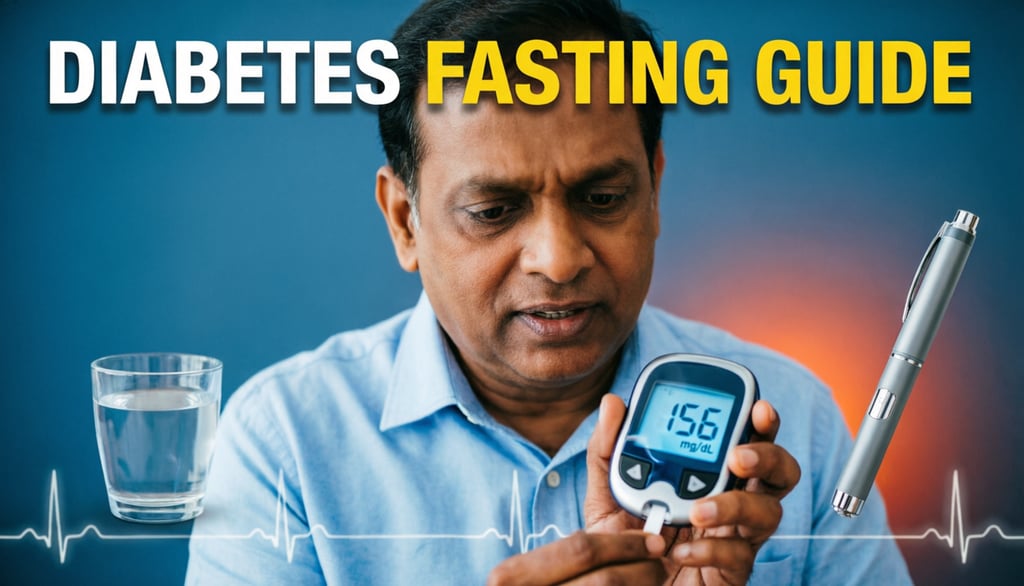
Fasting is deeply woven into the cultural and spiritual fabric of India. From the month-long observances of Ramadan by our Muslim brothers and sisters to the numerous fasts observed by Hindus—Karva Chauth, Navratri, Ekadashi—and the fasting practices of Jains, Sikhs, and Christians, abstaining from food and drink is a tradition that transcends religious boundaries. For many, these fasts are not merely rituals but profound expressions of faith, discipline, and community.
But what happens when a person living with diabetes wishes to participate in these sacred observances? For decades, the answer was often a flat "no"—a blanket prohibition that created frustration, anxiety, and a painful disconnect between medical advice and spiritual identity. Patients were forced to choose between their health and their faith, a dilemma that left many feeling isolated from their families and communities.
Today, thanks to advances in diabetes care, better medications, and the emergence of clear, evidence-based guidelines, this landscape has transformed. We now understand that with proper preparation, education, and medical supervision, many individuals with diabetes can fast safely. The key lies in personalized risk assessment, strategic medication adjustments, disciplined nutrition, and vigilant monitoring.
This comprehensive guide synthesizes the latest international and Indian recommendations—including the 2025 updates to the Ramadan fasting guidelines from the American Diabetes Association (ADA) and European Association for the Study of Diabetes (EASD), the Diabetes and Ramadan (DaR) International Alliance guidelines, and Indian consensus statements—to provide a practical, culturally sensitive roadmap for safe fasting with diabetes .
Whether you are considering a religious fast, exploring intermittent fasting for metabolic health, or caring for a loved one with diabetes who wishes to fast, this guide is for you. Let us begin by understanding the scale of this issue in India.
1. Introduction: Fasting and Diabetes in the Indian Context
1.1 The Numbers Tell a Story
India is home to an estimated 101 million people living with diabetes, according to the ICMR-INDIAB national study . Another 136 million Indians are in the prediabetic stage . At the same time, India is a land of diverse faiths, each with its own fasting traditions. The convergence of these two realities—high diabetes prevalence and widespread fasting practices—creates a unique clinical and cultural challenge.
Globally, over 150 million Muslims living with diabetes observe the Ramadan fast each year . In India, where Muslims constitute over 14% of the population, this translates to millions of individuals navigating diabetes management during the holy month. Add to this the millions of Hindus observing Navratri, Karva Chauth, and other fasts, and the scale of the challenge becomes evident.
1.2 A Historical Shift in Medical Thinking
Historically, patients with diabetes were advised against fasting. The risks—hypoglycemia (dangerously low blood sugar), hyperglycemia (excessively high blood sugar), dehydration, and thrombosis—were considered too great . This created significant distress, as being unable to fast meant being unable to fully participate in community life and spiritual practice.
However, as the 2025 ADA/EASD Ramadan guidelines note, "As patient outcomes improved through the emergence of better pharmacotherapy and increasing use of technology, these restrictions have been reconsidered" . A series of global recommendations, updated every five years since 2005, have progressively refined our understanding of who can fast safely and how to optimize their care.
1.3 The "Four Rights" Framework
This guide is organized around a simple but powerful framework for safe fasting: the Four Rights.
Right Risk Assessment: Understanding your personal risk category before you begin fasting.
Right Nutrition: Choosing the right foods, at the right time, in the right quantities for pre-dawn and post-dusk meals.
Right Medication Adjustments: Modifying your diabetes medications under medical supervision to prevent dangerous fluctuations.
Right Monitoring: Vigilant self-monitoring and knowing when to break the fast.
2. Types of Fasting: Understanding What You Are Undertaking
Before diving into medical management, it is essential to understand the type of fast you are considering, as the duration and pattern of fasting significantly influence the associated risks and required preparations.
2.1 Religious Fasts in India
Ramadan (Islamic Fasting): During the month of Ramadan, observant Muslims abstain from all food and drink from dawn (Fajr) to sunset (Maghrib). The duration of the daily fast varies by season and geographic location, typically ranging from 11 to 16 hours in India . The pre-dawn meal is called Suhoor (or Sehri), and the meal to break the fast is called Iftaar. Ramadan fasting is obligatory for able-bodied adults who are capable of fasting .
Hindu Fasts: Hindu fasting practices are diverse and vary by region, community, and specific occasion. Common types include:
Nirjala (without water): Complete abstinence from food and water, often for 24 hours (e.g., Karva Chauth, certain Ekadashis).
Phalahar: Consumption of only fruits, milk, and specific allowed foods (e.g., during Navratri).
Single-meal fasts: Eating only one meal during the day.
Other Religious Fasts: Jain, Sikh, and Christian communities in India also observe various fasts, each with its own rules and durations.
2.2 Intermittent Fasting for Health
Beyond religious observance, many individuals with type 2 diabetes are now exploring intermittent fasting (IF) as a therapeutic strategy for weight loss and glycemic control. Common IF protocols include:
Time-Restricted Eating (TRE): Eating all daily calories within a specific window, typically 8-10 hours, and fasting for the remaining 14-16 hours . This is the most studied form of IF in diabetes.
5:2 Diet: Eating normally for five days of the week and significantly restricting calories (500-600 kcal) on two non-consecutive days .
Fasting-Mimicking Diet (FMD): A very-low-calorie diet consumed for 5 consecutive days, repeated once a month or less frequently .
A 2025 review in Nature Reviews Endocrinology noted that 10-11 hour time-restricted eating "might be effective in reducing HbA1c, weight and other cardiometabolic risk factors after several months" . However, it also cautioned that modified fasting interventions like the 5:2 diet "are difficult to implement in the short term and long term" .
2.3 Key Differences and Implications
FeatureReligious Fasting (e.g., Ramadan)Therapeutic Intermittent FastingPrimary PurposeSpiritual observance, worshipHealth improvement (weight, glycemic control)DurationFixed by religious calendar (e.g., ~30 days)Flexible, chosen by individualFluid IntakeUsually no water during fastWater and non-caloric beverages usually allowedFlexibilityRigid schedule; cannot be modifiedFlexible timing; can be adjustedMedical SupervisionVariable; often sought after decisionUsually planned with healthcare team
Understanding these differences is crucial because the management approach may vary. For therapeutic IF, the timing can be adjusted to suit the individual's lifestyle and medication regimen. For religious fasting, the schedule is fixed, and the individual must adapt their diabetes management to this immutable structure.
3. Risk Assessment: The First and Most Important Step
Not everyone with diabetes can fast safely. The first step, ideally undertaken 6-8 weeks before the fast begins, is a thorough medical assessment to determine your risk category . The 2025 ADA/EASD guidelines emphasize the pivotal role of primary care providers in this process .
3.1 The Four Risk Categories
Based on international consensus, individuals with diabetes are generally classified into four risk categories for fasting.
Very High Risk: Fasting is NOT recommended. Individuals in this category should be strongly advised not to fast.
Severe hypoglycemia (requiring assistance) within 3 months before Ramadan
History of recurrent hypoglycemia
Diabetic ketoacidosis (DKA) within 3 months before Ramadan
Hyperosmolar hyperglycemic state (HHS) within 3 months before Ramadan
Type 1 diabetes with poor glycemic control or complicated by hypoglycemia unawareness
Pregnancy in a woman with pre-existing diabetes
Chronic dialysis
Acute illness
High Risk: Fasting is generally NOT recommended; individualized assessment with extreme caution if patient insists.
Type 1 diabetes with well-controlled glucose and stable on therapy
Type 2 diabetes with moderate hyperglycemia (HbA1c >8.5-9%) or with significant microvascular or macrovascular complications
Chronic kidney disease stage 3-4
Older adults (>75 years) with frailty or other comorbidities
Pregnant women with gestational diabetes controlled by diet or metformin
Patients on medications that may cause hypoglycemia (sulfonylureas, insulin, meglitinides) without recent dose adjustment
Patients performing intense physical labor
Moderate Risk: Fasting may be permissible with proper education and medication adjustment.
Well-controlled type 2 diabetes on stable doses of metformin, DPP-4 inhibitors, SGLT-2 inhibitors, GLP-1 receptor agonists, or low-dose sulfonylureas/insulin
Healthy older adults (>75 years) without frailty
Low Risk: Fasting likely permissible with minimal intervention.
Well-controlled type 2 diabetes managed with lifestyle alone (diet and exercise)
Well-controlled type 2 diabetes on metformin alone (low hypoglycemia risk)
3.2 The Role of Technology in Risk Assessment
The 2025 ADA/EASD guidelines highlight the growing role of technology in enabling safer fasting. "Technological advancements, including integrated pump-sensor systems, hybrid closed-loop systems, and artificial intelligence (AI)-equipped continuous glucose monitoring (CGM) devices, show great promise in the monitoring of blood glucose levels and can provide tangible reductions in hypoglycaemia episodes" . For individuals with type 1 diabetes who wish to fast, these technologies may offer a pathway that was previously unavailable.
The Diabetes and Ramadan (DaR) International Alliance, in collaboration with the ADA and IDF, has also announced the forthcoming release of a Ramadan Risk Calculator in 2026, designed to support healthcare professionals in delivering structured and personalized pre-Ramadan assessments .
3.3 The Pre-Fasting Medical Consultation
A comprehensive pre-fasting consultation should cover:
Medical History: Review of diabetes type, duration, complications, and history of hypoglycemia or DKA.
Glycemic Control: Recent HbA1c and blood glucose patterns.
Medication Review: Assessment of current diabetes medications and their risk of causing hypoglycemia.
Comorbidities: Evaluation of conditions like hypertension, kidney disease, or heart disease.
Nutritional Assessment: Discussion of typical meal patterns and foods consumed during fasting.
Education: Structured diabetes education focused on self-monitoring, recognizing warning signs, and knowing when to break the fast .
A randomized controlled trial published in 2023 demonstrated the power of this approach. The study, which applied the principles of the ADA/EASD consensus, found that a pre-Ramadan assessment coupled with education and medication adjustment reduced the risk of severe hypoglycemia by 80% (odds ratio 0.2) compared to usual care .
4. Medical Nutrition Therapy (MNT) During Fasting
Nutrition is the cornerstone of safe fasting. The goal is to maintain energy, prevent hypoglycemia, avoid excessive post-meal glucose spikes, and ensure adequate hydration. The 2025 RSSDI Nutrition Guidelines for Type 2 Diabetes, supported by the ICMR-National Institute of Nutrition, provide a robust framework for Indian dietary practices .
4.1 General Principles for All Fasts
Do Not Skip the Pre-Dawn Meal (Suhoor/Pre-Fast Meal): This meal sustains you through the fasting hours. It should be consumed as close to the start of the fast as possible.
Hydrate Wisely: During non-fasting hours, drink plenty of water. Avoid sugary drinks, excessive tea, and coffee (which can have a diuretic effect).
Break the Fast Gently and Wisely: Avoid overeating. Start with fluids and a small portion of food, then pause before the main meal.
Avoid Feast-and-Famine Cycles: Do not compensate for daytime fasting by overeating at night. This leads to glucose volatility and weight gain.
4.2 The "Right Carbs, Right Time, Right Quantity" Framework
Applying the principles from our previous guide, here is how to structure meals during fasting periods.
For the Pre-Dawn Meal (Suhoor/Pre-Fast):
This meal should be designed for sustained energy release throughout the fasting hours.
Right Carbs: Choose low-glycemic index (GI), high-fiber carbohydrates that digest slowly. Excellent Indian options include:
Whole grains and millets: Oats, daliya (broken wheat), whole wheat roti, jowar roti, bajra roti.
Complex carbohydrates: Brown rice, or even a small portion of well-cooked white rice paired with plenty of dal.
Right Time: Eat this meal as late as possible, just before the fast begins.
Right Quantity: This should be a substantial meal, but not a feast. Use the plate method: half vegetables, one-quarter protein, one-quarter quality carbs.
Protein is Crucial: Include a good protein source to enhance satiety and slow glucose absorption. Options: Dal (moong dal is excellent), eggs, paneer, curd, or lean meat/fish.
Include Healthy Fats: A small amount of healthy fat (ghee, olive oil, nuts) further slows digestion and provides sustained energy.
Hydrate: Drink adequate water, but not to the point of discomfort.
For the Post-Dusk Meal (Iftaar/Breaking the Fast):
The traditional practice of breaking the fast with dates and water is both culturally significant and physiologically sound. Dates provide quick glucose to replenish energy. However, moderation is key.
Break Gently:
Start with 2-3 dates and water or a small glass of milk.
Offer prayers or rest for 15-20 minutes. This allows the body to begin rehydration and gently raise blood glucose before the main meal.
The Main Meal: Apply the plate method strictly.
Half your plate: Vegetable sabzi, salad.
One-quarter: Protein (dal, paneer, chicken, fish).
One-quarter: Quality carbs (1-2 rotis, or a small bowl of rice).
Avoid Fried and Sugary Foods: Samosas, pakoras, and sugary sweets (like jalebis) are traditional Iftaar items but are disastrous for blood sugar control. If you must indulge, limit to one small piece and account for it in your meal plan.
4.3 Specific Considerations for Hindu Fasts
Nirjala Fasts (without water): These are extremely high-risk for individuals with diabetes, particularly those on medications that can cause hypoglycemia or dehydration. Fasting without water should generally be avoided. Dehydration can rapidly lead to hyperglycemia and thrombosis. If such a fast is undertaken, it must be with explicit medical approval, extreme caution, and vigilant monitoring.
Phalahar Fasts (Fruit-based): While fruits are healthy, relying solely on fruits for energy can lead to significant glucose spikes due to their fructose content. If observing a Phalahar fast:
Choose low-GI fruits (apple, guava, pear, orange) over high-GI fruits (ripe banana, mango, grapes, watermelon).
Include milk, curd, or paneer to add protein and fat to the meal, which will slow glucose absorption.
Nuts and seeds are excellent additions.
5. Medication Adjustments: A Critical Step That Requires Medical Supervision
Warning: Do not adjust your diabetes medications on your own. The following information is for educational purposes. You must consult your diabetologist or physician for a personalized medication plan.
The primary goal of medication adjustment during fasting is to reduce the risk of hypoglycemia while preventing extreme hyperglycemia. The general principle is to modify the timing and/or dose of medications that carry a high risk of causing low blood sugar .
5.1 Medications with Low Hypoglycemia Risk
These medications generally have a low risk of causing hypoglycemia and may be continued with minimal adjustment, but timing may change.
Metformin: Usually well-tolerated. The dose can often be split: take one dose with the pre-dawn meal and one dose with the post-dusk meal. Extended-release formulations may be taken once daily with the evening meal.
DPP-4 Inhibitors (e.g., Sitagliptin, Vildagliptin): Low risk. Usually taken once daily with the main meal (Iftaar).
SGLT-2 Inhibitors (e.g., Dapagliflozin, Empagliflozin): Low risk of hypoglycemia. However, they increase the risk of dehydration because they cause glucose to be excreted in urine. Strict hydration during non-fasting hours is essential. Some guidelines suggest holding this medication if the patient is at high risk of volume depletion or is unwell. Consult your doctor.
GLP-1 Receptor Agonists (e.g., Liraglutide, Semaglutide, Dulaglutide): Low risk. Usually taken once weekly or once daily. The dose timing may not need adjustment, but the effect on appetite suppression should be considered. Oral semaglutide is typically taken on an empty stomach, which may conflict with meal timing during fasting; discuss with your doctor .
Thiazolidinediones (Pioglitazone): Low risk. Can be continued, but the dose is usually taken with one of the main meals.
5.2 Medications with Moderate to High Hypoglycemia Risk
These medications require careful dose adjustment, often a dose reduction.
Sulfonylureas (e.g., Glimepiride, Glipizide, Gliclazide): These stimulate the pancreas to release insulin and carry a significant risk of hypoglycemia, especially during prolonged fasting.
Glimepiride/Glipizide: The morning dose is usually reduced or omitted. If taken twice daily, the morning dose may be shifted to the evening meal.
Gliclazide MR (modified release): The once-daily dose may be taken with the evening meal instead of the morning.
Meglitinides (e.g., Repaglinide): These are short-acting insulin secretagogues. They have a lower risk than sulfonylureas because they are taken with meals. During fasting, the dose with the pre-dawn meal should be taken as usual, and the dose with the evening meal is taken as usual.
5.3 Insulin
Insulin management during fasting is complex and highly individualized. The 2025 ADA/EASD guidelines prioritize technologies like insulin pumps and CGM to facilitate safer fasting for those on insulin .
Basal Insulin (Long-acting, e.g., Glargine, Detemir, Degludec): The dose is often reduced by 15-30% to account for the long period without food and to prevent daytime hypoglycemia. The timing of the dose may also be shifted to the evening.
Premixed Insulin (e.g., 30/70, 50/50): These are challenging. The morning dose is typically reduced or omitted, and the evening dose is given as usual. However, this can lead to poor glycemic control. Patients on premixed insulin are generally considered higher risk.
Rapid-Acting Insulin (e.g., Aspart, Lispro, Glulisine): Used for meal coverage. The dose with the pre-dawn meal is usually taken, and the dose with the post-dusk meal is taken. The doses may need adjustment based on the planned meal size and carbohydrate content.
Insulin Pumps: For those with type 1 diabetes using insulin pumps, the basal rate can be adjusted for the fasting period (e.g., a temporary basal rate reduction) to prevent hypoglycemia. Integrated pump-sensor systems and hybrid closed-loop systems can automate some of this adjustment, offering a new level of safety .
5.4 The Exception: Sick Days
The general rule during fasting is: if you become ill, do not fast. The 2025 ADA/EASD guidelines list "acute illness" as a very high-risk condition that precludes fasting . If you develop a fever, vomiting, or diarrhea, you must break your fast and follow your "sick day" management plan .
6. Monitoring and When to Break the Fast
6.1 Self-Monitoring of Blood Glucose (SMBG)
During fasting, monitoring becomes even more critical. You cannot rely on how you feel; you must know your numbers.
Frequency: Check your blood glucose multiple times daily. Essential checkpoints include:
Before the pre-dawn meal (Suhoor)
Midday (around noon)
Mid-afternoon (a few hours before breaking the fast)
After the post-dusk meal (Iftaar)
Act on the Numbers: Do not just collect data. Use it to make decisions.
6.2 Continuous Glucose Monitoring (CGM)
The 2025 ADA/EASD guidelines strongly endorse the use of CGM, stating it can "provide tangible reductions in hypoglycaemia episodes" . CGM provides real-time glucose readings and alerts for impending hypoglycemia or hyperglycemia, allowing for immediate intervention. It is particularly valuable for individuals with type 1 diabetes or those on insulin therapy .
6.3 The Golden Rule: When in Doubt, Break the Fast
This is the most important rule of all. The Quran explicitly exempts sick individuals from fasting, and this is interpreted to include situations where fasting could cause harm. Breaking a fast due to a medical emergency is not a sin; it is an act of preserving life, which is a higher principle in all faiths.
You MUST break your fast immediately if any of the following occur:
Blood Glucose < 70 mg/dL (3.9 mmol/L): This is hypoglycemia. Treat immediately with 15 grams of fast-acting carbohydrate (3-4 glucose tablets, 100-125 ml of fruit juice, 1 tablespoon of honey/sugar mixed in water). Once you feel better, you may resume fasting? No. Once you break the fast for hypoglycemia, the fast is considered broken for that day for medical reasons.
Blood Glucose > 300 mg/dL (16.7 mmol/L): This is significant hyperglycemia. It can lead to dehydration and, in type 1 diabetes, can precipitate diabetic ketoacidosis (DKA). If your sugar is this high, especially if you are on insulin or SGLT-2 inhibitors, you must break the fast and seek medical advice.
Symptoms of Hypoglycemia or Hyperglycemia: Even if you cannot check your sugar, symptoms like trembling, sweating, confusion, palpitations (hypoglycemia) or extreme thirst, frequent urination, nausea, weakness (hyperglycemia) warrant breaking the fast.
Acute Illness: Fever, vomiting, or diarrhea.
6.4 Special Considerations for Type 1 Diabetes
For individuals with type 1 diabetes, the risks are magnified. The 2025 guidelines note that while technology has made fasting possible for some with type 1, those with poor glycemic control or a history of DKA should not fast . Any individual with type 1 diabetes considering a fast must have an extremely detailed plan developed with their endocrinologist, often involving CGM and insulin pump adjustments.
7. Managing Special Situations
7.1 Physical Activity During Fasting
Light to moderate activity can be continued during fasting. However, strenuous physical activity should be avoided during the late afternoon, as this is when the risk of hypoglycemia is highest. Taraweeh prayers (special nightly prayers during Ramadan) involve repeated cycles of standing, bowing, and prostrating. This is a form of light to moderate physical activity and should be factored into the overall energy expenditure. Ensure adequate hydration and a light meal after prayers.
7.2 Managing Complications: The Sick Day Rules
As emphasized, illness and fasting do not mix. The "sick day rules" for diabetes management apply:
Never fast when sick.
Check blood glucose every 2-4 hours.
Stay hydrated: Drink at least 250 ml (1 cup) of sugar-free fluids every hour if possible .
Manage Hypoglycemia: If you are unable to eat solid food but have low or normal blood glucose, consume 15g of easily digestible carbohydrates every hour (e.g., fruit juice, honey, regular soda, crackers) .
Medications:
Continue insulin as prescribed, but you may need adjustments—consult your sick day plan .
Continue most oral medications as prescribed, as blood sugar often rises during illness .
SGLT-2 inhibitors (dapagliflozin, empagliflozin) should be stopped if you are vomiting, have diarrhea, or are unable to eat and drink, as they increase the risk of dehydration and a rare but serious condition called euglycemic DKA .
Seek Medical Help Immediately if you have persistent vomiting, high fever, moderate to large ketones (if testing), severe abdominal pain, confusion, or drowsiness .
7.3 After the Fast: Transitioning Back
After a period of prolonged fasting, whether it is a month of Ramadan or a series of religious fasts, the transition back to normal eating patterns must be gradual.
Day 1 (Eid-al-Fitr/First Day Post-Fast): Start with a light breakfast. Avoid a massive feast. Ease your digestive system back into daytime eating.
Medication Re-adjustment: Your medication doses will need to be re-adjusted back to your pre-fasting regimen. This is best done in consultation with your doctor.
Monitor Closely: Glucose levels may be volatile for a few days as your body readjusts.
8. Evidence from Research: What Studies Show
8.1 The 2023 Randomized Controlled Trial
The previously mentioned multinational RCT by Ibrahim et al. (2023) provides powerful evidence for the structured approach . Key findings from this study of 506 participants with type 2 diabetes:
80% Reduction in Severe Hypoglycemia: The intervention group (pre-Ramadan education and medication adjustment) had a significantly lower risk of severe hypoglycemia compared to the control group (usual care). The odds ratio was 0.2 [0.1-0.8].
Improved HbA1c: Both groups saw reductions in HbA1c, but the improvements were significantly greater in the intervention group.
Weight and Lipids: While not statistically different from usual care, the intervention group showed trends toward weight reduction and improved HDL cholesterol.
Conclusion: "A pre-Ramadan assessment of people with T2D coupled with pre-Ramadan education and an adjustment of glucose-lowering treatment as per our updated 2020 recommendations can prevent acute complications and allow a safer fast for people with T2D."
8.2 Intermittent Fasting Research
A 2025 review in Primary Care Diabetes compared intermittent fasting (IF) to continuous caloric restriction (CCR) for glycemic control in type 2 diabetes . Key points:
Short-term benefits of IF: Significant decreases in HbA1c, fasting glucose, and body weight were observed with IF protocols.
Mechanisms: Improved insulin sensitivity, enhanced fat metabolism, and autophagy (cellular cleanup) were identified as key aspects .
Long-term benefits of CCR: Continuous caloric restriction was linked to enduring metabolic improvements, including reduced visceral fat and sustained insulin sensitivity.
Limitations: Both approaches have constraints, particularly regarding long-term adherence.
8.3 The Cardiovascular Question
The 2025 ADA/EASD guidelines note that the implications of Ramadan fasting on atherosclerotic cardiovascular disease (ASCVD) risk "remain uncertain due to the sparsity of evidence, but the literature suggests an increased risk" . Until more conclusive evidence is available, they advise that patients with high ASCVD risk avoid Ramadan fasting .
9. Practical Checklists for Patients
9.1 6-8 Weeks Before the Fast (The Preparation Phase)
Schedule an appointment with your diabetologist/physician.
Discuss your intention to fast and undergo a risk assessment.
Review your current medications and develop a personalized adjustment plan.
Get your HbA1c, kidney function, and other relevant tests done.
Discuss nutrition and meal planning, preferably with a dietitian.
9.2 1-2 Weeks Before the Fast (The Practice Phase)
If your medications have been adjusted, start the new regimen to see how your body responds.
Practice the pre-dawn and post-dusk meal patterns.
Ensure you have an adequate supply of glucose testing strips and your medications.
If using CGM, ensure sensors are available and you are comfortable with the technology.
9.3 During the Fast (The Execution Phase)
Check your blood glucose at all recommended times.
Follow your meal plan: prioritize low-GI carbs, protein, and vegetables.
Stay hydrated with water during non-fasting hours.
Avoid sugary and fried foods.
If you feel unwell or have a glucose reading <70 mg/dL or >300 mg/dL, break your fast immediately.
Keep a fast-acting sugar source (glucose tablets, juice box, honey) with you at all times for the hypothetical emergency (though you will break the fast if you need it).
9.4 After the Fast (The Transition Phase)
Do not overeat on the first day post-fast.
Resume your regular medication schedule as advised by your doctor.
Monitor your glucose closely for a few days to ensure stability.
Schedule a follow-up appointment with your doctor to review how the fasting period went and adjust your long-term management plan if needed.
10. Conclusion: Faith, Health, and Informed Choice
Fasting is a beautiful and meaningful practice that connects millions of Indians to their faith, their families, and their communities. For a person living with diabetes, the desire to participate in these observances is a deeply human one—a wish to be part of something larger than oneself, to share in the collective experience of devotion and sacrifice.
The message of modern diabetes care is not one of prohibition, but of empowerment. Thanks to decades of research, clear international guidelines, and a deeper understanding of individual risk, we can now offer people with diabetes a path to fast safely. This path requires work—preparation, education, consultation, and vigilant self-care. But it is a path that leads not only to metabolic safety but also to spiritual fulfillment.
The 15.3% of Indians with prediabetes, the 101 million with diabetes, and the countless family members who care for them all deserve access to this knowledge . They deserve to know that with the right risk assessment, the right nutrition, the right medication adjustments, and the right monitoring, safe fasting is an achievable goal for many.
If you are considering fasting, start the conversation with your doctor today—not a week before, but months before. Arm yourself with knowledge. Prepare your body and your mind. And remember the golden rule: your health is a gift, and preserving it is an act of worship in itself.
The fast is a journey of the spirit. With the right preparation, it does not have to be a trial for the body.
References
Ibrahim M, et al. (2025). Recommendations for the Management of Diabetes During Ramadan Applying the Principles of the ADA/ EASD Consensus: Update 2025. Diabetes/Metabolism Research and Reviews, 41(5):e70057.
International Diabetes Federation. (2025, December 9). 14th DaR Conference presents updated Ramadan Guidelines and Risk Calculator.
Anjana RM, Unnikrishnan R, Deepa M, et al. (2023). Metabolic non-communicable disease health report of India: the ICMR-INDIAB national cross-sectional study (ICMR-INDIAB-17). The Lancet Diabetes & Endocrinology, 11(7):474–489.
RSSDI Consensus Guidelines 2025 - Nutrition Management of Diabetes Mellitus in Children, Adolescents, and Young Adults in India (Supported by ICMR - National Institute of Nutrition). (2025). International Journal of Diabetes in Developing Countries, 45(Suppl 2):143–266.
Longo VD. (2025). Intermittent and periodic fasting in the treatment of obesity and type 2 diabetes mellitus. Nature Reviews Endocrinology, 21(2):73-74.
Ibrahim M, Barker MM, Ahmad E, et al. (2023). Optimizing Ramadan fasting: A randomised controlled trial for people with type 2 diabetes during Ramadan applying the principles of the ADA/EASD consensus. Diabetes/Metabolism Research and Reviews, 39(3):e3604.
Lakhani HA, et al. (2025). Intermittent fasting versus continuous caloric restriction for glycemic control and weight loss in type 2 diabetes: A traditional review. Primary Care Diabetes, 19(3):203-213.
Via Medica Journals. (2025, March 14). Expert Opinion on the Cardio-Renal-Metabolic Approach to Management of Adults with Type 2 Diabetes Using Oral Semaglutide: An Indian Perspective. Clinical Diabetology, 14(2):96-116.
National University Health System (NUHS), Singapore. (2024). Managing Sick Days with Diabetes.
Pharmasave. (2025). How to take care of yourself when you are sick.
---
Disclaimer: This blog post is for informational purposes only and does not constitute medical advice. Always consult a qualified healthcare professional before starting any exercise program, especially if you have diabetes or other medical conditions. The information presented is based on current research and may evolve as new evidence emerges.