
Indian Diabetes Diet Chart 2026: Best Foods for Blood Sugar Control
For millions of Indian families, diabetes is not just a medical condition—it is a daily reality that shapes every meal, every celebration, and every aspect of life. With over 101 million Indians living with diabetes and another 136 million in the prediabetic stage, the question of what to eat has never been more urgent or more personal.
ASF
3/9/202619 min read
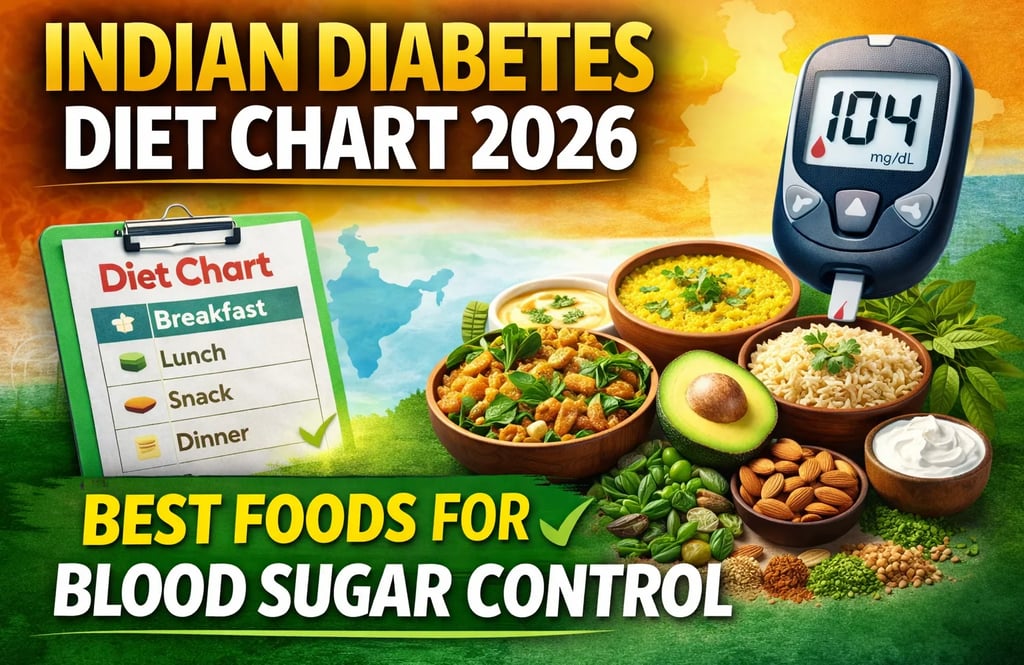
For millions of Indian families, diabetes is not just a medical condition—it is a daily reality that shapes every meal, every celebration, and every aspect of life. With over 101 million Indians living with diabetes and another 136 million in the prediabetic stage, the question of what to eat has never been more urgent or more personal.
The good news is that managing diabetes through diet does not mean abandoning the foods you love. It does not mean bland, tasteless meals or expensive, imported "health foods." It means understanding how your body responds to different foods, making smarter choices within your cultural traditions, and building a plate that nourishes rather than harms.
This comprehensive guide presents the Indian Diabetes Diet Chart for 2026, grounded in the latest research, traditional wisdom, and practical realities of Indian kitchens. Whether you are from Punjab or Tamil Nadu, Gujarat or West Bengal, vegetarian or non-vegetarian, you will find here a roadmap to eating well while keeping your blood sugar in check.
1. Introduction: Why Diet Is the Foundation of Diabetes Management
1.1 The Indian Dietary Landscape
India's dietary diversity is both a challenge and an opportunity. Our meals vary dramatically by region—rice-based in the South and East, wheat-based in the North, millet-rich in the West. We celebrate with sweets, bond over shared meals, and express love through food. Any dietary advice that ignores this cultural context is doomed to fail.
Dr. Pranav Ghody, Consultant Endocrinologist at Wockhardt Hospital, Mumbai, explains that for individuals with prediabetes or newly detected mild elevations, "even modest changes can yield meaningful improvements. Many people see improvement when they lose even a small amount of weight and stay active daily" . Fat loss, particularly around the abdomen, improves insulin sensitivity, allowing the body to use glucose more efficiently .
1.2 The 2026 Context: India-Specific Guidelines
A landmark development in 2026 is the Indian Council of Medical Research's (ICMR) Clinical Care Excellence Initiative, launched on February 1, 2026 . This large-scale program aims to generate "homegrown" evidence for managing non-communicable diseases like diabetes, tailored to the unique genetic, dietary, and environmental profile of the Indian population .
For decades, Indian physicians followed clinical guidelines derived from studies on Caucasian populations. However, as Dr. V. Mohan, Director of the Madras Diabetes Research Foundation, notes, "Indians develop diabetes at a much younger age and at lower body weights than Caucasians. Our genetics and high-refined-carb diets mean we cannot simply import recipes for health from the West" .
The "thin-fat" phenotype—carrying high levels of visceral fat despite appearing lean—makes Indians uniquely vulnerable to diabetes and means our dietary approach must be uniquely Indian .
1.3 What This Guide Offers
This guide synthesizes the latest recommendations from the Apollo 24|7 diabetes guides, the ICMR-INDIAB study findings, and expert opinions from Indian endocrinologists . It provides:
- A clear framework for building your diabetes plate
- Detailed lists of best foods and foods to avoid
- Regional meal patterns that respect culinary traditions
- Practical tips for festivals, eating out, and everyday challenges
- The latest 2026 updates on Indian-specific dietary research
2. Foundational Principles of the Indian Diabetes Diet
2.1 The Core Goals
A diabetes-friendly diet aims to:
1. Stabilize blood glucose levels – Prevent dangerous spikes and crashes
2. Improve insulin sensitivity – Help your body use insulin more effectively
3. Support healthy weight – Reduce visceral fat that drives insulin resistance
4. Prevent complications – Protect heart, kidneys, eyes, and nerves
5. Provide adequate nutrition – Maintain energy, muscle, and overall health
2.2 The Plate Method: A Visual Guide
The simplest and most effective tool for meal planning is the plate method . It requires no weighing, no counting, and no complicated calculations—just a visual template for every meal.
Fill half your plate (50%) with non-starchy vegetables. These include:
- Bhindi (okra), lauki (bottle gourd), tinda (Indian round gourd), cabbage
- Leafy greens: palak (spinach), methi (fenugreek), saag, amaranth
- Cauliflower, broccoli, bell peppers, beans
- Cucumber, tomato, radish (in salads)
Fill one-quarter (25%) with protein. Options include:
- Dal (moong, toor, masoor, chana)
- Legumes: rajma, chole, lobia
- Paneer, tofu
- Eggs, fish, chicken (lean cuts)
- Curd (plain, unsweetened)
Fill one-quarter (25%) with quality carbohydrates. Choose:
- Whole wheat roti
- Brown rice, parboiled rice, or basmati rice (in controlled portions)
- Millets: jowar, bajra, ragi, foxtail, little, barnyard
- Whole grain daliya, oats
Add a small amount of healthy fat (1-2 teaspoons of oil or ghee) and a side of salad or curd .
2.3 Carbohydrate Quality: The Glycemic Index
Not all carbohydrates are created equal. The glycemic index (GI) ranks how quickly a food raises blood glucose. Low-GI foods (55 or less) are digested slowly, causing gradual rises in blood sugar. High-GI foods (70 or above) cause rapid spikes .
Low-GI Indian foods (choose frequently):
- Whole grains: barley, oats, daliya
- Millets: jowar, bajra, ragi, foxtail
- Pulses and legumes: all dals, chana, rajma, soybean
- Vegetables: most non-starchy vegetables
- Fruits: apple, guava, orange, pear, berries, jamun
Medium-GI foods (consume in moderation):
- Basmati rice, parboiled rice
- Whole wheat chapati
- Sweet potato
High-GI foods (limit or avoid):
- White rice (especially highly polished)
- Refined flour (maida) products: white bread, naan, bakery items
- Sugar, jaggery, honey
- Watermelon, ripe banana, mango, grapes (in large quantities)
- Processed breakfast cereals
2.4 Glycemic Load: Portion Matters
Glycemic load (GL) accounts for both the GI and the portion size, giving a more practical picture . A small portion of a high-GI food may have a lower GL than a large portion of a low-GI food. This is why portion control is as important as food choice.
2.5 The Power of Pairing
Pairing carbohydrates with protein, fiber, or healthy fats slows glucose absorption and reduces post-meal spikes . Traditional Indian meals often do this naturally:
- Dal with rice
- Paneer with roti
- Curd with meals
- Vegetables with grains
This wisdom is scientifically sound—continue these practices.
2.6 The Order of Eating
Research shows that the sequence in which you eat foods affects blood sugar. The "vegetables first" approach—starting meals with fiber-rich vegetables, followed by protein, and then carbohydrates—can significantly lower post-meal glucose levels . This simple change requires no additional effort, only a shift in eating order.
3. The Indian Diabetes Diet Chart 2026: Best Foods
Based on comprehensive reviews of Indian dietary guidelines and expert recommendations, here are the best foods for blood sugar control, organized by category .
3.1 Whole Grains and Millets
| Grain | Benefits | How to Use |
| High in fiber, slows sugar absorption, rich in antioxidants | Jowar roti, upma, bhakri |
| Bajra (Pearl Millet) | Rich in magnesium (improves insulin sensitivity), high fiber | Bajra roti, khichdi |
| Ragi (Finger Millet) | High in calcium and fiber, low GI | Ragi mudde, ragi porridge, ragi roti |
| Foxtail, Little, Barnyard Millets | Slow-digesting, good for variety | Rice substitute, upma, pongal |
| Brown Rice/Red Rice | Higher fiber than white rice, more nutrients | With dal, sambar, rasam |
| Whole Wheat | Better than refined flour, moderate portions only | Chapati, paratha (without oil) |
| Oats | Soluble fiber (beta-glucan) slows glucose absorption | Oats upma, oats porridge with vegetables |
| Daliya (Broken Wheat) | Low GI, high fiber | Vegetable daliya, khichdi |
Tip: Replace white rice with millets or brown rice for at least half of your meals. Start with a mix (50% rice, 50% millet) and gradually increase the millet proportion .
3.2 Pulses and Legumes
Pulses are nutritional powerhouses for diabetes—high in protein, high in fiber, and low GI .
| Pulse | Benefits | How to Use |
|-------|----------|------------|
| Moong Dal (Green Gram) | Lightest dal, easy to digest, low GI | Plain dal, khichdi, cheela (pancakes) |
| Chana Dal (Chickpea) | High protein and fiber | Dal, chutney, sprouts |
| Masoor Dal (Red Lentil) | Quick-cooking, protein-rich | Regular dal preparation |
| Toor Dal (Pigeon Pea) | Staple in many regions, moderate GI | Sambar, dal |
| Rajma (Kidney Beans) | Very high fiber, protein-rich | Rajma curry (moderate portions) |
| Chole (Chickpeas) | High protein, low GI | Chole (without excess oil) |
| Lobia (Black-eyed Peas) | Fiber-rich, protein-dense | Curry, salad |
| Soybeans/Soya Chunks | Complete plant protein | Curry, snacks |
Tip: Soak pulses overnight before cooking to improve digestion and reduce glycemic impact .
3.3 Vegetables
Non-starchy vegetables should form the foundation of every meal .
Leafy Greens (Unlimited):
- Spinach (palak)
- Fenugreek (methi)
- Amaranth (chaulai)
- Mustard greens (sarson)
- Drumstick leaves (moringa)
Gourd Family (Excellent Choices):
- Bottle gourd (lauki/ghiya)
- Bitter gourd (karela) – contains charantin, which helps lower blood sugar
- Ridge gourd (tori/turai)
- Snake gourd
- Pumpkin (kaddu – in moderation)
Cruciferous Vegetables:
- Cauliflower (phool gobhi) – contains sulforaphane, reduces inflammation
- Cabbage (patta gobhi)
- Broccoli
- Radish (mooli)
Other Vegetables:
- Okra (bhindi) – rich in soluble fiber, slows sugar absorption
- Beans (fansi)
- Brinjal (baingan)
- Capsicum (shimla mirch)
- Onion (pyaz)
- Tomato (tamatar)
Starchy Vegetables (Limit Portions):
- Potato (aloo)
- Sweet potato (shakarkandi)
- Yam (jimikand)
- Arbi (colocasia)
3.4 Protein Sources
Adequate protein at each meal helps stabilize blood sugar and preserve muscle mass .
Plant Proteins:
- All pulses and legumes (listed above)
- Paneer (in moderation – 50-75g per serving)
- Tofu
- Soya chunks
- Sprouts
Animal Proteins (for non-vegetarians):
- Eggs (whole eggs are fine; whites for additional protein)
- Fish (especially fatty fish like mackerel/bangda, sardines/mathi)
- Chicken (skinless, grilled or roasted, not fried)
Dairy:
- Curd (plain, unsweetened) – probiotics support gut health
- Buttermilk (chaas)
- Milk (toned or double-toned, 1-2 cups daily)
3.5 Healthy Fats
Fats are essential but must be consumed in controlled amounts .
Best Choices (1-2 teaspoons per meal):
- Mustard oil (sarson ka tel)
- Groundnut oil (moongphali ka tel)
- Sesame oil (til ka tel)
- Rice bran oil
- Sunflower oil (in moderation)
- Ghee (in small amounts)
Nuts and Seeds (Small Handful Daily):
- Almonds (badam) – soak overnight
- Walnuts (akhrot)
- Peanuts (moongphali)
- Flaxseeds (alsi/javas) – rich in fiber, slow sugar absorption
- Chia seeds
- Pumpkin seeds
- Sunflower seeds
3.6 Fruits
Fruits are healthy but must be chosen wisely and portion-controlled .
Best Choices (Low GI, High Fiber):
| Fruit | Portion | Why It Works |
|-------|---------|--------------|
| Guava (amrud) | 1 medium | High fiber, low sugar |
| Apple (seb) | 1 medium | With skin, pectin slows glucose |
| Pear (nashpati) | 1 medium | Good fiber content |
| Orange (santra) | 1 medium | Whole fruit, not juice |
| Papaya (papeeta) | 1 small bowl | In moderation |
| Berries (strawberries, blueberries) | 1 small bowl | Antioxidant-rich |
| Jamun (Indian blackberry) | 1 small bowl | Traditionally used for diabetes |
| Amla (Indian gooseberry) | 1-2 | Rich in vitamin C, improves insulin sensitivity |
Fruits to Limit (High GI or High Sugar):
- Mango (aam) – small portions only when in season
- Banana (kela) – ripe bananas are high sugar
- Grapes (angoor) – limit to 10-15
- Chikoo (sapota) – very high sugar
- Watermelon (tarbooj) – high GI, limit portion
Golden Rule: Eat whole fruits, never fruit juices. Juicing removes fiber and concentrates sugar, causing rapid spikes .
3.7 Herbs and Spices with Benefits
Indian spices are not just flavor—they are medicine .
| Spice | Benefit | How to Use |
|-------|---------|------------|
| Turmeric (Haldi) | Curcumin reduces inflammation, improves insulin sensitivity | Add to dal, vegetables, milk |
| Fenugreek seeds (Methi dana) | Soluble fiber slows sugar absorption; improves insulin sensitivity | Soak overnight, drink water; add to cooking |
| Cinnamon (Dalchini) | May lower fasting blood sugar | Add pinch to tea, milk, oatmeal |
| Fenugreek leaves (Kasuri methi) | Fiber-rich, glucose-lowering | Add to vegetables, parathas |
| Curry leaves (Kadi patta) | Traditional remedy for diabetes | Add to tadka, chutneys |
| Ginger (Adrak) | Anti-inflammatory, aids metabolism | In tea, cooking |
| Garlic (Lahsun) | Supports heart health, may improve insulin sensitivity | In cooking |
| Black pepper (Kali mirch) | Enhances nutrient absorption | In cooking |
3.8 Superfoods for Diabetes
Recent media highlights include several "superfoods" particularly beneficial for diabetes :
- Okra (Bhindi): Rich in soluble fiber, slows sugar absorption, improves insulin sensitivity
- Mushrooms: Low-carb, anti-inflammatory, help insulin work more effectively
- Tofu: Plant-based protein, helps build muscle for better glucose utilization
- Green tea: Catechins improve glucose metabolism, support fat burning
- Cauliflower: Sulforaphane reduces inflammation, supports insulin function
- Flaxseed (Javas): Beta-glucan fiber slows sugar absorption, prevents rapid spikes
4. Foods to Avoid or Strictly Limit
Equally important to knowing what to eat is knowing what to avoid .
4.1 High-Glycemic Carbohydrates
- White rice (especially highly polished varieties) – causes rapid spikes
- Refined flour (maida) – white bread, naan, pav, bakery items
- Sugary breakfast cereals – cornflakes, sugar-coated muesli
- Instant noodles – high in refined carbs, low in nutrition
4.2 Sugars and Sweeteners
- Table sugar (chini) – obviously harmful
- Jaggery (gur) – despite "healthy" image, raises glucose similarly to sugar
- Honey (shahad) – still a free sugar, should be limited
- Brown sugar, demerara – nutritionally similar to white sugar
- Sweets (mithai) – barfi, gulab jamun, jalebi, halwa, laddoo
- Sugar-sweetened beverages – soft drinks, packaged juices, sweetened lassi, flavored milk
4.3 Fried and Fatty Foods
- Fried snacks: samosa, pakora, bhajiya, kachori, chips
- Deep-fried breads: puri, bhatura, chole bhature
- Creamy gravies: rich, oil-laden restaurant curries
- Trans fats: vanaspati, margarine, commercially baked goods
4.4 Hidden Sugars in Packaged Foods
Always read labels for hidden sugars under these names :
- Maltose, dextrose, fructose, glucose
- High-fructose corn syrup
- Invert sugar
- Jaggery syrup
- Fruit juice concentrate
- Honey, maple syrup
Common offenders: ketchup, sauces, "health drinks," flavored yogurt, energy bars, packaged chutneys.
5. Regional Indian Meal Patterns
One size does not fit all in India. Here are regionally adapted meal patterns following the plate method .
5.1 North Indian Pattern
Typical foods: Wheat rotis, dal, sabzi, raita, salad
Sample Day:
- Breakfast: Vegetable poha with peanuts, or 2 moong dal cheela with mint chutney
- Lunch: 2 whole wheat rotis (or 1 jowar roti), 1 bowl dal, 1 bowl mixed vegetable sabzi (bhindi, lauki, or cabbage), salad, small bowl curd
- Evening snack: Roasted chana or a handful of almonds
- Dinner: 1-2 multigrain rotis, 1 bowl paneer or tofu curry, sautéed vegetables, cucumber salad
Smart swap: Replace one roti with a mix of whole wheat and besan (chickpea flour) for added protein.
5.2 South Indian Pattern
Typical foods: Rice, sambar, rasam, poriyal, curd
Sample Day:
- Breakfast: 2-3 idlis with sambar (generous vegetables) and coconut chutney, or millet dosa
- Lunch: 1 katori brown rice or millet rice, 1 bowl sambar, 1 bowl vegetable poriyal (beans, carrot, cabbage), 1 bowl rasam, curd on side
- Evening snack: Sundal (steamed chickpeas with coconut)
- Dinner: 1 katori parboiled rice, fish curry or dal, grilled vegetables, salad
Smart swap: Replace white rice with parboiled rice, brown rice, or millets. Make idli/dosa with added urad dal for protein.
5.3 East Indian Pattern
Typical foods: Rice, fish curry, dal, green leafy vegetables (saag)
Sample Day:
- Breakfast: Vegetable daliya, or 2 eggs with whole wheat toast
- Lunch: 1 katori parboiled rice, fish curry (mustard oil), 1 bowl saag (palak or methi), 1 bowl dal, salad
- Evening snack: Roasted makhana (fox nuts)
- Dinner: 1 katori brown rice, chicken curry (light gravy), stir-fried vegetables, salad
Smart swap: Use mustard oil in moderation. Balance rice with generous vegetable portions. Include more dal for protein.
5.4 West Indian Pattern
Typical foods: Jowar/bajra roti, vegetable subzi, dal, buttermilk
Sample Day:
- Breakfast: Vegetable upma (millet-based), or oats upma
- Lunch: 2 jowar/bajra rotis, 1 bowl baingan bharta or other vegetable subzi, 1 bowl moong dal, salad, buttermilk
- Evening snack: Sprouts salad with lemon
- Dinner: 2 multigrain rotis, 1 bowl chole (small portion), vegetable subzi, cucumber raita
Smart swap: Millets are naturally low-GI—embrace them. Pair with peanut chutney for added protein.
5.5 Gujarati Pattern
Typical foods: Roti, dal, kadhi, shaak (vegetable), salad
Sample Day:
- Breakfast: Moong dal cheela or thepla (without much oil)
- Lunch: 2 rotis, 1 bowl dal/kadhi, 1 bowl shaak (e.g., tindora, cabbage, or methi), salad, curd
- Evening snack: Roasted chana or murmura with vegetables
- Dinner: 1-2 rotis, 1 bowl vegetable subzi, dal, salad
Challenge: Gujarati thalis often include farsan and mithai. Limit these to special occasions, and take small portions.
6. Meal Timing and Frequency
6.1 The Importance of Regularity
Consistent meal timing helps improve insulin sensitivity and reduces overeating . Eating at roughly the same times each day trains your body to expect fuel and manage glucose efficiently.
6.2 Sample Daily Schedule
| Time | Meal | Notes |
|------|------|-------|
| 7:00-8:00 AM | Morning | Warm water with lemon, 4-5 soaked almonds |
| 8:00-9:00 AM | Breakfast | Within 1 hour of waking |
| 11:00 AM | Mid-morning snack | Optional if hungry; fruit or nuts |
| 1:00-2:00 PM | Lunch | Main meal of the day |
| 4:00-5:00 PM | Evening snack | Light, protein-based |
| 7:00-8:00 PM | Dinner | Light, at least 2-3 hours before sleep |
6.3 The "Vegetables First" Approach
Eat your meal in this order:
1. Vegetables and salad (fiber)
2. Protein (dal, paneer, fish, chicken)
3. Carbohydrates (roti, rice)
This sequence blunts post-meal glucose spikes significantly .
6.4 Early Dinner
Traditional wisdom and modern science agree: dinner should be the lightest meal and eaten early. Eating at least 2-3 hours before bedtime allows digestion to complete before sleep and prevents overnight glucose fluctuations . Some experts recommend finishing dinner before sunset .
6.5 Avoid Long Gaps
Prolonged fasting can lead to hypoglycemia (low blood sugar) in those on certain medications, and can also trigger overeating at the next meal. Aim to eat every 4-5 hours during waking hours.
7. Carbohydrate Counting and Portion Control
7.1 Why Portions Matter
Even healthy carbohydrates, in large quantities, can spike blood sugar. Portion control is non-negotiable.
7.2 Hand Guide for Portions
Your hand provides built-in portion guides :
- Palm (without fingers): Protein portion (paneer, chicken, fish)
- Fist: Vegetable serving
- Cupped hand: Carbohydrate portion (rice, roti)
- Thumb: Fat serving (ghee, oil)
7.3 Carbohydrate Counts for Common Indian Foods
Knowing approximate carb counts helps in meal planning, especially for those on insulin .
| Food Item | Portion | Carbohydrates (approx.) |
|-----------|---------|-------------------------|
| Whole wheat chapati | 1 medium (6" diameter) | 15 g |
| Idli | 1 medium | 12-15 g |
| Dosa | 1 plain medium | 30 g |
| White rice (cooked) | 1 katori (small bowl) | 45 g |
| Parboiled/basmati rice | 1 katori | 40-45 g |
| Millets (cooked) | 1 katori | 35-40 g |
| Dal (cooked) | 1 katori | 15-20 g |
| Rajma/chole (cooked) | 1 katori | 30-35 g |
| Potato (cooked) | 1 medium | 30 g |
| Banana | 1 medium | 25-30 g |
| Apple | 1 medium | 20-25 g |
| Milk | 1 cup (250 ml) | 12 g |
| Curd | 1 cup | 12-15 g |
7.4 The "One-Quarter" Rule
Cereals (rice, roti, millets) should occupy no more than one-quarter of your plate . This is a simple visual rule that automatically controls portions.
7.5 Personalize with Self-Monitoring
Use your glucometer or continuous glucose monitor (CGM) to understand how specific foods affect you. Check blood glucose before and 1-2 hours after meals to learn your personal responses and adjust portions accordingly .
8. Special Situations: Festivals, Eating Out, and Travel
8.1 Navigating Festivals
Festivals are an integral part of Indian life. You need not abstain completely, but you must be strategic .
Before the festival:
- Eat a balanced meal with protein and vegetables before attending events. This reduces hunger and temptation.
- Stay hydrated with water.
During the festival:
- Choose your favourite sweet—one small piece. Eat it slowly, savouring every bite.
- Pair sweets with protein or fiber. For example, have that small piece of barfi after a protein-rich meal, not on an empty stomach.
- The "share and savor" strategy: share one sweet among 2-3 people .
- Fill most of your plate with healthier options (vegetables, dal, grilled items) before considering indulgent foods.
- Avoid fried snacks; if you must, take one or two and stop.
After the festival:
- Return immediately to your regular eating pattern.
- Increase physical activity (extra walking) to compensate for any indulgences.
8.2 Eating Out
Restaurant food is often high in hidden sugar, salt, and unhealthy fats. Strategies for eating out :
- Choose wisely: Order tandoori, grilled, or steamed dishes. Avoid creamy gravies, deep-fried items, and heavily sweetened preparations.
- Ask for modifications: Request less oil, no sugar, or gravy on the side.
- Watch portions: Restaurant portions are often large. Consider sharing a main course or taking half home.
- Bread basket danger: Limit or avoid naan, kulcha, and other refined-flour breads. If eating roti, ask for whole wheat options.
- Beverages: Stick to water, unsweetened buttermilk, or plain soda with lime. Avoid soft drinks, packaged juices, and sweetened lassi.
8.3 Travel Tips
- Pack snacks: Carry diabetes-friendly snacks like roasted chana, nuts, seeds, or whole fruit. This prevents reliance on airport or roadside junk food.
- Stay hydrated: Drink plenty of water, especially during flights.
- Medication and monitoring: Carry all medications, glucose monitor, and fast-acting sugar (glucose tablets, candies) in hand luggage.
- Meal timing: Try to maintain regular meal times despite time zone changes.
- Request special meals: On flights, request a diabetic or low-calorie meal when booking.
9. Beyond Diet: Lifestyle Factors That Matter
9.1 Physical Activity
Diet and exercise work synergistically. Regular physical activity improves insulin sensitivity, helps with weight management, and directly lowers blood glucose .
- Aim for at least 150 minutes of moderate-intensity activity weekly (30 minutes daily, 5 days/week)
- Brisk walking is excellent and accessible to most
- Include strength training 2 days/week to build muscle (muscle is metabolically active tissue)
9.2 Weight Management
Even modest weight loss of 5-7% of starting body weight significantly improves insulin sensitivity and diabetes control . For someone weighing 80 kg, this means losing just 4-6 kg.
9.3 Sleep
Poor sleep disrupts hormones that regulate appetite and glucose metabolism. Aim for 7-8 hours of quality sleep nightly . Maintain consistent sleep-wake times, even on weekends.
9.4 Stress Management
Chronic stress elevates cortisol, which directly increases blood glucose. Incorporate stress-reducing practices:
- Deep breathing exercises
- Meditation
- Yoga
- Time in nature
- Hobbies and social connections
9.5 Regular Monitoring
- Blood glucose: As advised by your doctor (typically fasting and post-meal)
- HbA1c: Every 3-6 months
- Lipid profile, kidney function, eye exam: Annually or as recommended
10. Common Mistakes and How to Avoid Them
10.1 "I Don't Eat Sugar, So I'm Fine"
Many people focus only on visible sugar (mithai, soft drinks) while ignoring refined carbohydrates. White rice, white bread, and maida products convert to glucose rapidly and can spike blood sugar as much as sugar itself .
10.2 Eating Too Much "Healthy" Food
Even healthy foods, in excessive quantities, raise blood sugar. Portion control applies to everything—roti, rice, dal, fruits, nuts.
10.3 Drinking Fruit Juice
Whole fruits are healthy; fruit juices are not. Juicing removes fiber and concentrates sugar, causing rapid spikes. Always eat the whole fruit .
10.4 Skipping Meals
Skipping meals can lead to hypoglycemia (low blood sugar) in those on medications, and often results in overeating later. Eat regular, balanced meals.
10.5 Relying Only on Medicine
Medications are important, but they work best when combined with proper diet and lifestyle. Do not assume that taking pills means you can eat whatever you want .
10.6 Being Misled by "Sugar-Free" Labels
"Sugar-free" products may still contain carbohydrates, fats, and calories. Some use sugar alcohols that can cause digestive issues. Read the full nutrition label, not just the front-of-pack claims.
10.7 Ignoring Portion Size of Rice
Rice is a staple in many regions, and the problem is often quantity, not the food itself. A small katori of rice (not heaped) with plenty of dal and vegetables is fine. Three heaped servings of rice with minimal accompaniments is not.
11. Sample 7-Day Indian Diabetes Meal Plan
Here is a practical, regionally diverse meal plan following all the principles discussed.
Day 1 (North Indian Style)
| Meal | Options |
|------|---------|
| Morning (7 AM) | Warm water with lemon, 5 soaked almonds |
| Breakfast (8:30 AM) | Vegetable poha with peanuts and curry leaves |
| Mid-morning (11 AM) | 1 small apple |
| Lunch (1:30 PM) | 2 whole wheat rotis, 1 bowl moong dal, 1 bowl bhindi sabzi, cucumber salad, 1 small bowl curd |
| Evening (4:30 PM) | Roasted chana (small handful) with mint chutney |
| Dinner (7:30 PM) | 1 multigrain roti, 1 bowl palak paneer (less oil), tomato-cucumber salad |
Day 2 (South Indian Style)
| Meal | Options |
|------|---------|
| Morning (7 AM) | Warm water with lemon, 5 soaked almonds |
| Breakfast (8:30 AM) | 2-3 idlis with sambar (generous vegetables) and coconut chutney |
| Mid-morning (11 AM) | 1 orange |
| Lunch (1:30 PM) | 1 katori brown rice, 1 bowl sambar, 1 bowl cabbage poriyal, 1 bowl rasam, curd |
| Evening (4:30 PM) | Sprouts sundal (steamed sprouts with coconut) |
| Dinner (7:30 PM) | 1 katori parboiled rice, 1 bowl grilled fish curry (light), stir-fried beans, salad |
Day 3 (West Indian/Millet Style)
| Meal | Options |
|------|---------|
| Morning (7 AM) | Warm water with lemon, 5 soaked almonds |
| Breakfast (8:30 AM) | Oats upma with vegetables |
| Mid-morning (11 AM) | 1 guava |
| Lunch (1:30 PM) | 2 jowar rotis, 1 bowl baingan bharta, 1 bowl masoor dal, salad, buttermilk |
| Evening (4:30 PM) | Makhana (roasted fox nuts) |
| Dinner (7:30 PM) | 2 bajra rotis, 1 bowl mixed vegetable sabzi, cucumber raita |
Day 4 (East Indian Style)
| Meal | Options |
|------|---------|
| Morning (7 AM) | Warm water with lemon, 5 soaked almonds |
| Breakfast (8:30 AM) | Vegetable daliya with peas and carrots |
| Mid-morning (11 AM) | 1 pear |
| Lunch (1:30 PM) | 1 katori parboiled rice, 1 bowl fish curry (mustard oil), 1 bowl saag (palak), salad |
| Evening (4:30 PM) | Roasted chana |
| Dinner (7:30 PM) | 1 multigrain roti, 1 bowl chicken stew (light), steamed vegetables |
Day 5 (Simple Vegetarian)
| Meal | Options |
|------|---------|
| Morning (7 AM) | Warm water with lemon, 5 soaked almonds |
| Breakfast (8:30 AM) | 2 moong dal cheela with mint chutney |
| Mid-morning (11 AM) | 1 small bowl papaya |
| Lunch (1:30 PM) | 2 whole wheat rotis, 1 bowl chole (small portion), 1 bowl lauki sabzi, salad, curd |
| Evening (4:30 PM) | Sprouts salad with lemon |
| Dinner (7:30 PM) | 1 katori brown rice, 1 bowl dal, 1 bowl tinda sabzi, cucumber salad |
Day 6 (Millet and Protein Focus)
| Meal | Options |
|------|---------|
| Morning (7 AM) | Warm water with lemon, 5 soaked almonds |
| Breakfast (8:30 AM) | Ragi porridge with nuts and seeds |
| Mid-morning (11 AM) | 1 small bowl berries or jamun |
| Lunch (1:30 PM) | 2 ragi rotis, 1 bowl rajma (small portion), 1 bowl methi sabzi, salad, buttermilk |
| Evening (4:30 PM) | Roasted peanuts (small handful) |
| Dinner (7:30 PM) | 1 multigrain roti, 1 bowl paneer bhurji (less oil), sautéed capsicum and onions |
Day 7 (Light and Balanced)
| Meal | Options |
|------|---------|
| Morning (7 AM) | Warm water with lemon, 5 soaked almonds |
| Breakfast (8:30 AM) | Vegetable besan chilla with mint chutney |
| Mid-morning (11 AM) | 1 apple |
| Lunch (1:30 PM) | 1 katori millet rice (foxtail/little millet), 1 bowl sambar, 1 bowl vegetable thoran, curd |
| Evening (4:30 PM) | Roasted chana or nuts |
| Dinner (7:30 PM) | 2 whole wheat rotis, 1 bowl dal, 1 bowl mixed vegetable sabzi, cucumber salad |
12. Special Considerations
12.1 For Prediabetes
If you have prediabetes (HbA1c 5.7-6.4%), this is your golden window for prevention. The same dietary principles apply, with even greater potential for reversal. Weight loss of 5-7% and consistent physical activity can prevent progression to diabetes .
12.2 For Gestational Diabetes
If you have gestational diabetes, consult a qualified dietitian and obstetrician. General principles apply, but protein and iron needs are higher. Avoid fasting. Include iron-rich foods: leafy greens, legumes, fortified cereals.
12.3 For Older Adults
As we age, muscle preservation becomes crucial. Ensure adequate protein intake (at least one serving at each meal). Fiber remains important for digestion and glucose control. Watch for hydration.
12.4 For Those with Kidney Disease
If you have diabetic kidney disease, protein intake may need to be modified. Consult your nephrologist and dietitian for personalized guidance, as this guide's general protein recommendations may not apply.
12.5 For Vegetarians
India's vegetarian traditions provide excellent options. Focus on:
- Protein combinations: dal-chawal, roti-dal, idli-sambar (complementary proteins)
- Diverse pulses and legumes
- Paneer, curd, buttermilk
- Nuts and seeds
- Soya products
12.6 For Vegans
Vegan diets can be diabetes-friendly with planning:
- Protein: all pulses, legumes, tofu, soya chunks, nuts, seeds
- Calcium: fortified plant milks, leafy greens, sesame seeds
- Vitamin B12: supplementation essential
13. The Future: Innovations in Diabetes Nutrition
13.1 Designer Rice
On February 18, 2026, the CSIR-National Institute for Interdisciplinary Science and Technology (CSIR–NIIST), Thiruvananthapuram, released a high-protein, low-glycemic index rice fortified with iron, folic acid, and vitamin B12 . This "designer rice" addresses the dual challenge of high glycemic impact of white rice and widespread micronutrient deficiencies . The technology has been transferred to TATA Consumer Products Limited and SS Soul Foods for commercial production .
This innovation is significant because it improves the nutritional quality of rice without altering dietary habits—a culturally sensitive approach to diabetes prevention .
13.2 India-Specific Clinical Guidelines
The ICMR's Clinical Care Excellence Initiative, launched in February 2026, will generate homegrown evidence for diabetes management over the next four years . This will lead to treatment protocols tailored specifically to Indian genetics, dietary patterns, and environmental factors, potentially making care more effective and affordable .
13.3 Continuous Glucose Monitoring (CGM)
CGM technology is becoming more accessible in India. These devices provide real-time glucose readings, helping individuals understand exactly how specific foods affect their blood sugar. This personalized data can fine-tune dietary choices beyond generic guidelines .
14. Conclusion: Sustainable Progress, Not Perfection
Managing diabetes through diet is not about rigid restrictions, occasional perfection, or abandoning the foods you love. It is about understanding how your body responds, making consistent smart choices, and building habits that last a lifetime.
The Indian Diabetes Diet Chart 2026 is grounded in three simple principles:
1. Choose quality carbohydrates – prioritize whole grains, millets, and pulses over refined carbs
2. Control portions – use the plate method and your hand as guides
3. Eat regular, balanced meals – with vegetables, protein, and carbs at each sitting
Remember that progress, not perfection, is the goal. A single high-sugar meal does not ruin your health, just as a single healthy meal does not cure diabetes. It is the pattern of your eating, day after day, week after week, that determines your outcomes.
Dr. Pranav Ghody reminds us that "balanced meals with more vegetables, pulses, curd, nuts, and whole grains help slow sugar absorption. Portion control is just as important as food choice. Traditional foods can be included, but quantity matters" .
Start where you are. Make one change this week—perhaps replacing white rice with brown rice or millets for half your meals. Next week, add another—perhaps ensuring half your plate is vegetables at lunch. Small, consistent changes compound into significant improvements over time.
India's culinary traditions are rich, diverse, and nourishing. By adapting them wisely to the realities of diabetes, you can eat well, celebrate fully, and live healthily. Your diabetes diet is not a punishment—it is a pathway to better health, one meal at a time.
References
1. Apollo 24|7. (2026). Guide to Diabetes India: Diet, Sugar Impact, and Warning Signs. Medically reviewed by Dr. Siri Nallapu and Dr. Vasanthasree Nair. Updated February 2, 2026.
2. Anjana RM, Unnikrishnan R, Deepa M, et al. (2023). Metabolic non-communicable disease health report of India: the ICMR-INDIAB national cross-sectional study (ICMR-INDIAB-17). The Lancet Diabetes & Endocrinology, 11(7):474–489.
3. HealthandFamily.in. (2026). Beyond the Western Blueprint: ICMR Launches Bold Initiative for India-Specific Treatment Standards. February 11, 2026.
4. Apollo 24|7. (2026). Diabetic-Friendly Foods in India. Reviewed by Dr. M L Ezhilarasan. Updated January 13, 2026.
5. Sukhayu Hospital, Nashik. (2026). Diabetes and Diet for Indian People. February 12, 2026.
6. Apollo 24|7. (2026). Indian Foods to Manage Diabetes Effectively. Updated January 13, 2026.
7. Jeena Sikho HiiMS, Navi Mumbai. (2026). Diabetes Diet Chart: What to Eat and What to Avoid. January 31, 2026.
8. The Indian Express. (2026). The Indian glucose paradox: Balancing traditional roti and rice for better health. Interview with Dr. Pranav Ghody. March 8, 2026.
9. Lokmat Times. (2026). Diabetes Rising in India: 7 Superfoods That Can Help Control Blood Sugar Naturally. January 9, 2026.
10. The Hindu. (2026). Protein-rich 'designer rice' developed by CSIR-NIIST to be released. February 16, 2026.
11. The Economic Times. (2026). 6 diabetes-friendly Indian foods. February 8, 2026.
---
Disclaimer: This blog post is for informational purposes only and does not constitute medical advice. Always consult a qualified healthcare professional for diagnosis and treatment. The information presented is based on current research as of March 2026 and may evolve as new evidence emerges.