
Insulin Resistance: The Silent Driver of Weight Gain and High Sugar
Imagine two people of the same age, height, and weight. They eat similar foods, follow comparable routines, yet one struggles with relentless weight gain, constant fatigue, and creeping blood sugar levels, while the other remains metabolically healthy. What explains this difference? The answer often lies hidden deep within the body's cells, invisible to the naked eye but profoundly influential: insulin resistance.
ASF
2/12/202613 min read

Imagine two people of the same age, height, and weight. They eat similar foods, follow comparable routines, yet one struggles with relentless weight gain, constant fatigue, and creeping blood sugar levels, while the other remains metabolically healthy. What explains this difference? The answer often lies hidden deep within the body's cells, invisible to the naked eye but profoundly influential: insulin resistance.
Insulin resistance is the common thread linking India's twin epidemics of obesity and diabetes. It is the metabolic malfunction that silently affects millions of Indians years—sometimes decades—before a diabetes diagnosis is made. It explains why so many of us battle unexplained weight gain despite "not eating much." It is the reason traditional diets that once kept our ancestors healthy now seem to fail us.
This comprehensive guide pulls back the curtain on insulin resistance, exploring its mechanisms, its unique prevalence in Indian populations, its role in driving weight gain and high blood sugar, and most importantly, the evidence-based strategies for reversing it. Drawing on the latest research, including the landmark ICMR-INDIAB studies and international consensus guidelines, we present a roadmap tailored to the Indian context .
1. Introduction: The Invisible Metabolic Disrupter
1.1 What Is Insulin Resistance?
Insulin resistance is a condition in which the body's cells—particularly those in muscle, fat, and liver—stop responding adequately to the hormone insulin . To understand why this matters, we must first appreciate insulin's central role.
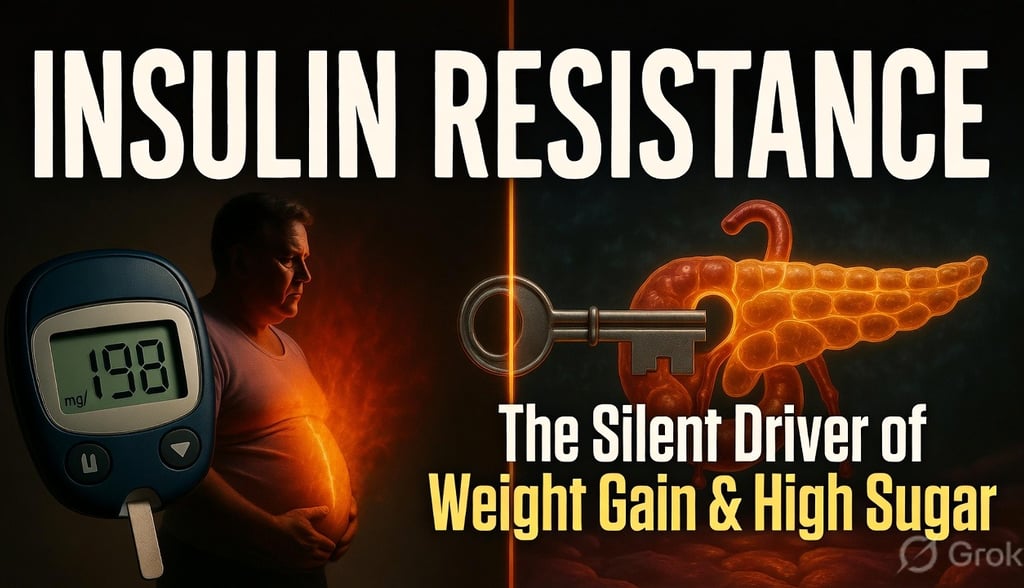
Insulin, produced by the beta cells of the pancreas, is the master regulator of energy metabolism. When we eat, carbohydrates are broken down into glucose, which enters the bloodstream. Rising blood glucose signals the pancreas to release insulin. Insulin then acts as a key, unlocking cells to allow glucose to enter and be used for energy .
In insulin resistance, this lock-and-key mechanism malfunctions. Cells become "deaf" to insulin's signal. The pancreas responds by producing more insulin to force glucose into cells, resulting in hyperinsulinemia—chronically elevated insulin levels . This compensatory phase can last for years, with blood sugar remaining normal only because the pancreas works overtime. Eventually, the pancreas may exhaust itself, insulin production drops, and blood sugar rises into the diabetic range .
1.2 Why "Silent Driver"?
Insulin resistance earns its "silent" designation because it operates without obvious symptoms in its early stages. The classic warning signs—fatigue, increased hunger, frequent urination, darkened skin patches (acanthosis nigricans)—often appear only after significant progression . Meanwhile, the metabolic dysfunction continues unabated, driving weight gain, promoting inflammation, and gradually increasing cardiovascular risk.
1.3 The Indian Imperative
Understanding insulin resistance is particularly urgent for Indians. As Dr. KVS Hari Kumar, Secretary of the Endocrine Society of India, explains, "Many people of Indian origin carry inherited traits that make them more prone to higher insulin resistance and increased visceral fat compared to other ethnic groups, even when their overall body mass index appears normal" .
The numbers underscore this urgency. The ICMR-INDIAB-17 study found that approximately 101 million Indians currently live with diabetes, while another 136 million have prediabetes . This means nearly one in four Indian adults already has significant metabolic dysfunction. Behind every diabetes diagnosis lies years of silent insulin resistance.
2. The Biological Basis: Understanding the Mechanism
2.1 Insulin's Normal Function
Under normal conditions, insulin orchestrates a complex metabolic symphony:
In muscle cells: Insulin promotes glucose uptake for immediate energy or storage as glycogen
In fat cells (adipocytes): Insulin promotes glucose uptake and conversion to fat (lipogenesis), while inhibiting fat breakdown (lipolysis)
In liver cells: Insulin suppresses glucose production (gluconeogenesis) and promotes glycogen storage
This system maintains blood glucose within a narrow, healthy range while ensuring cells receive adequate fuel .
2.2 The Resistance Cascade
When cells become insulin resistant, multiple disruptions occur:
Impaired glucose uptake: Muscle cells fail to take up glucose efficiently, leaving excess glucose in the bloodstream.
Compensatory hyperinsulinemia: The pancreas produces more insulin to overcome resistance, resulting in chronically elevated insulin levels .
Increased fat storage: High insulin levels actively promote fat storage in adipose tissue while inhibiting fat breakdown. As one source explains, "Chronic hyperinsulinemia drives even more glucose into fat cells, increasing fat storage" .
Hepatic overproduction: The liver, no longer properly suppressed by insulin, continues producing glucose, adding to blood sugar elevation.
Inflammatory activation: Dysfunctional fat cells release inflammatory cytokines that further impair insulin signaling, creating a vicious cycle .
2.3 The Role of Fat Cells
Fat cells are not passive storage depots; they are metabolically active endocrine organs. Different fat depots have different effects on insulin sensitivity :
Subcutaneous fat: Located beneath the skin; relatively benign metabolically
Visceral fat: Deep abdominal fat surrounding organs; highly metabolically active and strongly associated with insulin resistance
Ectopic fat: Fat accumulating in organs like liver and muscle; directly impairs function of those organs
Visceral fat releases inflammatory substances that disrupt insulin signaling throughout the body . This explains why waist circumference—a proxy for visceral fat—correlates more strongly with metabolic risk than overall weight.
3. The Indian Paradox: Why We Are Uniquely Vulnerable
3.1 The "Thin-Fat" Indian Phenotype
Indians develop insulin resistance differently from Western populations. Research consistently shows that South Asians have:
Higher body fat percentage at lower body mass index (BMI)
Greater visceral fat accumulation even when appearing lean
Lower muscle mass, reducing the body's metabolic engine
Higher insulin resistance at any given BMI compared to Caucasians
Dr. KVS Hari Kumar describes this as the "thin-fat" body composition: "Even with a normal body mass index, South Asians have extra fat around the belly, a condition known as central or visceral obesity. It has been established that this trend raises the risk of diabetes" .
This phenotype means that an Indian with a BMI of 23 may carry the same metabolic risk as a Caucasian with a BMI of 30. Consequently, many Indians who appear perfectly lean externally may already be experiencing significant insulin resistance .
3.2 Genetic Predisposition
Genetic factors contribute substantially to Indian vulnerability. Studies have identified specific genetic variations more common in Indian populations that affect:
Fat storage patterns
Insulin signaling pathways
Inflammatory responses
Adipokine production
These genetic factors evolved over millennia in an environment of food scarcity and high physical activity. They optimized energy storage—a survival advantage when food was unpredictable. Today, in an environment of calorie abundance and sedentary lifestyles, those same thrifty genes promote insulin resistance and metabolic disease .
3.3 The Dietary Transition
Indian diets have transformed dramatically over recent decades. Traditional meals, while carbohydrate-heavy, used whole grains, millets, pulses, and fiber-rich preparations that slowed glucose absorption. Modern diets feature:
Highly polished white rice and finely milled wheat flour (maida)
Ultra-processed foods and packaged snacks
Sugary beverages and hidden sugars
Reduced protein and fiber
These dietary shifts promote rapid glucose spikes, demanding high insulin release. Over time, constant overstimulation exhausts the system and drives insulin resistance .
3.4 Sedentary Lifestyles and Urbanization
Physical activity has plummeted with urbanization. Desk jobs, screen time, and motorized transport have replaced manual labor and walking. The ICMR-INDIAB study documented low physical activity levels across India, particularly in urban areas .
Simultaneously, chronic stress, sleep deprivation, and irregular schedules disrupt hormonal balance, further impairing insulin sensitivity. As Dr. KVS Hari Kumar notes, "Together, these shifts are fundamentally altering daily habits and metabolic health outcomes. As a result, many Indians who appear thin and healthy externally may already be experiencing underlying metabolic risks" .
4. Insulin Resistance as the Driver of Weight Gain
4.1 The Insulin-Weight Connection
The relationship between insulin resistance and weight gain is bidirectional and self-reinforcing. Insulin resistance promotes weight gain, and weight gain worsens insulin resistance .
Increased fat storage: Chronically elevated insulin actively promotes fat storage. Insulin drives glucose into fat cells and converts excess glucose to fat. With insulin resistance, even higher insulin levels push more glucose into fat cells, accelerating fat accumulation .
Reduced fat breakdown: Insulin inhibits lipolysis—the breakdown of stored fat for energy. High insulin levels effectively lock fat in storage, making it difficult to access fat reserves even during calorie deficit .
Increased appetite: Insulin resistance often causes reactive hypoglycemia—rapid blood sugar drops after meals—triggering hunger and cravings for carbohydrates, perpetuating the cycle .
4.2 Visceral Fat Accumulation
Insulin resistance specifically promotes visceral fat deposition. Visceral fat, in turn, releases inflammatory cytokines that worsen insulin resistance. This vicious cycle explains the characteristic "pot belly" or "apple shape" associated with metabolic syndrome .
4.3 The Weight Loss Challenge
For someone with insulin resistance, weight loss is doubly difficult. The hormonal environment actively opposes fat mobilization. This explains why many individuals with insulin resistance struggle despite genuine efforts—they are fighting their own biochemistry.
4.4 Modest Weight Loss, Major Benefits
The good news is that even modest weight loss significantly improves insulin sensitivity. Long-term studies funded by the National Institutes of Health have found that people who lost 5 to 7 percent of their starting weight substantially reduced their diabetes risk . This level of weight loss—achievable for most—can break the cycle and restore metabolic health.
5. Insulin Resistance as the Driver of High Blood Sugar
5.1 The Path to Prediabetes
As insulin resistance progresses, the pancreas increases insulin production to compensate. For years, this compensation maintains normal blood glucose. However, this is not a stable equilibrium—it is a losing battle .
When compensatory mechanisms eventually fail, blood glucose rises into the prediabetes range:
Fasting glucose: 100–125 mg/dL
Oral glucose tolerance test (2-hour): 140–199 mg/dL
HbA1c: 5.7%–6.4%
With 15% of Indians already in the prediabetic stage, representing approximately 136 million individuals, this is where the greatest opportunity for intervention lies .
5.2 The Transition to Diabetes
When pancreatic beta cells can no longer sustain the high insulin output required, insulin production drops, and blood glucose rises into the diabetes range:
Fasting glucose: ≥126 mg/dL
Oral glucose tolerance test (2-hour): ≥200 mg/dL
HbA1c: ≥6.5%
The ICMR-INDIAB-17 study estimates that 11.4% of Indians now have diabetes—approximately 101 million adults .
5.3 Glycemic Targets
For those with diabetes, the Indian Council of Medical Research guideline specifies a target glycated hemoglobin (HbA1c) value of ≤7% for non-pregnant adults . However, achieving this target remains challenging; the reported mean HbA1c in India is approximately 9.0%, far above recommended levels .
6. The Clinical Consequences: Beyond Blood Sugar
6.1 Metabolic Syndrome
Insulin resistance is the core defect underlying metabolic syndrome—a cluster of conditions including:
Central obesity (increased waist circumference)
Elevated blood pressure
Abnormal cholesterol levels (low HDL, high triglycerides)
Elevated fasting glucose
Metabolic syndrome significantly increases risk of heart disease, stroke, and diabetes .
6.2 Non-Alcoholic Fatty Liver Disease (NAFLD)
Insulin resistance drives fat accumulation in the liver, leading to metabolic dysfunction-associated steatotic liver disease (MASLD) . Studies suggest that 27.4% of Indians may have MASLD, often coexisting with insulin resistance and diabetes . This combination compounds risks for cirrhosis, liver cancer, and cardiovascular disease.
6.3 Cardiovascular Disease
Insulin resistance independently increases cardiovascular risk through multiple mechanisms:
Endothelial dysfunction
Pro-inflammatory state
Pro-thrombotic tendencies
Dyslipidemia
Hypertension
People with diabetes face a 2- to 4-fold higher risk of cardiovascular mortality .
6.4 Polycystic Ovary Syndrome (PCOS)
Insulin resistance is a common feature of PCOS, affecting reproductive-age women. It contributes to hormonal imbalances, menstrual irregularities, infertility, and long-term metabolic risk .
6.5 Other Complications
Long-term insulin resistance and diabetes lead to microvascular complications:
Retinopathy (leading to blindness)
Nephropathy (kidney failure)
Neuropathy (nerve damage, foot ulcers)
The Chronic Kidney Disease (CKD) has been reported in 48.4% of people with T2D .
7. Diagnosing Insulin Resistance: Know Your Numbers
7.1 Clinical Clues
Early signs of insulin resistance may include:
Fatigue, especially after meals
Increased hunger or thirst
Frequent urination
Darkened skin patches (acanthosis nigricans)—often on neck, armpits, or groin
Weight gain, particularly around the abdomen
Difficulty losing weight despite efforts
7.2 Laboratory Assessment
Healthcare providers use several tests to assess insulin resistance:
Fasting glucose: Simple screening test; values above 100 mg/dL indicate concern .
Oral glucose tolerance test (OGTT): Measures glucose response to a standardized carbohydrate load; gold standard for diagnosing prediabetes and diabetes.
HbA1c: Reflects average blood glucose over 2-3 months; values above 5.7% indicate prediabetes, above 6.5% indicate diabetes .
Fasting insulin: Directly measures insulin levels; elevated values suggest insulin resistance.
HOMA-IR (Homeostatic Model Assessment of Insulin Resistance): Calculated from fasting glucose and insulin; provides quantitative estimate of insulin resistance .
Lipid profile: Low HDL, high triglycerides suggest insulin resistance.
7.3 Screening Recommendations
Given India's high prevalence, experts recommend that adults over age 30 undergo annual screening with fasting glucose or HbA1c . Those with risk factors—family history, overweight, sedentary lifestyle, history of gestational diabetes—should begin earlier.
8. Reversing Insulin Resistance: The Evidence-Based Approach
The critical message about insulin resistance is that it is reversible. Through comprehensive lifestyle interventions, most individuals can significantly improve insulin sensitivity and restore metabolic health .
8.1 Exercise: The Most Potent Intervention
Exercise is arguably the most effective tool for reversing insulin resistance. Dr. Gerald I. Shulman of the Yale Diabetes Research Center explains that in a small study of adults, just one 45-minute session of moderate-intensity exercise improved insulin sensitivity; six weeks of regular exercise improved sensitivity by 40 percent .
Recommended exercise targets :
Aerobic activity: 150 minutes of moderate-intensity activity weekly (brisk walking, cycling, swimming) OR 75 minutes of vigorous-intensity activity
Strength training: Two sessions weekly involving all major muscle groups (weights, resistance bands, bodyweight exercises)
Consistency: Benefits dissipate 48-72 hours after stopping, making regularity essential
Exercise improves insulin sensitivity by increasing glucose transporters on muscle cells, enhancing blood flow, reducing inflammation, and promoting healthy weight management .
8.2 Weight Loss: Breaking the Cycle
Weight loss directly improves insulin sensitivity by reducing fat stores, particularly visceral fat, and lowering inflammation . Even modest weight loss of 5-7% of starting body weight significantly reduces diabetes risk .
For someone weighing 80 kg, this means losing just 4-6 kg—an achievable target with sustained lifestyle changes.
8.3 Dietary Strategies
Nutrition plays a central role in improving insulin sensitivity .
Reduce ultra-processed foods: Limit refined carbohydrates (white bread, pasta, polished rice), sugary drinks, and packaged snacks. These cause dramatic blood sugar spikes and promote insulin resistance .
Increase fiber: Fiber slows glucose absorption, improves glycemic control, and supports satiety. Aim for 25-30 grams daily from vegetables, fruits, whole grains, and legumes .
Prioritize healthy fats: Choose unsaturated fats (avocados, nuts, olive oil) and omega-3 fatty acids (fish, flaxseeds). Limit saturated fats and avoid trans fats .
Incorporate lean proteins: Protein promotes fullness, stabilizes blood sugar, and preserves muscle mass. Include lentils, legumes, eggs, fish, lean meats, and low-fat dairy .
Consider meal timing: Some evidence suggests that limiting snacks, avoiding late-night meals, or intermittent fasting may improve insulin sensitivity .
8.4 Indian Food Choices That Support Insulin Sensitivity
Working with Indian culinary traditions, not against them, is essential for sustainable change .
Whole grains and millets:
Roti from whole wheat, jowar, bajra, or ragi
Brown rice, parboiled rice, or hand-pounded rice
Millets (foxtail, little millet, kodo millet)
Protein-rich options:
All dals (moong, toor, masoor)
Paneer (preferably homemade low-fat)
Curd and buttermilk
Eggs and fish
Soybeans and soya chunks
Fiber-filled vegetables:
Ladies finger (bhindi), bitter gourd (karela), beans, ridge gourd, snake gourd
Leafy greens: spinach (palak), amaranth (chaulai), fenugreek (methi)
Raw salads: cucumber, tomato, carrot
Smart snacks:
Roasted chana
Sprouts chaat
Low glycemic index fruits: guava, apple (with skin), orange, papaya
8.5 Sleep: The Non-Negotiable Foundation
Poor sleep disrupts hormonal balance, increasing cortisol and impairing insulin sensitivity . Experts recommend 7-8 hours of quality sleep per night .
Sleep hygiene practices:
Consistent sleep-wake schedule
Dark, quiet, cool sleeping environment
Remove electronic devices from bedroom
Wind down without screens before bed
Limit caffeine and alcohol, especially evenings
8.6 Stress Management
Chronic stress elevates cortisol, which interferes with insulin signaling and promotes insulin resistance . Effective stress management tools include:
Deep breathing exercises
Meditation
Yoga
Spending time in nature
Connecting with loved ones
Engaging in hobbies
8.7 Smoking Cessation
Nicotine and other cigarette chemicals promote inflammation, oxidative stress, and insulin resistance . Quitting smoking improves insulin sensitivity over time, though weight gain concerns should be discussed with healthcare providers .
8.8 Targeted Supplements
While whole foods should be the primary source of nutrition, certain supplements may help :
Omega-3 fatty acids: Reduce inflammation and support cell membrane health
Magnesium: Essential for glucose metabolism; deficiency worsens insulin resistance
Chromium: May support insulin action
Vitamin D: Plays role in insulin function
Important: Always consult a healthcare provider before starting supplements .
9. Pharmacological Interventions: When Lifestyle Isn't Enough
9.1 When to Consider Medication
Some individuals require medication despite optimal lifestyle efforts. Indications include:
Persistent elevation in blood glucose despite lifestyle changes
Diagnosis of diabetes (HbA1c ≥6.5%)
Significant cardiovascular or renal risk
Inability to achieve weight loss goals
9.2 Metformin: First-Line Therapy
Metformin remains the foundation of pharmacological management for insulin resistance and type 2 diabetes. It works primarily by reducing hepatic glucose production and improving peripheral insulin sensitivity .
9.3 Newer Agents
Recent years have seen expansion of treatment options with additional benefits .
SGLT-2 inhibitors: Lower blood sugar by promoting glucose excretion in urine; provide cardiovascular and renal protection independent of glycemic effects.
DPP-4 inhibitors: Enhance incretin hormones, increasing insulin secretion and decreasing glucagon; weight-neutral with good safety profile.
GLP-1 receptor agonists: Stimulate glucose-dependent insulin secretion, suppress glucagon, slow gastric emptying, and promote weight loss. Agents like oral semaglutide have shown significant HbA1c reduction and weight loss benefits .
The 2024 American Diabetes Association standards recommend GLP-1RAs and/or SGLT2 inhibitors for adults with type 2 diabetes and established or high risk of atherosclerotic cardiovascular disease, heart failure, and/or chronic kidney disease .
9.4 Fixed-Dose Combinations
To reduce pill burden and improve adherence, fixed-dose combinations (FDCs) are increasingly recommended in the Indian context . These combine multiple agents in a single tablet, simplifying regimens and potentially reducing costs.
10. Special Populations
10.1 Children and Adolescents
Insulin resistance increasingly affects young Indians. Contributing factors include sedentary lifestyles, screen time, ultra-processed food consumption, and genetic predisposition. Early intervention is critical to prevent progression to type 2 diabetes and complications .
10.2 Women with PCOS
Insulin resistance is central to PCOS pathophysiology. Management should include lifestyle modification with particular attention to weight management, dietary quality, and physical activity. Metformin is often used to improve insulin sensitivity and restore ovulatory function .
10.3 Pregnancy
Gestational diabetes represents pregnancy-induced insulin resistance. Women with gestational diabetes have substantially elevated lifetime risk of type 2 diabetes and should undergo regular postpartum screening. Pregnancy also presents opportunities for lifestyle intervention that benefits both mother and child .
10.4 Older Adults
Insulin sensitivity naturally declines with age. In older adults, management must balance glycemic control with avoidance of hypoglycemia, preservation of physical function, and management of comorbidities .
11. Prevention: The Window of Opportunity
11.1 The Prediabetes Advantage
Prediabetes is not merely a risk state—it is an opportunity. Research consistently shows that intensive lifestyle intervention can prevent or delay progression to type 2 diabetes by 58% . The 136 million Indians with prediabetes today hold the power to change their metabolic destiny .
11.2 Family-Based Approaches
Given the strong genetic component, family-based interventions make sense. When one family member adopts healthier habits, others often follow. Screening family members of affected individuals can identify others at risk.
11.3 Community and Policy Interventions
Individual efforts must be supported by broader changes:
Health-promoting urban design (parks, walkability)
School-based nutrition and physical activity programs
Workplace wellness initiatives
Regulation of food marketing, especially to children
Front-of-pack nutrition labeling
Taxes on sugar-sweetened beverages
12. Conclusion: Taking Control of Your Metabolic Health
Insulin resistance is the silent driver behind India's twin epidemics of obesity and diabetes. It operates invisibly for years, promoting weight gain, raising blood sugar, and increasing cardiovascular risk long before diagnosis. Yet insulin resistance is not destiny. It is reversible.
The tools for reversal are simple, accessible, and evidence-based: regular physical activity, modest weight loss, dietary quality, adequate sleep, stress management, and avoidance of tobacco. For those who need additional support, medications can help.
India's genetic vulnerability demands heightened awareness and earlier action. As Dr. KVS Hari Kumar emphasizes, "Addressing this growing burden requires a decisive shift in mindset from primarily treating diabetes after onset to actively preventing it" .
If you have a family history of diabetes, carry excess weight around your abdomen, or lead a sedentary life, consider this your call to action. Get tested. Know your numbers—fasting glucose, HbA1c, lipid profile, waist circumference. Make one change today, however small.
The window of opportunity is open. For the 136 million Indians with prediabetes, for the 101 million with diabetes, and for the millions more at risk, the time to act is now. Insulin resistance may be silent, but your response to it does not have to be.
References
Times of India. (2026, February 24). How our genes, diet and lifestyle make Indians more vulnerable to diabetes, doctor explains.
Advance Study. (2026, February 7). Does Imbalance of Insulin Cause Obesity?
Verywell Health. (2024, August 12). 8 Lifestyle Changes to Improve Insulin Resistance.
National Institutes of Health (NIH). (2025, June 29). Expert Consensus Statement on Simplified Glycemic Care in Patients With Type 2 Diabetes Mellitus. Cureus, 17(6):e87002.
Advance Study. (2024). Does Weight Gain Cause Insulin Resistance?
Dr. Mohan's Diabetes Specialities Centre. (2025, May 21). Best Indian Foods to Pair with Insulin Therapy.
NPL. (2024, December 9). 5 Ways to Get Insulin Resistance in Check.
Via Medica Journals. (2025, March 14). Expert Opinion on the Cardio-Renal-Metabolic Approach to Management of Adults with Type 2 Diabetes Using Oral Semaglutide: An Indian Perspective. Clinical Diabetology, 14(2):96-116.
Anjana, R. M., Deepa, M., & Pradeepa, R. (2025). Prevalence of diabetes in urban and rural India—ICMR-INDIAB study. In Cardiometabolic Diseases (pp. 37-48). Elsevier.
----
Disclaimer: This blog post is for informational purposes only and does not constitute medical advice. Always consult a qualified healthcare professional before starting any exercise program, especially if you have diabetes or other medical conditions. The information presented is based on current research and may evolve as new evidence emerges.