
It's Not Just Tiredness: The Hidden Signs of Restless Legs Syndrome (RLS)
Imagine this: You have worked hard all day. You finally lie down in your comfortable bed, ready for a peaceful night's sleep. But just as you are about to drift off, an strange, uncontrollable sensation creeps into your legs. It is not exactly pain, but an deep, creeping, crawling feeling deep inside your muscles. The only thing that provides even momentary relief is moving your legs—stretching, kicking, or getting up to walk. You do this repeatedly, night after night, while your family sleeps peacefully beside you. By morning, you are exhausted, irritable, and desperate for answers.
ASF
2/17/202615 min read
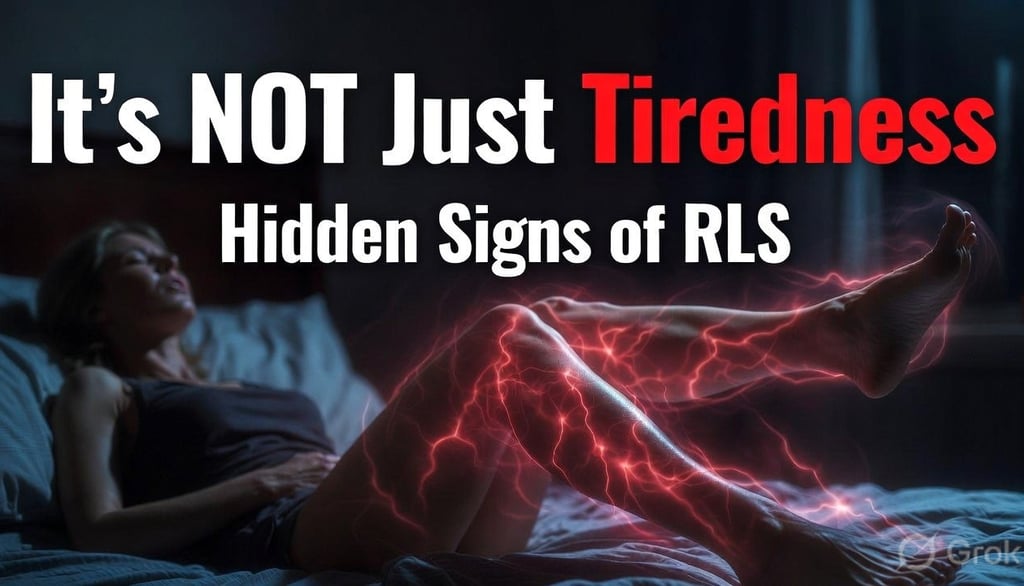
Imagine this: You have worked hard all day. You finally lie down in your comfortable bed, ready for a peaceful night's sleep. But just as you are about to drift off, an strange, uncontrollable sensation creeps into your legs. It is not exactly pain, but an deep, creeping, crawling feeling deep inside your muscles. The only thing that provides even momentary relief is moving your legs—stretching, kicking, or getting up to walk. You do this repeatedly, night after night, while your family sleeps peacefully beside you. By morning, you are exhausted, irritable, and desperate for answers.
If this scenario sounds familiar, you or someone you love may be suffering from Restless Legs Syndrome (RLS)—a neurological disorder that remains tragically underdiagnosed and misunderstood in India. Most people dismiss these symptoms as ordinary tiredness, "body ache" from a long day, or simply "weak nerves." They suffer in silence, unaware that a treatable medical condition is robbing them of sleep, energy, and quality of life.
This comprehensive guide aims to change that. Drawing on the latest international research and Indian studies, we will explore what RLS really is, how to recognize its hidden signs, why it is far more than simple tiredness, and what you can do about it. For the 10-15% of adults who may be affected, and the millions more who remain undiagnosed, this information could be life-changing .
1. Introduction: The Most Misunderstood Movement Disorder
1.1 What Is Restless Legs Syndrome?
Restless Legs Syndrome (RLS), also known as Willis-Ekbom Disease, is a neurological disorder characterized by an uncontrollable urge to move the legs, usually accompanied by uncomfortable sensations . These sensations are often described as creeping, crawling, pulling, tingling, or aching deep within the limbs, typically occurring when the body is at rest—particularly in the evening or at night.
The late Dr. Sudhansu Chokroverty, a pioneering neurologist of Indian origin who made monumental contributions to sleep medicine, once called RLS the "most common movement disorder you have never heard of." His observation remains painfully accurate in India today.
1.2 Why "It's Not Just Tiredness"
The phrase "it's not just tiredness" captures the essence of this condition. Tired legs after a long day are normal. Tired legs that prevent you from sleeping, that force you to get up and walk at 2 AM, that leave you exhausted despite spending eight hours in bed—that is something entirely different.
RLS is a genuine medical condition with identifiable biological underpinnings, not a reflection of laziness, anxiety, or poor character. Understanding this distinction is the first step toward proper diagnosis and treatment.
1.3 The Indian Context: A Silent Epidemic
In India, RLS remains profoundly underrecognized. There are no large-scale epidemiological studies estimating national prevalence, but extrapolating from Western data suggests that between 10 to 25 crore Indians could be affected to some degree . The condition cuts across age groups, though it becomes more common with advancing age, affecting up to 20% of people over 80 .
Why does RLS fly under the radar in India? Several factors contribute:
Attribution to "normal" phenomena: Symptoms are dismissed as routine "body pain" or "thakan" (fatigue).
Low awareness among healthcare providers: Many doctors receive minimal training in sleep medicine and movement disorders.
Cultural silence around sleep: Sleep disturbances are often considered trivial or unworthy of medical attention.
Limited access to specialists: Neurologists and sleep medicine experts are concentrated in metropolitan areas, leaving vast populations underserved.
2. Understanding the Condition: Beyond the Name
2.1 What RLS Feels Like: The Patient's Experience
Patients struggle to find words for what they experience. Common descriptions include:
"It feels like something is crawling inside my bones."
"I feel like I have to move, or I will jump out of my skin."
"It is like soda water fizzing in my veins."
"My legs feel restless, like they want to run even when I am lying down."
"The only relief is when I get up and walk. The moment I lie down again, it starts all over."
These sensations are not merely uncomfortable—they are deeply distressing and can lead to significant psychological suffering over time.
2.2 The Five Essential Diagnostic Criteria
The International Restless Legs Syndrome Study Group (IRLSSG) has established five essential criteria for diagnosing RLS . All five must be present:
CriterionDescription1. Urge to moveAn urge to move the legs, usually accompanied or caused by uncomfortable and unpleasant sensations in the legs2. Worsening at restThe urge to move or unpleasant sensations begin or worsen during periods of rest or inactivity (lying down, sitting)3. Relief with movementThe urge or sensations are partially or totally relieved by movement (walking, stretching) as long as the movement continues4. Circadian patternThe urge or sensations are worse in the evening or at night than during the day, or occur only in the evening/night5. Exclusion of mimicsThe above features are not solely accounted for by another medical or behavioral condition (like leg cramps, positional discomfort, arthritis)
2.3 The Circadian Connection: Why Evenings Are Worst
One of RLS's most distinctive features is its circadian rhythm. Symptoms consistently worsen in the evening and at night, aligning with the body's natural biological clock. This pattern is so characteristic that its absence should raise questions about the diagnosis.
The evening worsening explains why RLS has such devastating effects on sleep. Just as the body prepares for rest, the neurological drive to move intensifies, creating a cruel paradox: the desire for sleep versus the irresistible urge to move.
2.4 Primary Versus Secondary RLS
RLS can be classified into two main categories:
Primary (Idiopathic) RLS:
No identifiable underlying cause
Often runs in families (strong genetic component)
Typically begins before age 40-45
Progresses slowly over decades
Secondary RLS:
Caused by an underlying medical condition or factor
Common causes include iron deficiency, pregnancy, kidney failure, diabetes, and certain medications
May resolve when the underlying cause is treated
Often has more abrupt onset
Distinguishing between primary and secondary RLS is crucial because treatment approaches differ fundamentally. Secondary RLS may be curable by addressing the root cause, while primary RLS requires ongoing management.
3. The Hidden Signs: Recognizing RLS Beyond the Obvious
3.1 The Sensation Spectrum
RLS sensations vary enormously between individuals and even within the same person over time. They can be described as:
Creeping – Like insects crawling under the skin
Crawling – Slow, writhing sensations deep in the muscles
Pulling – A tugging or stretching feeling
Tingling – Pins and needles without clear cause
Aching – Deep, gnawing discomfort
Burning – Heat-like sensations
Electric – Brief, shock-like feelings
Fizzing – Carbonation-like bubbling
Importantly, RLS sensations are not simply "pain," though they can be painful in severe cases. They are dysesthesias—unpleasant abnormal sensations that defy simple description.
3.2 The Urge to Move: More Than Just Fidgeting
Everyone fidgets occasionally. RLS is different. The urge to move is:
Compelling – Difficult or impossible to resist
Recurrent – Returns repeatedly, especially at rest
Relieved only temporarily – Relief lasts only as long as movement continues
Worse at specific times – Evening and night predominance
Patients often develop elaborate strategies to cope: walking in circles, stretching repeatedly, kicking under the covers, or even sleeping in chairs to avoid lying flat.
3.3 Sleep Disturbance: The Invisible Consequence
Sleep disruption is the primary morbidity of RLS. Approximately 90% of people with RLS experience difficulty falling or staying asleep . The consequences cascade:
Prolonged sleep onset – Hours spent trying to fall asleep
Frequent awakenings – Nighttime arousals due to symptoms or periodic limb movements
Non-restorative sleep – Waking feeling unrefreshed regardless of sleep duration
Daytime sleepiness – Excessive fatigue, nodding off during sedentary activities
Cognitive impairment – Difficulty concentrating, memory lapses, reduced productivity
The cumulative sleep debt can be enormous, affecting work performance, relationships, and overall quality of life.
3.4 The Periodic Limb Movement Connection
Most people with RLS also experience Periodic Limb Movements in Sleep (PLMS) —repetitive, involuntary jerking movements of the legs during sleep, occurring every 20-40 seconds . These movements:
Fragment sleep without the person's awareness
Prevent deep, restorative sleep stages
Can be detected through polysomnography (sleep study)
Contribute significantly to daytime fatigue
Sleep partners often notice the kicking or jerking, even when the affected person remains unaware.
3.5 Daytime Symptoms: The Unseen Burden
RLS does not confine itself to nights. Many patients experience daytime symptoms during prolonged sitting—while driving, watching movies, attending meetings, or traveling. The inability to sit still can be socially embarrassing and professionally limiting.
A study using the Parkinson's disease non-motor symptoms questionnaire in RLS patients revealed striking findings :
89.2% reported insomnia
70.3% reported nocturia (frequent nighttime urination)
59.5% reported anhedonia (loss of pleasure)
54.1% reported forgetfulness
43.2% reported anxiety
41.9% reported unexplained pain
These non-motor symptoms highlight the broad impact of RLS beyond simple leg discomfort.
3.6 The Emotional Toll
Living with undiagnosed or poorly treated RLS takes psychological toll:
Frustration and helplessness – The inability to control one's own body
Anxiety about bedtime – Dreading the nightly struggle
Depression – From chronic sleep deprivation and impaired functioning
Relationship strain – Disrupted sleep for partners, irritability during the day
Misunderstanding – Being told to "just relax" or "stop worrying"
Many patients internalize these struggles, believing they are somehow responsible for their symptoms.
4. The Indian Evidence: What Research Reveals
4.1 RLS in Cardiac Patients: An Alarming Finding
A recent cross-sectional study conducted at a tertiary care hospital in India examined the prevalence of RLS among patients who underwent percutaneous coronary intervention (PCI) —a procedure to open blocked heart arteries . The findings were striking:
21.6% of post-PCI patients met diagnostic criteria for RLS
Mean age of symptom onset: 48.5 years
Among those with RLS, 56% had moderate severity, 24% had severe RLS
Poor sleep quality was significantly associated with RLS presence (27.5% vs. 8.33%)
The study concluded that one in five patients with coronary artery disease had RLS, emphasizing the need for identification and treatment to improve quality of life in this vulnerable population.
4.2 RLS in Psychiatric Patients: Astonishing Prevalence
A 2024 study from North India investigated RLS prevalence in patients with common psychiatric disorders . The results were remarkable:
66.7% of patients with depressive disorders had RLS
50% of patients with anxiety disorders had RLS
48% of patients with somatoform disorders had RLS
Nearly one-third suffered from severe to very severe RLS symptoms
Quality of life was poorest in those with co-existing depressive disorders
Significant predictors of RLS included female gender and presence of clinical insomnia. The researchers emphasized that RLS is "commonly missed in routine psychiatry practice" despite its high prevalence .
4.3 Vitamin B12 Deficiency: An Underappreciated Cause
A compelling case report from Kolkata described a 24-year-old man with severe RLS (score 25 on severity scale) who failed to improve with standard medications including gabapentin and pramipexole . Further investigation revealed:
Serum vitamin B12 level: 45 pg/mL (normal: 150–950)
Diagnosis: Pernicious anemia (positive intrinsic factor and parietal cell antibodies)
Complete resolution of symptoms with vitamin B12 supplementation alone
One-month follow-up: RLS severity score 0
Three-month follow-up: All other medications discontinued without relapse
This case illustrates that RLS can be an early and isolated manifestation of vitamin B12 deficiency—long before other neurological symptoms develop . Given that vitamin B12 deficiency is common in India due to dietary patterns, this connection has profound implications.
4.4 Other Secondary Causes in Indian Populations
Indian research has identified numerous conditions associated with secondary RLS :
Iron deficiency anemia – Five to sixfold increased RLS prevalence
Diabetes mellitus – Prevalence ranges from 8% to 45% in type 2 diabetes
Chronic kidney disease – Common in patients undergoing hemodialysis
Hypothyroidism – Dopaminergic dysfunction links thyroid disorders and RLS
Rheumatoid disorders – Chronic inflammation may contribute
Pregnancy – Particularly third trimester, usually resolving after delivery
4.5 Genetic Factors
While comprehensive Indian genetic studies are lacking, international research has identified multiple risk genes, including BTBD9, MEIS1, and others . These genes influence iron metabolism and dopaminergic function, providing biological plausibility for the disorder.
5. The Biological Basis: What Happens Inside the Body
5.1 Brain Iron Deficiency: The Central Player
The most established biological abnormality in RLS is brain iron deficiency . Key findings include:
Reduced iron in specific brain regions (substantia nigra, thalamus)
Abnormal iron transport proteins
Impaired iron uptake by neurons
Normal peripheral iron stores in many patients
Iron is essential for dopamine synthesis and function. Even mild brain iron deficiency can disrupt dopamine signaling, producing RLS symptoms.
The 2024 American Academy of Sleep Medicine (AASM) guidelines now mandate routine iron studies (ferritin, transferrin saturation) for all patients with clinically significant RLS . Intervention thresholds are set at:
Ferritin below 75 ng/mL
Transferrin saturation below 20%
5.2 Dopamine Dysfunction: The Neurotransmitter Connection
Dopamine plays a central role in RLS pathophysiology. Evidence includes:
Symptoms improve with dopamine-enhancing medications
Symptoms worsen with dopamine-blocking drugs
Circadian fluctuations in dopamine activity match symptom patterns
Brain imaging shows dopaminergic abnormalities
However, the relationship is complex. While dopamine drugs help initially, they can paradoxically worsen symptoms over time—a phenomenon called augmentation.
5.3 The Genetic Contribution
RLS has a strong genetic component. Family studies show:
First-degree relatives of affected individuals have 3-6 times higher risk
Heritability estimated at 50-60%
Multiple risk genes identified, affecting iron handling and neural development
In familial cases, symptoms often begin earlier and progress more slowly.
5.4 The Role of Other Nutrients
Beyond iron and vitamin B12, other nutritional factors may contribute :
Folate deficiency – Associated with RLS in pregnancy
Magnesium – May influence muscle excitability
Vitamin D – Emerging research on possible links
However, evidence for these associations is less robust than for iron and B12.
6. The Great Mimickers: Conditions Confused with RLS
6.1 Why Misdiagnosis Is Common
Even in expert hands, RLS diagnosis is accurate in only about 85% of cases . The remaining 15% represent either missed RLS or conditions that mimic RLS. This section helps distinguish RLS from its common impostors.
6.2 Nocturnal Leg Cramps
FeatureRLSLeg CrampsSensationCreeping, crawling, urge to moveIntense muscle pain, tighteningMuscle stateRelaxedContracted, palpable knotReliefMovement provides reliefStretching relieves, but pain lingersTimingWorsens at rest, improves with movementOccurs suddenly, often awakening from sleep
6.3 Peripheral Neuropathy
FeatureRLSNeuropathySensationDeep, poorly localizedOften burning, numbness, "stocking-glove" distributionMovement effectRelieves symptomsNo effect or worsensCircadian patternEvening/night worseningConstant, may be worse at night due to attentionExaminationUsually normalMay show sensory loss, absent reflexes
Diabetic neuropathy particularly complicates diagnosis, as both conditions can co-exist. Nerve conduction studies may help differentiate .
6.4 Akathisia
FeatureRLSAkathisiaSensationLeg-focused discomfortInner restlessness, whole-bodyMovementWalking relievesUnable to sit still, pacingTimingEvening/night predominanceConstant, no circadian patternContextOften genetic or secondaryUsually medication-induced (antipsychotics)
6.5 Positional Discomfort
FeatureRLSPositional DiscomfortOnsetMinutes after lying downImmediate upon assuming positionReliefMovement requiredChanging position provides instant reliefPersistenceReturns when stillResolves with comfortable position
6.6 Arthritis and Joint Pain
FeatureRLSArthritisLocationDeep, poorly localizedJoint-specificMovementWalking relievesWalking may worsenExaminationNormalJoint swelling, tenderness, reduced range
6.7 Venous Insufficiency
FeatureRLSVenous DiseaseSensationUrge to moveHeaviness, achingPositionWorse lying downWorse standing, improved with elevationSignsNoneVaricose veins, swelling, skin changes
6.8 Differential Diagnosis Flowchart
A clinical approach to distinguishing RLS from mimics involves systematically evaluating:
Is there an urge to move? (Core feature of RLS)
Does rest trigger symptoms? (RLS hallmark)
Does movement relieve? (RLS hallmark)
Is there evening/night worsening? (RLS hallmark)
Are there examination findings? (Normal in RLS, abnormal in mimics)
Is there another explanation? (Rule out mimics)
7. Treatment Update: The 2024 AASM Guidelines
7.1 A Paradigm Shift in Management
The 2024 American Academy of Sleep Medicine (AASM) guidelines represent a fundamental shift in RLS treatment . Compared to previous recommendations, the new guidelines emphasize:
Long-term safety over short-term efficacy
Patient-centered care and shared decision-making
Evidence-based practices from recent clinical trials
Iron management as a cornerstone of treatment
7.2 Iron: The First-Line Intervention
For the first time, iron studies are mandated for all patients with clinically significant RLS . The guidelines recommend:
Oral iron for mild deficiency (ferritin <75 ng/mL)
Intravenous ferric carboxymaltose for moderate deficiency or when oral iron fails
Regular monitoring of iron parameters during treatment
This emphasis reflects growing recognition that brain iron deficiency underlies many RLS cases, regardless of peripheral iron levels.
7.3 Pharmacological Treatments: What's Changed
Dopamine Agonists (Pramipexole, Ropinirole):
Previously first-line, now conditionally recommended
Concern: Augmentation—worsening of symptoms with continued treatment
Concern: Impulse control disorders (compulsive gambling, shopping)
Use limited to short-term, low-dose scenarios
Gabapentinoids (Gabapentin, Pregabalin, Gabapentin Enacarbil):
Now first-line for most patients
Effective for symptom reduction
Improve sleep quality
Lower risk of augmentation
Particularly useful when pain or neuropathy co-exists
Opioids (Extended-Release Oxycodone):
Reserved for refractory cases unresponsive to other treatments
Careful monitoring required for dependence and overdose risk
Only after exhausting other options
7.4 Non-Pharmacological Interventions
The 2024 guidelines strongly endorse lifestyle modifications :
Avoid exacerbating factors: Caffeine, alcohol, nicotine (especially evening)
Regular exercise: Moderate activity, not too intense before bed
Sleep hygiene: Consistent sleep schedule, comfortable sleep environment
Cognitive behavioral therapy for insomnia: Addresses co-existing sleep disturbance
Leg massage and warm baths: May provide symptomatic relief
7.5 Device-Based Therapies
Novel interventions receive conditional support in the 2024 guidelines :
High-frequency peroneal nerve stimulation: For refractory cases
Pneumatic compression devices: May benefit some patients
Vibratory stimulation: Emerging evidence
7.6 Treating Underlying Causes
For secondary RLS, treating the root cause is paramount:
Iron deficiency: Supplementation (oral or IV)
Vitamin B12 deficiency: Replacement therapy
Uremia: Optimize dialysis, consider kidney transplantation
Medication-induced: Discontinue offending drugs (antidepressants, antihistamines, dopamine-blocking agents)
Pregnancy-related: Usually resolves after delivery; focus on iron and folate
7.7 The Indian Treatment Context
In India, treatment must consider:
Availability and cost of newer medications
Access to specialists for complex cases
Cultural attitudes toward chronic medication use
Dietary patterns affecting iron and B12 status
Traditional remedies (massage, yoga, Ayurveda) as complementary approaches
8. Practical Management: A Guide for Indian Patients
8.1 When to See a Doctor
Consider medical evaluation if:
Leg discomfort regularly interferes with falling asleep
You feel an irresistible urge to move your legs when resting
Your sleep partner notices leg jerking during the night
You experience excessive daytime sleepiness despite adequate time in bed
Symptoms affect your quality of life, work, or relationships
8.2 What to Expect During Evaluation
A proper RLS evaluation includes:
Detailed history – Symptom description, timing, triggers, family history
Physical and neurological examination – To exclude mimics
Blood tests – Complete blood count, ferritin, transferrin saturation, vitamin B12, folate, kidney function, thyroid function
Sleep study – If sleep apnea or periodic limb movements suspected
8.3 Questions to Ask Your Doctor
Could my symptoms be RLS?
Do I need blood tests for iron and vitamin B12?
What lifestyle changes might help?
What medications are appropriate for my situation?
How will we monitor for side effects?
What is augmentation, and how will we recognize it?
8.4 Lifestyle Modifications That Help
Exercise:
Moderate aerobic activity (walking, swimming, cycling)
Avoid intense exercise close to bedtime
Regular stretching, especially leg muscles
Yoga may benefit through relaxation and stretching
Sleep Hygiene:
Consistent sleep-wake schedule
Cool, quiet, comfortable sleep environment
Avoid screens 1 hour before bed
Relaxation routines before bedtime
Dietary Considerations:
Ensure adequate iron intake: leafy greens, legumes, fortified cereals
Pair iron-rich foods with vitamin C for absorption
Monitor vitamin B12, especially for vegetarians
Consider B12 supplementation if deficient
Trigger Avoidance:
Eliminate caffeine after noon
Reduce or eliminate alcohol
Stop smoking (nicotine worsens symptoms)
Review medications with doctor (some antidepressants, antihistamines can trigger RLS)
8.5 Immediate Relief Strategies
When symptoms strike:
Get up and walk
Stretch legs thoroughly
Take a warm bath
Massage legs
Apply warm or cool packs
Distract yourself with engaging activity
Use counter-stimulation (firm pressure, vibration)
8.6 Pregnancy and RLS
RLS is common in pregnancy, especially third trimester . Safe approaches include:
Iron and folate supplementation (check levels)
Exercise within pregnancy limits
Leg massage
Warm baths
Most medications avoided; consult obstetrician
8.7 Children and RLS
RLS can affect children, though diagnosis is challenging . Features include:
"Growing pains" that don't fit typical pattern
Sleep disruption
Daytime fidgeting, difficulty sitting still
Family history common
Evaluation by a pediatric neurologist or sleep specialist is recommended.
9. Living with RLS: Beyond Treatment
9.1 The Psychological Impact
Living with chronic RLS affects mental health. Strategies include:
Acknowledgment – Recognize RLS as a real medical condition, not personal failure
Support groups – Connect with others who understand
Counseling – Address anxiety, depression, sleep-related fears
Stress management – Meditation, deep breathing, progressive muscle relaxation
9.2 Relationships and RLS
RLS affects not only patients but also their bed partners. Open communication is essential:
Explain the condition to family members
Discuss sleep arrangements if needed
Seek partner's support without guilt
Consider separate covers or beds if necessary
9.3 Work and Daily Functioning
Daytime symptoms can affect work. Practical tips:
Schedule breaks for movement
Use standing desks
Alert supervisors if accommodations needed
Plan travel with opportunities to stretch
Avoid prolonged meetings without breaks
9.4 Travel Tips
Traveling with RLS requires planning:
Request aisle seats on flights
Stand and walk during flight whenever possible
Pack comfortable shoes for walking
Carry medication in hand luggage
Research nearby parks or walking areas at destinations
10. Special Populations and Comorbidities
10.1 RLS and Cardiovascular Disease
The Indian PCI study revealed that 21.6% of heart patients had RLS . This association is clinically important because:
RLS increases cardiovascular risk through sleep disruption and autonomic activation
RLS symptoms may be overlooked in cardiac patients focused on heart health
Treatment of RLS can improve quality of life in cardiac patients
Some cardiac medications may affect RLS (beta-blockers, calcium channel blockers)
10.2 RLS and Psychiatric Disorders
The striking prevalence of RLS in psychiatric patients (66.7% in depression, 50% in anxiety) has profound implications :
RLS may masquerade as or exacerbate psychiatric symptoms
Sleep disruption from RLS worsens depression and anxiety
Psychiatric medications can trigger or worsen RLS (antidepressants, antipsychotics)
Untreated RLS may impair response to psychiatric treatment
Screening for RLS should be routine in psychiatric practice.
10.3 RLS and Diabetes
RLS affects 8-45% of people with type 2 diabetes . Important considerations:
Diabetic neuropathy can mimic or co-exist with RLS
RLS is associated with higher rates of diabetic complications (retinopathy, nephropathy)
Macrovascular complications (heart disease, stroke) more common in diabetic patients with RLS
Glycemic control may influence RLS severity
10.4 RLS and Kidney Disease
RLS is highly prevalent in chronic kidney disease, especially among dialysis patients . Mechanisms include:
Iron deficiency from blood loss, reduced absorption
Uremic toxin accumulation
Neuropathy
Sleep disruption from dialysis schedule
Treatment requires coordination with nephrology care.
10.5 RLS and Parkinson's Disease
The relationship between RLS and Parkinson's disease is complex and controversial . Some evidence suggests:
RLS may be a prodromal feature of Parkinson's in some cases
The two conditions share dopaminergic dysfunction
However, most RLS patients never develop Parkinson's
Treatment approaches differ substantially
11. Future Directions: Research and Hope
11.1 Emerging Research in India
Indian researchers are increasingly studying RLS:
Prevalence studies in specific populations
Genetic studies in Indian cohorts
Vitamin B12-iron interactions
Traditional medicine approaches
Cost-effective treatment algorithms
11.2 New Treatment Approaches
Promising developments include:
More selective iron formulations
Novel α2δ ligands with fewer side effects
Adenosine receptor modulators
Personalized treatment based on genetic profiles
Improved dopamine agonists with lower augmentation risk
11.3 Advocacy and Awareness
Growing recognition of RLS as a legitimate disorder is essential. Efforts include:
Medical education for physicians and trainees
Public awareness campaigns
Patient support organizations
Research funding prioritization
Integration into primary care training
12. Conclusion: It's Time to Take RLS Seriously
Restless Legs Syndrome is not just tiredness. It is not a figment of imagination. It is not a character flaw or a sign of weakness. It is a genuine neurological disorder affecting millions of Indians, robbing them of sleep, energy, and quality of life.
The hidden signs are all around us—the colleague who seems perpetually exhausted despite adequate sleep, the family member who paces at night, the friend who cannot sit through a movie without fidgeting, the patient whose depression does not improve despite treatment. Behind each of these scenarios, RLS may be the unrecognized culprit.
The good news is that RLS is treatable. With proper diagnosis, appropriate investigation for underlying causes (especially iron and vitamin B12 deficiency), and evidence-based treatment guided by the latest guidelines, most people with RLS can achieve significant symptom relief and restored quality of life.
If you recognize yourself in these pages, do not suffer in silence. Consult a healthcare provider—a neurologist, sleep specialist, or even a primary care physician with knowledge of RLS. Bring this article if it helps you describe what you experience. Request appropriate testing. Explore treatment options.
For the millions of Indians living with undiagnosed RLS, the path to better sleep and better health begins with a single step: recognizing that it is not just tiredness. It is RLS, and it deserves attention, understanding, and care.
References
Gupta A, et al. (2025). Prevalence of Restless Legs Syndrome in Patients Who Underwent Percutaneous Coronary Intervention in a Tertiary Care Hospital: A Cross-Sectional Study. Annals of Indian Academy of Neurology.
Khara N. (2024). A Paradigm Shift: Latest (2024) American Academy of Sleep Medicine Guidelines for Restless Legs Syndrome and Periodic Limb Movement Disorder. Journal of Sleep Medicine.
Poplawska-Domaszewicz K, et al. (2025). The complexities in the differential diagnosis of restless legs syndrome (Willis-Ekbom disease). Expert Review of Neurotherapeutics, 25(2):157-173.
Garcia-Borreguero D, Williams AM. (2014). An update on restless legs syndrome (Willis-Ekbom disease): clinical features, pathogenesis and treatment. Current Opinion in Neurology, 27(4):493-501.
Dani M, Sharma S. (2024). Cognitive Resilience in Willis Ekbom Disease: Enhancing Functionality through Neurophysiotherapy Interventions. Journal of Clinical and Diagnostic Research, 18(3):55.
Aneja J, et al. (2024). Prevalence and clinical correlates of restless legs syndrome in psychiatric patients: A cross-sectional study from North India. Indian Journal of Psychiatry, 66(1):58-66.
Neurology and Sleep Centre. (2025). RLS Treatment in India.
Jha S, Pendyala SK, Mahale RR. (2024). Establishing the Law of Parsimony in a Case of Restless Legs Syndrome. Journal of Sleep Medicine.
Allen RP, et al. (2014). Restless legs syndrome/Willis-Ekbom disease diagnostic criteria: Updated International Restless Legs Syndrome Study Group consensus criteria. Sleep Medicine, 15:860-73.
Winkelman JW, et al. (2024). Treatment of restless legs syndrome and periodic limb movement disorder: An American Academy of Sleep Medicine clinical practice guideline. Journal of Clinical Sleep Medicine.
----
Disclaimer: This blog post is for informational purposes only and does not constitute medical advice. Always consult a qualified healthcare professional before starting any exercise program, especially if you have diabetes or other medical conditions. The information presented is based on current research and may evolve as new evidence emerges.