Obesity & Diabetes: The Twin Epidemic – An Indian Perspective
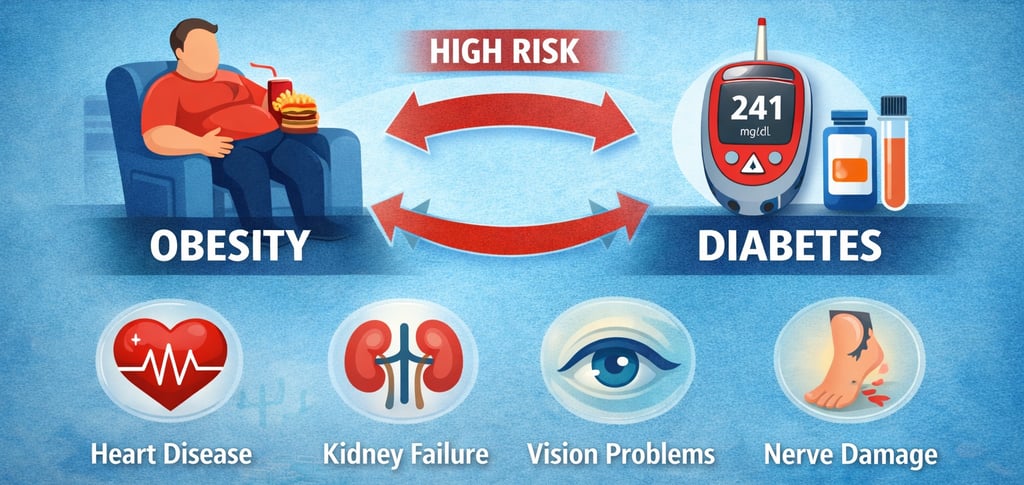
Two public health crises are no longer marching in parallel—they have collided. India is today confronting a phenomenon that medical experts have termed the "twin epidemic": the deadly synergy of obesity and diabetes. This convergence, often called "diabesity," represents the most significant health challenge of the twenty-first century for our nation
ASF
15 min read
Two public health crises are no longer marching in parallel—they have collided. India is today confronting a phenomenon that medical experts have termed the "twin epidemic": the deadly synergy of obesity and diabetes. This convergence, often called "diabesity," represents the most significant health challenge of the twenty-first century for our nation.
India stands at a unique and precarious crossroads. We are a country with a genetic predisposition that makes us more vulnerable to metabolic diseases at lower body weights than any other population group. We are a society transitioning rapidly from traditional diets to ultra-processed foods. We are a nation where nearly one in four adults is now overweight or obese, and where over 101 million people live with diabetes.
This comprehensive guide examines the twin epidemic from every angle—its roots in our biology and environment, its staggering economic cost, the policy response from our government, and most importantly, what every Indian family can do today to protect themselves.
1. Understanding the Twin Epidemic
1.1 What Is Diabesity?
The term "diabesity" describes the intimate, bidirectional relationship between obesity and type 2 diabetes. It is not merely the coexistence of two conditions but a metabolic dysfunction where excess body fat—particularly visceral fat—drives insulin resistance, which in turn makes weight loss more difficult.
This is not a problem confined to the wealthy or to urban India. The twin epidemic has permeated every stratum of society, every age group, and every geographic region. What makes it particularly insidious is its silent progression. Years before blood sugar levels rise, years before a diabetes diagnosis, metabolic damage accumulates silently within the body.
1.2 The Scale of the Crisis: Latest Data
The numbers emerging from recent studies are sobering. According to the Economic Survey 2025-26, which for the first time integrated health indicators into economic planning, 24% of Indian women and 23% of Indian men aged 15-49 are now classified as overweight or obese. This represents a nearly fivefold increase from three decades ago.
Among children under five, excess weight prevalence rose from 2.1% in 2015-16 to 3.4% in 2019-21. Estimates suggest over 3.3 crore children were obese in 2020, a figure projected to reach 8.3 crore by 2035 if current trends continue.
On the diabetes front, the ICMR-INDIAB national study estimates that approximately 101 million people in India have diabetes, with another 136 million in the prediabetic stage. This means nearly one in four Indians is either diabetic or at immediate risk of becoming so.
Perhaps most alarming is the overlap. An Indian study found that nearly 80% of prediabetics are overweight or obese. The twin epidemic is not two separate problems—it is one problem with two faces.
1.3 Why "Twin"? The Bidirectional Relationship
The relationship between obesity and diabetes is cyclical and self-reinforcing. Excess fat, particularly visceral fat accumulated around internal organs, is not inert storage tissue. It is metabolically active, releasing inflammatory substances called adipokines that interfere with insulin signalling. This creates insulin resistance, forcing the pancreas to produce more insulin to maintain normal blood sugar.
Over time, the pancreas exhausts itself. Insulin production falters, and blood sugar rises—diabetes sets in. But the story does not end there. Diabetes medications and the metabolic derangements of high blood sugar can promote further weight gain, deepening obesity and worsening insulin resistance. The cycle continues.
This bidirectional relationship explains why addressing only one aspect of the twin epidemic—focusing solely on blood sugar while ignoring weight, or pursuing weight loss without understanding metabolic health—often yields disappointing results.
2. The Indian Paradox: Why We Are Uniquely Vulnerable
2.1 The Asian Indian Phenotype
Indians do not develop obesity and diabetes the way Western populations do. We have what researchers call the "Asian Indian phenotype" or the "thin-fat" Indian paradox.
This phenotype is characterised by:
- Higher body fat percentage at lower body mass index (BMI)
- Greater visceral fat accumulation—the dangerous fat around organs
- Lower muscle mass, reducing the body's metabolic engine
- Higher insulin resistance even in the absence of significant weight gain
Studies show that South Asians require a BMI as low as 22 kg/m² to match the diabetes risk that Caucasians face at a BMI of 30 kg/m². This means an Indian who appears perfectly lean by Western standards may already be metabolically obese, carrying hidden visceral fat that drives diabetes risk.
The ICMR-INDIAB study quantified this phenomenon nationally, finding that approximately 43.3% of Indians exhibit "metabolically obese normal weight" (MONW) —individuals who look thin but carry dangerous levels of visceral fat.
2.2 Genetic Predisposition
Research has identified specific genetic variations more common in Indian populations that affect how we store fat and process glucose. These genetic factors, combined with rapid environmental changes over the past few decades, have created a perfect storm.
Our genes evolved over millennia in an environment of food scarcity and high physical activity. They were optimised for efficient energy storage—a survival advantage when food was scarce. Today, in an environment of calorie abundance and physical inactivity, those same thrifty genes become a liability, promoting fat storage and metabolic dysfunction.
2.3 The Dual Burden: Undernutrition and Overnutrition
India faces a unique "dual burden" of malnutrition. In many families, undernutrition in one generation—particularly during fetal development and early childhood—programs the metabolism for efficient energy storage. When that individual later encounters a calorie-rich environment, their body responds by storing more fat, increasing diabetes risk .
This phenomenon, known as the "thrifty phenotype" hypothesis, means that the rapid economic improvement India has experienced may paradoxically increase metabolic disease risk among those who experienced early-life undernutrition. States like Tamil Nadu illustrate this dual burden vividly, with undernutrition persisting in some communities while obesity rises in others.
3. The Drivers of the Epidemic
3.1 Dietary Transformation: The Shift to Ultra-Processed Foods
Perhaps the single most important driver of the twin epidemic is the dramatic transformation of the Indian diet over the past three decades.
Traditional Indian diets were home-cooked, predominantly plant-based, and rich in legumes, whole grains, vegetables, fruits, and nuts. Fermented foods promoting gut health were common. However, they also had drawbacks, including high salt intake from pickles and papads.
The modern Indian diet tells a different story. Recent decades have witnessed a shift toward foods high in refined carbohydrates, fats, sugar, and salt, alongside an increase in the consumption of ultra-processed foods (UPFs).
The statistics are startling. The Economic Survey 2025-26 reports that retail sales of ultra-processed foods in India grew over 150% between 2009 and 2023. India consumed 8.68 billion servings of instant noodles in 2023 alone, with the true figure likely higher due to offline sales. Urban elite households now allocate nearly half of their food budget to packaged food, dining out, and delivery, up from 41.2% a decade ago. Spending on processed food rose by 2.2 times among elite urban consumers and 3.3 times among the middle class.
3.2 The Refined Carbohydrate Overload
Traditional Indian meals were carbohydrate-heavy, but those carbohydrates came with fibre intact—whole grains, unpolished rice, and legumes that slowed digestion and glucose absorption.
Today, we have shifted toward refined carbohydrates with devastating metabolic effects. Highly polished white rice, finely milled wheat flour (maida), and products made from them dominate our plates. A study in Chennai reported that the mean refined grain intake in a cohort of 2,042 participants was 333 g/day—46.9% of total calories.
Refined carbohydrates are absorbed rapidly, causing sharp spikes in blood sugar and insulin. Over time, this constant demand exhausts the pancreas and promotes insulin resistance. They also lack the fibre that traditionally provides satiety, leading to overconsumption.
3.3 Hidden and Added Sugars
Sugar has infiltrated the Indian diet in ways many do not recognise. According to ICMR-NIN data, average daily added sugar consumption in urban cities is 16 g/person/day and 13 g/person/day in rural areas. However, a 24-hour diet recall suggests the majority comes from sweets consumption, packaged fruit juices, carbonated beverages, and cakes.
The true challenge lies in hidden sugars. Sugar is estimated to be found in 75% of packaged foods, often under names consumers do not recognise—maltose, inverted sugar, high-fructose corn syrup, and over 400 other terms manufacturers use to obscure sugar content. Many products marketed as "sugar-free" still contain multiple forms of sugar.
3.4 Changes in Cooking Oils and Fats
Urbanisation has altered not just how much oil we consume but which oils we use. Traditional fats like ghee (in moderation) and cold-pressed oils have been replaced by refined vegetable oils—palm, sunflower, and soybean oils, high in omega-6 fatty acids.
Between 2007 and 2020, India's per capita ghee and butter consumption nearly doubled—from 2.7 kg/year (7.4 g/person/day) to 4.48 kg/year (12.3 g/person/day). In North India, the use of vanaspati containing up to 53% trans fats in fried and baked foods remains a major concern.
The decline in omega-3 fatty acids and the rise in trans fats and omega-6 oils contribute to chronic inflammation, a key driver of insulin resistance and metabolic disease.
3.5 Physical Inactivity and Sedentary Lifestyles
As diets have worsened, physical activity has plummeted. Urbanisation has reduced occupational physical activity—fewer people work in agriculture or manufacturing, and more sit at desks. Leisure time, once spent outdoors, is now dominated by screens.
The Economic Survey 2025-26 introduced a novel concern: digital addiction. Excessive screen time is associated with reduced physical activity, sleep deprivation, and stress—all of which compound metabolic risk. The convergence of sedentary behaviour with poor diet creates the metabolic perfect storm driving the twin epidemic.
3.6 The Food Environment: Commercial Determinants of Health
Individual choices are shaped by the environment in which they are made. India's food environment has been transformed by aggressive marketing, expansion of fast-food chains, and the affordability of ultra-processed foods.
Quick commerce and delivery platforms have made calorie-dense, nutrient-poor foods available at the touch of a button, often cheaper than healthier alternatives. About 74% of Indians cannot afford a healthy diet due to low income levels, while ultra-processed foods are often priced lower.
A study conducted in Chennai found that a high Retail Food Environment Index (RFEI)—meaning higher density of fast-food outlets relative to healthy options—correlated strongly with diabesity prevalence. Our environment is quite literally making us sick.
4. The Economic Shock: Costs to the Nation and Families
4.1 The National Economic Burden
The twin epidemic carries an enormous economic price tag. Recent estimates suggest that obesity and its associated conditions currently cost the Indian economy approximately $28.9 billion annually. This figure accounts for direct healthcare spending as well as indirect costs from premature mortality, absenteeism, and reduced on-the-job performance (presenteeism).
A more detailed analysis projects that by 2030, the cost could rise to $81.5 billion—around 1.6% of GDP. For a young country aspiring to global economic leadership, permitting such a preventable drain on human capital is simply not an option.
4.2 The Family's Financial Burden
Behind these macro-level figures are painful personal stories. Families are selling land or pledging jewellery to pay for repeated hospitalisations. Workers in their forties are living with diabetes, heart disease, and disability, their most productive years stolen.
The cost of diabetes management alone—doctor consultations, medications, monitoring equipment, laboratory tests—can consume a significant portion of household income for lower-middle-class families. When complications develop, requiring hospitalisation or dialysis, the financial devastation is complete.
4.3 The Productivity Impact
The twin epidemic affects not just those diagnosed but the entire economy. Workers with poorly managed diabetes are more likely to take sick leave, retire early, or die prematurely. The Tony Blair Institute report emphasises that obesity and its associated chronic conditions generate higher rates of premature mortality, absenteeism, and presenteeism—working while unwell, which reduces productivity.
For a nation depending on its demographic dividend—a young, productive workforce—the twin epidemic threatens to transform that dividend into a liability.
5. From Prediabetes to Complications: The Clinical Journey
5.1 The Prediabetes-Obesity Connection
Prediabetes represents the critical intervention window. The International Diabetes Federation 2025 Atlas estimates nearly 90 million Indians are affected by prediabetes. Alarmingly, an Indian study found that nearly 80% of prediabetics are overweight or obese.
The ICMR study revealed India's metabolic landscape in detail:
- 43.3%: Metabolically obese, non-obese (MONO) — normal weight but metabolically unhealthy
- 28.3%: Metabolically obese, obese (MOO) — obese and metabolically unhealthy
- 26.6%: Metabolically healthy, non-obese (MHNO)
- 1.8%: Metabolically healthy, obese (MHO)
These numbers reveal that metabolic health cannot be assumed from appearance. Even those who look thin may be at high risk.
5.2 The Remission Revolution
Perhaps the most hopeful development in diabesity management is the growing evidence for type 2 diabetes remission—maintaining an HbA1c below 6.5% for at least three months without medication.
A study of an Indian cohort of 2,384 patients undergoing intensive lifestyle interventions found that 31.2% achieved remission. The strongest predictors for success included:
- Being under the age of 50
- Disease duration of less than six years
- Achieving weight loss of 10% or more
This suggests that early, aggressive intervention can essentially "reset" metabolism for a significant portion of the population. The window is narrow, but it exists.
5.3 Complications When Intervention Fails
When the twin epidemic proceeds unchecked, complications multiply:
Microvascular Complications:
- Retinopathy leading to blindness
- Nephropathy requiring dialysis
- Neuropathy causing loss of sensation and foot ulcers
Macrovascular Complications:
- Heart attacks and strokes
- Peripheral vascular disease
Liver Complications:
Metabolically dysregulated steatotic liver disease (MASLD) now affects 27.4% of the Indian population, often coexisting with type 2 diabetes. This combination compounds risks for heart disease, kidney disease, liver cancer, and stroke.
6. Policy Response: What Is Being Done
6.1 Government Recognition and Initiatives
The government has recognised the gravity of the twin epidemic. Prime Minister Narendra Modi has emphasised the need for enhancing awareness and urged collective action to reduce obesity. The Prime Minister's call to reduce oil consumption by 10% reflects growing policy attention to dietary habits.
The Economic Survey 2025-26 marked a turning point by integrating health indicators into economic planning, suggesting that long-term productivity and inclusive growth are closely tied to the nation's health outcomes.
6.2 FSSAI's Stop Obesity Campaign
On World Food Safety Day 2025, Union Health Minister Jagat Prakash Nadda launched FSSAI's "Awareness Initiative to Stop Obesity" under the Eat Right India programme. The campaign aims to raise nationwide awareness about obesity's health risks and promote healthier eating habits.
A key innovation has been the installation of "Sugar and Oil Boards" in schools, workplaces, and public spaces. These boards display the hidden sugars and fats in popular foods like samosas, kachori, pizza, pakoras, banana chips, burgers, soft drinks, and chocolate pastries, along with recommended daily intake limits. AIIMS Delhi has committed to installing these boards to help healthcare workers boost their health.
6.3 ICMR Dietary Guidelines
The Indian Council of Medical Research and National Institute of Nutrition released comprehensive dietary guidelines in 2024, comprising 17 detailed recommendations developed by a multi-disciplinary committee of experts. These guidelines focus on:
- Eating a balanced diet and adopting a healthy lifestyle to prevent obesity
- Maintaining proper exercise
- Minimising ultra-processed foods
- Reading food labels to make informed and healthy choices
6.4 Policy Recommendations from Experts
Recent policy papers and expert consultations have proposed several evidence-based interventions:
Fiscal Measures: The Economic Survey 2025-26 suggested exploring taxation on sugar-sweetened beverages and ultra-processed foods, similar to the United Kingdom's soft drinks industry levy, which successfully drove product reformulation.
Food Environment Regulation: Experts call for stricter front-of-pack nutrition labelling using simple warning symbols, tighter controls on marketing junk food to children (including on digital platforms), and stronger regulation of misleading health claims.
School and Workplace Interventions: Recommendations include banning junk food sales in and around schools, integrating nutrition and physical activity into curricula, and promoting workplace wellness programmes.
Digital Health Integration: India's expanding network of Ayushman Arogya Mandirs and the National NCD portal offer platforms for protocol-based, digitally enabled care. Similar models can be adapted for obesity: standardised screening, SMS and app-based nudges, teleconsultations with nutritionists, and systematic follow-up.
6.5 The Gap Between Intent and Action
Despite these initiatives, public health experts note a gap between policy intent and implementation. The recent Union Budget focused on big-ticket scientific initiatives but provided modest increases in preventive health allocations. For the average Indian, this means the immediate need for accessible preventive services remains urgent while longer-term solutions develop.
7. Managing the Twin Epidemic: A Practical Guide for Indian Families
7.1 Rethinking the Indian Plate
Managing diabesity in India requires strategies that work with our culture, not against it. The goal is not to abandon traditional foods but to rediscover their wisdom while adapting to modern circumstances.
The Plate Rule:
- Fill Half Your Plate with vegetables: Include a variety of colourful, non-starchy vegetables—bhindi, lauki, cabbage, leafy greens, and salads.
- Fill One-Quarter with Protein: Prioritise plant proteins—dal, chana, rajma, soya chunks, along with moderate amounts of paneer, fish, or chicken.
- Fill One-Quarter with Quality Carbs: Choose whole grains, millets (jowar, bajra, ragi, foxtail millet), or parboiled rice.
Recent guidelines emphasise the importance of plant-based proteins, noting that research shows a whole food, plant-based diet can reduce the underlying causes of type 2 diabetes—excess fat accumulation inside cells, insulin resistance, and chronic inflammation.
7.2 Protein: The Missing Nutrient
The Indian diet, traditionally carbohydrate-heavy, often lacks adequate protein. This is particularly problematic because protein provides satiety, preserves muscle mass (the body's metabolic engine), and has minimal impact on blood sugar.
Good Indian protein sources include:
- Pulses and legumes: All dals, chana, rajma, lobia, soybeans
- Dairy: Curd, paneer, buttermilk (in moderation)
- Eggs and fish for non-vegetarians
- Nuts and seeds in controlled portions
The goal should be to include a protein source at every meal and snack.
7.3 The Truth About Fats and Oils
Not all fats are created equal. The goal is to reduce harmful fats while including beneficial ones:
Limit:
- Trans fats: Found in vanaspati, many baked goods, and fried street foods
- Excessive refined vegetable oils are high in omega-6
- Visible fat on meat
Choose:
- Moderate amounts of traditional fats like ghee and cold-pressed oils
- Sources of omega-3: Flaxseeds, walnuts, fish
- Cooking methods that minimise oil absorption: Steaming, baking, air-frying
The Prime Minister's call to reduce oil consumption by 10% is a practical starting point for most families.
7.4 Sugar: The Hidden Enemy
Reducing added sugar is one of the most impactful dietary changes. A simple win: cutting just one teaspoon of sugar from tea or coffee twice daily saves roughly 8–10 grams of sugar daily—240–300 grams monthly.
Be aware that "healthy" alternatives like jaggery and honey are still sugars that raise blood glucose similarly to table sugar. They should be limited, not freely substituted.
Reading labels is essential. If sugar appears among the first three ingredients, the product is likely nutritionally poor. Remember that sugar hides under many names—maltose, dextrose, high-fructose corn syrup, fruit juice concentrates, and dozens more.
7.5 Physical Activity: Moving More
Physical activity is non-negotiable in managing the twin epidemic. It improves insulin sensitivity, helps maintain muscle mass, aids weight management, and reduces cardiovascular risk.
For most adults, the goal should be:
- At least 150 minutes of moderate-intensity aerobic activity weekly (brisk walking, cycling, swimming)
- Resistance training 2-3 times weekly to preserve muscle mass
- Reduced sedentary time—breaking up long sitting periods with short walks
For those with limited time, even small changes accumulate: taking stairs instead of elevators, walking while on phone calls, parking farther from destinations.
7.6 Structured Nutrition and Medical Support
For those already struggling with obesity or diabetes, structured nutrition programmes may help. The PRIDE study, a 12-week randomised clinical trial involving Indian patients with type 2 diabetes, found that participants using partial meal replacements saw a 0.59% drop in HbA1c compared to only 0.21% in standard care, with significant reductions in fasting glucose, body weight, and waist circumference.
However, such programmes require medical supervision and are adjuncts to—not replacements for—long-term behavioural changes.
7.7 The Role of New Medications
The arrival of GLP-1 receptor agonists (such as semaglutide) in India has generated significant interest. These medications can produce substantial weight loss and improve blood sugar control. However, experts warn of a "muscle trap"—these drugs can cause up to 40% of total weight loss to come from lean muscle rather than fat.
In the Indian context, where sarcopenic obesity (low muscle mass with high fat) is already common, this loss can be devastating. Medications should be used as part of comprehensive care, not as standalone solutions, with adequate protein intake and resistance exercise to preserve muscle.
8. Hope on the Horizon
Despite the alarming statistics, reasons for hope exist. India possesses unique advantages in confronting the twin epidemic:
8.1 Digital Health Infrastructure
India's expanding network of Ayushman Arogya Mandirs, the National NCD portal, and platforms like e-Sanjeevani create opportunities for protocol-based, digitally enabled care at low cost. This infrastructure can scale up screening, counselling, and follow-up across the country.
8.2 Traditional Food Wisdom
There is renewed interest in millets and traditional grains. The government's push for millets and Ayurveda recognises that traditional dietary wisdom—diverse whole foods, plant-based eating, fermented foods—aligns perfectly with modern metabolic science.
8.3 Growing Awareness
The twin epidemic is finally receiving the attention it deserves. From parliamentary representations on childhood obesity to media coverage of economic costs, awareness is growing. The installation of Sugar and Oil Boards in schools and workplaces, while simple, represents a shift toward environmental interventions that make healthy choices easier.
8.4 Policy Momentum
The Economic Survey 2025-26's integration of health into economic planning marks a paradigm shift. Recognising that economic resilience depends on population health creates the foundation for sustained policy attention across electoral cycles.
9. Conclusion: The Fight Begins at Home
The twin epidemic of obesity and diabetes represents the most significant health challenge of our time. For India, with our unique genetic vulnerability, our rapid dietary transition, and our vast population, the stakes could not be higher.
But this is not a battle we are destined to lose. The weapons to defeat the twin epidemic are within reach: awareness, dietary wisdom, physical activity, community support, and evidence-based policy. We must create a culture where metabolic health is valued, where traditional dietary wisdom is revived, and where the food environment supports health rather than undermining it.
If you are reading this and you have a family history of diabetes, if you carry excess weight around your abdomen, if you live a sedentary life, or if you have already received a diagnosis of prediabetes or diabetes—consider this your call to action. Get tested. Understand your numbers. Make one change today, however small.
The biggest threat to India's future is not the twin epidemic itself but our inaction in the face of it. Let us act now—for ourselves, for our families, and for our nation.
References
1. Health and Family. (2026). The Diabesity Crisis: Why India's Metabolic Emergency Demands a Shift Toward Structured Nutrition.
2. ET Government. (2026). India's $81 billion crisis: Why treating obesity as a chronic disease is an economic imperative.
3. Indian Journal of Kidney Diseases. (2025). Dietary Patterns, Habits, and the Rising Burden of Noncommunicable Diseases in India. 4(2):39-42.
4. Physicians Committee for Responsible Medicine. (2025). To Fight Two Chronic Diseases Faced by Many in India, Health Leaders Issue New Guidelines Focused on Plant Proteins.
5. THIP Media. (2025). Oil and sugar boards key initiative to build awareness on healthy eating: Expert.
6. Medical Dialogues. (2026). Obesity-Prediabetes Duo: Why Clinicians Must Intervene Early?
7. News18. (2025). Beyond The Scale: India's '$29 Billion Per Year' Battle Against Bulging Obesity And Chronic Disease.
8. ET HealthWorld. (2024). ICMR issues dietary guidelines for Indians focuses on nutrient deficiencies and NCDs.
9. DD India. (2025). Health Minister Nadda launches FSSAI's 'Stop Obesity' campaign on World Food Safety Day 2025.
10. NDTV. (2026). Obesity, Diabetes And Digital Addiction Rising In India: Economic Survey 2025-26 Healthcare Insights.
---
Disclaimer: This blog post is for informational purposes only and does not constitute medical advice. Always consult a qualified healthcare professional for diagnosis and treatment. The information presented is based on current research and may evolve as new evidence emerges.